
Extreme conditions such as cryogenic temperatures, aggressive chemicals, pressure cycling, and vacuum pressures pose significant challenges for traditional sealing methods. However, spring-energized seals, with their unique ability to maintain consistent contact forces even under severe thermal and mechanical stress, stand out as a superior solution in these harsh environments.
Combining high-performance polymers, such as PTFE, PEEK, and UHMW-PE, with a precision-engineered spring element ensures that these seals maintain consistent contact forces even under severe thermal and mechanical stress. The result is a reliable, long-lasting sealing solution capable of withstanding everything from dimensional changes to media that would degrade or deform conventional elastomeric seals, providing a sense of security in your investment.
In this post, we will explore how spring-energized seals enable extreme sealing performance across a range of demanding applications.
The Spring-Energized Seal Architecture: A Foundation for Extreme Sealing
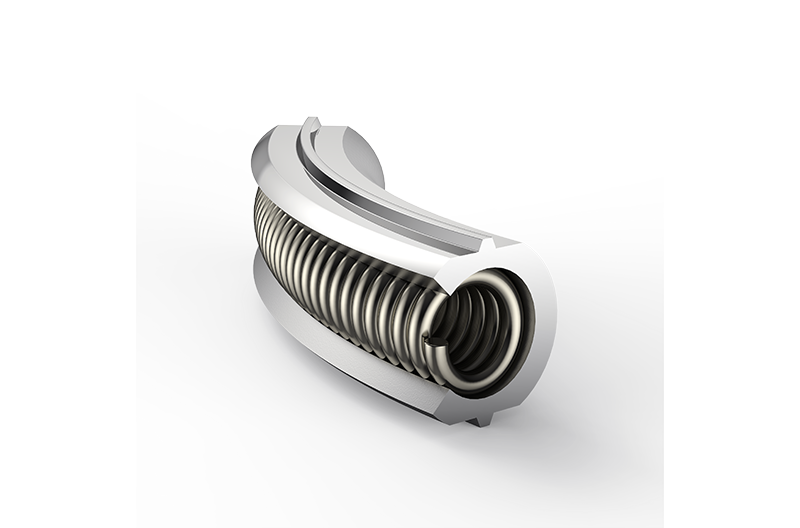
Spring-energized seals make use of a mechanical energizer (the spring) encased within a polymeric seal jacket. Because they are energized, these springs maintain an effective seal force even when faced with extremes in temperature, pressure, and dimensional variations. Various spring-energizer sizes and geometries allow engineers to customize them to specific applications, if needed. There are also options available with the jack material, including fillers to enhance seal performance.
Challenges of Sealing in Extreme Environments
Cryogenic and Vacuum Conditions
Cryogenic temperatures and vacuum conditions create interesting challenges for reliable sealing solutions, including potential issues with outgassing, brittle behavior, significant dimensional changes, and issues with lubrication.
Aggressive Media
Harsh environments can also include potential chemical incompatibility with the media as well as extremely aggressive chemicals such as acids, solvents, reactive gases, and sterilizers. Such issues can lead to excessive permeation and dimensional instability.
Pressure Cycling and Dynamic Loads
Pressure fluctuations and mechanical cycling have a heavy impact on seal performance, especially over time. Loss of contact with the sealing surface, extrusion, and fatigue, all of which can lead to seal failure and loss of consistent contact with the sealing surface. These challenges pose a significant problem for rotating equipment and actuators in particular.
Materials for Extreme Sealing
Material selection plays a crucial role in achieving extreme sealing. High-performance polymers such as PTFE, PEEK, and UHMW-PE, known for their unique properties and resilience in harsh conditions, are commonly utilized in extreme sealing applications.
Three high-performance polymers commonly utilized in extreme sealing applications include PTFE, PEEK, and UHMW-PE.
PTFE is known for being chemically inert, self-lubricating, and possessing an ultra-low coefficient of friction. It also exhibits a wide operating temperature range of -250°C to +260°C. It is proven to perform reliably in harsh environments. PTFE also has minimal outgassing in a vacuum and is a good choice for cryogenic aerospace systems, medical sterilization equipment, and semiconductor processing.
PEEK exhibits high strength, temperature resistance up to 260°C, and resistance to both radiation and hydrolysis. It maintains its dimensions very well under extreme pressures and can handle dynamic loads and cycling. PEEK spring-energized seals are often found in pumps, chemical reactors, aerospace fuel and hydraulic systems, as well as in both medical diagnostics and implants.
UHMW-PE has excellent abrasion resistance and impact strength, as well as toughness even at extremely low temperatures. It also exhibits low moisture absorption and is both lightweight and durable. UHMW-PE spring-energized seals are often used in LNG (Liquid Natural Gas) transfer systems and cold storage equipment.
Conclusion
Extreme sealing demands more than conventional solutions can offer. With applications involving cryogenic temperatures, aggressive media, pressure swings, and vacuum, spring energizers outperform more traditional approaches.
By combining engineered polymers like PTFE, PEEK, and UHMW-PE with a resilient spring element, spring-energized seals demonstrate their reliability even when everything else is under stress. They flex, adapt, and hold their seal even when conditions shift fast, instilling confidence in their adaptability under changing conditions.
If you need sealing performance you can count on in the harshest environments, Advanced EMC can help. Contact us today to discover the ideal sealing solution for your application.