by Sara McCaslin, PhD Sara McCaslin, PhD No Comments

The Role of Polymer Bearings in Electrified Equipment and EV Platforms

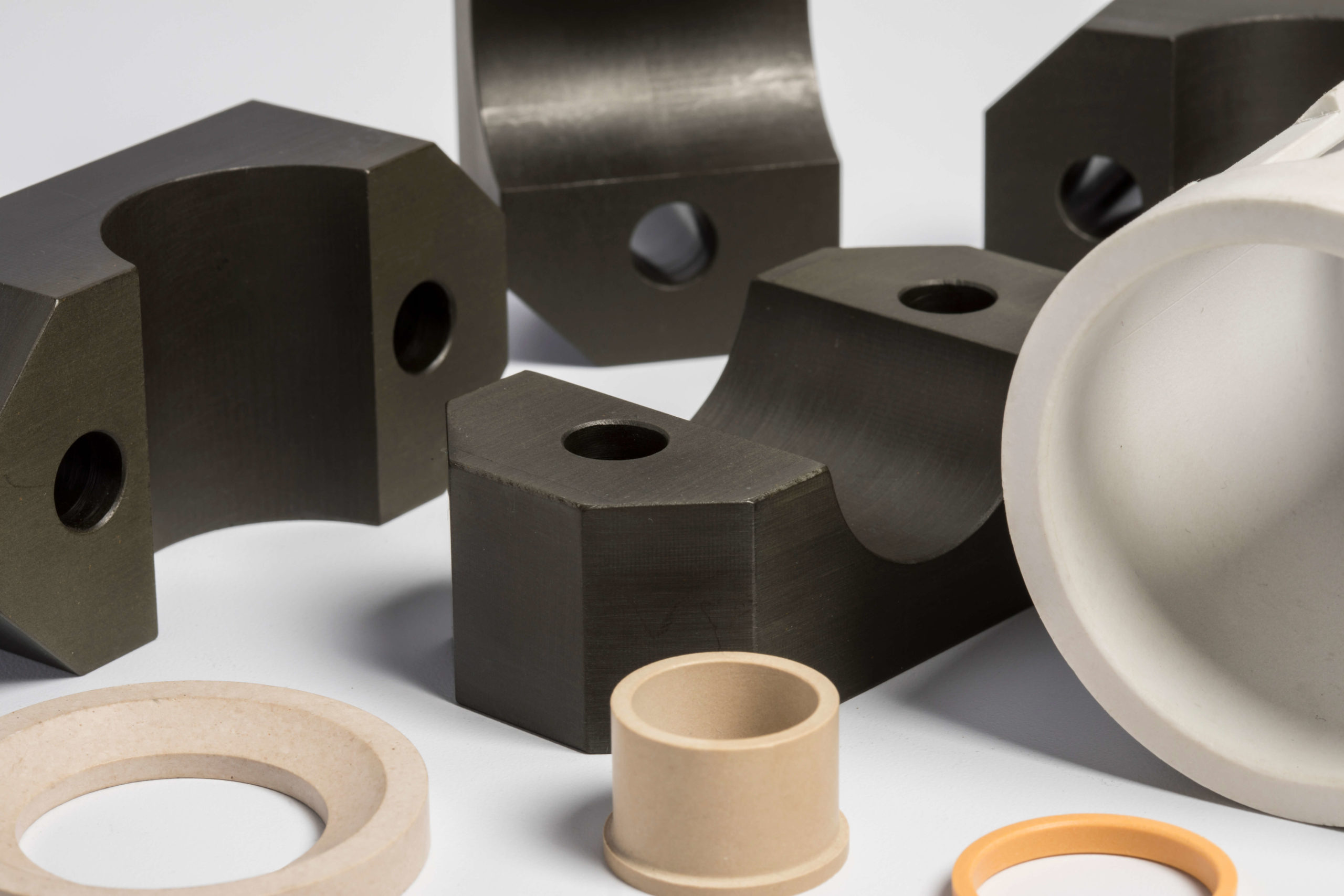
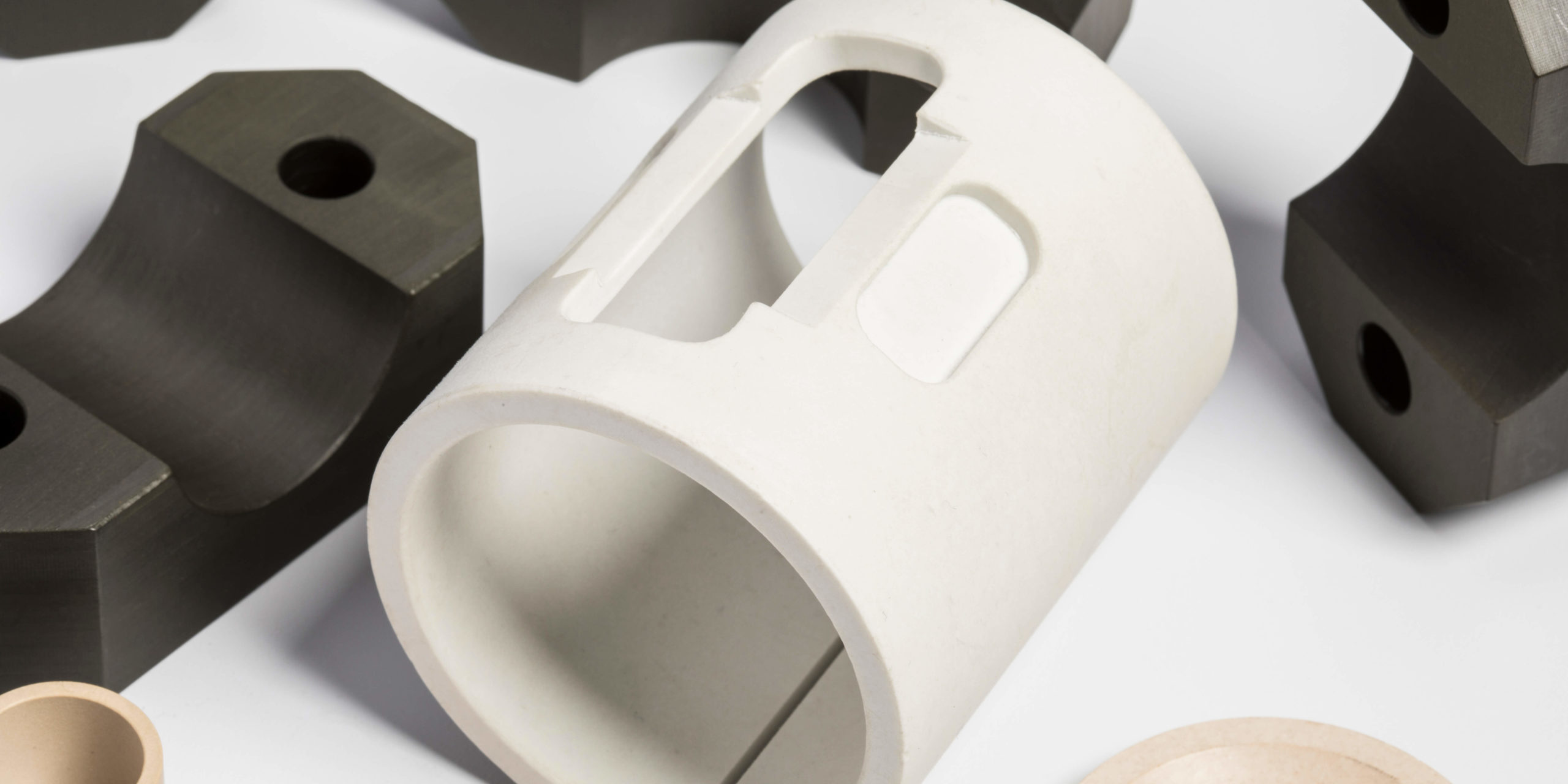
With the steady demand for electrified equipment and EV (Electric Vehicle) platforms, engineers are being forced to rethink their bearing designs. More specifically, traditional metal bearings involve serious challenges in high-voltage environments, including vulnerability to electrical erosion, heavy weight, and the need for constant lubrication. However, engineered-grade polymer bearings have emerged as a viable replacement, offering unique physical and chemical properties that address challenges posed by battery-powered mobility and high-voltage architectures.

Solutions Addressed by Polymer Bearings in Electrified Equipment

There are four challenges posed by electrified systems that polymer bearings can solve. The first is electrical insulation. Metal bearings carry electricity, while unfilled polymers are non-conductive. This eliminates issues with electrical pitting, fluting, and spark erosion. This eliminates the most common types of damage caused by electrical flow.

Another obvious benefit of polymer bearings is the weight savings. Polymers can be up to 80% lighter than traditional steel and bronze bearings. And in applications such as EV, every bit of weight savings adds up to benefits like improved overall efficiency and extended battery range.

Polymer bearings are going to run more quietly as they absorb shock and dampen vibrations. For EV, this means an NVH (Noise, Vibration, and Harshness) reduction that leads to a quieter, more pleasant ride.

In addition, there are types of polymers that are self-lubricating and allow for dry running. This not only reduces maintenance requirements but also eliminates parasitic drag from lubricant shear and the need for greases that can attract contamination. but enhances bearing reliability.

Polymer bearings are not going to rust, which means they are extremely reliable for situations like exterior chassis components exposed to weather. They also work well for thermal management systems that involve glycol-based coolants and water.

Types of Polymers, Features, and Applications

High-Performance Polymers

There are several top-tier plastics that are used inside or adjacent to electrical drive units. These include PI, PEEK, PPS, and PAI.

Polyimide (PI / Vespel) provides excellent dielectric strength and can withstand massive bearing loads even at extreme temperatures without experiencing creep. PI works best in high-voltage applications that demand maximum insulation. PI bearings work very well for insulating bearing sleeves inside EV traction motors.

PEEK (Polyetheretherketone) is known for its outstanding chemical resistance and high-temperature performance (up to 480°F continuous). PEEK bearings work very well in systems that are continuously exposed to aggressive coolants, fuels, and synthetic fluids, such as thermal management coolant pumps, high-speed actuators, and components submerged in e-axle or automatic transmission fluids.

PPS (Polyphenylene Sulfide) stands out because of its excellent chemical compatibility, low rigidity, low moisture absorption, and excellent thermal stability up to 400°F, as well as being a more cost-effective alternative to PEEK. The best areas for PPS bearings are applications requiring table electrical and mechanical performance under heat and chemical exposure. PPS bearings are often found with under-hood actuators, valves, and plastic over-moldings for deep groove ball bearings in eAxles.

PAI (Polyamide-Imide) is the highest-strength thermoplastic available for bearings. PAI bearings exhibit exceptional thermal resistance (up to 500°F) and extreme compressive strength (up to 1,000 psi). These bearings do their best work in extreme load-bearing environments where mechanical strength cannot be compromised. They are often found in high-temperature turbine environments, compressors, and heavy-duty robotic joints.

Engineering Polyamides

Engineers in search of a balance of cost-effectiveness, toughness, and reduced weight, an engineering Polyamide might be the best option.

PA46 and PA66 (Nylon) are able to resist deformation even at extreme speeds and are usually able to reduce the rotating mass of bearing assemblies. In addition, PA46 and PA66 are ideal for high-speed internal moving parts. In fact, an excellent example of usage would be bearing cages that hold steel or ceramic ball bearings inside EV traction motors spinning up to 30,000 RPM.

Fiber-Reinforced Nylon is another option when it comes to engineering polyamides. Filled solutions involve reinforcement with glass or carbon fibers in order to significantly increase mechanical and structural strength. Fiber-reinforced bearings are excellent for applications that require heavy-duty, load-bearing structural joints. Examples include replacements for the heavier metal bearings found in EV chassis, steering columns, and suspension components.

Low-Friction & Solid Lubricant Polymers

There are a couple of engineering polymers that provide exceptionally low friction and are self-lubricating.

PTFE (Polytetrafluoroethylene / Teflon): PTFE is the lowest-friction engineering material available with near-universal chemical resistance and electrical isolation properties. Because it has poor mechanical strength on its own, PTFE is often compounded with glass, carbon, or bronze fillers to handle loads. PTFE bearings are an excellent choice for low-load, low-to-moderate-speed applications or other operating environments requiring entirely dry operation. This includes Planetary gearsets, cooling pumps, and robotic automation gearboxes.

POM (Polyacetal / Acetal): POM is a valid option for cabins and interior systems where NVH control (eliminating squeaks/rattles) and avoiding messy liquid greases is paramount. It offers high rigidity and very low moisture absorption, and when combined with PTFE, it provides an ultra-smooth, silent glide. POM bearings can be found in EV pedal boxes, seat tracks, hinges, and steering columns.

UHMW-PE (Ultra-High Molecular Weight Polyethylene) offers extreme abrasion resistance and excellent durability, which is ideal for sliding applications that involve high wear. UHMW-PE bearings are commonly used in automated robotic manufacturing equipment for assembling EV battery packs.

MaterialElectrical insulationTemp. resistanceLoad capacityChemical resistanceSelf-lubricatingWeight savings
High-performance polymers
PI (Vespel)★★★★★★★★★☆★★★★☆★★★★☆★☆☆☆☆★★★☆☆
PEEK★★★★★★★★★☆★★★☆☆★★★★★★☆☆☆☆★★★☆☆
PPS★★★★☆★★★★☆★★★☆☆★★★★☆★☆☆☆☆★★★☆☆
PAI★★★★☆★★★★★★★★★★★★★★☆★☆☆☆☆★★★☆☆
Engineering polyamides
PA46/PA66 (Nylon)★★★☆☆★★★☆☆★★★☆☆★★☆☆☆★★☆☆☆★★★★☆
Fiber-reinforced nylon★★★☆☆★★★☆☆★★★★☆★★☆☆☆★★☆☆☆★★★☆☆
Low-friction & self-lubricating
PTFE (Teflon)★★★★★★★★☆☆★★☆☆☆★★★★★★★★★★★★★☆☆
POM (Acetal)★★★☆☆★★☆☆☆★★★☆☆★★★☆☆★★★☆☆★★★☆☆
UHMW-PE★★☆☆☆★★☆☆☆★★☆☆☆★★★☆☆★★★☆☆★★★★☆

Conclusion

Polymer bearings have been proven to be much more than just a lightweight substitute for metal. Polymer bearings in electrified equipment and EV platforms are an active efficiency enabler. And by minimizing friction, managing heat, preventing parasitic electrical erosion, and eliminating liquid lubrication, polymer bearings can significantly extend the lifespan and reliability of electric drivetrains.

As the EV industry rapidly transitions from 400V to 800V architectures, the challenges of electrical discharge and thermal management will double. Highly engineered polymer bearings, especially insulating composites and over-molded solutions, will be critical in maintaining the efficiency, safety, and operational longevity of the next generation of electrified equipment.

If you are looking for a polymer bearing solution for electricfied equipment, the experts at Advanced EMC are waiting to assist in every step from material selection to the final design and after. Contact us today!

by Sara McCaslin, PhD Sara McCaslin, PhD No Comments

Startup and Running Friction in Polymer Bearings

Startup and running friction can vary based on several different factors, and in this article we focus on what they are, why their values differ, and typical coefficients, as well as a detailed look at why these differences occur. It ends with a discussion of what impact startup and running friction have on bearing design.

Startup and Running Friction

Polymer bearings tend to exhibit higher breakaway (startup) friction than steady-state running friction due to factors such as static adhesion, microasperity interlocking, and transfer-film formation dynamics. 

The startup friction coefficient µₛ is measured at the onset of motion and represents static friction. The term “startup” does not refer solely to time zero, however. It represents the peak friction force or torque required to break the bearing free after a period of rest. Startup friction is actually the regime of dry contact when the polymer surface is still unconditioned. Unconditioned  means that the transfer film on the counterface is incomplete or patchy

The running friction coefficient µₖ represents a kinetic or dynamic measure of friction. It takes place when steady sliding motion is established and is represented by. Running friction relates to the frictional resistance that exists when two surfaces are in motion, steadily sliding against each other. 

Running friction applies after the initial breakaway event has occurred and the system has moved past issues such as static adhesion and micro-locking. As a result, the coefficient of running friction is typically lower and more stable than startup friction, especially for materials such as PTFE and UHMW-PE.

Why Startup and Running Friction Can Differ in a Polymer

There are some key factors that differentiate startup friction from running friction in polymers. For example, at rest, there is adhesion and junction growth. Polymer chains can increase the real contact load at under load rest (creep/relaxation), thereby increasing µₛ.In addition, at startup, there will be surface roughness and plowing. The roughness increases issues with mechanical interlocking and plowing. These two effects also raise the starting friction value.

In running friction conditions, materials like PTFE form a transfer film that reduces the effect of asperities and surface roughness, which reduces running friction. There is, however, a risk of stick-slip. This phenomenon is more likely to occur when the stiffness of the system is low, the speed is low, and the µₛ / µₖ ratio is high.

Typical Coefficients of Friction

The values below represent commonly used engineering polymers and are typical dry sliding vs steel values. These values can vary with pressure, speed, temperature, finish, fillers, and test method.

  • PTFE (virgin)
    • Startup friction (µₛ): ~0.05–0.10, often nearly identical to running friction
    • Running friction (µₖ): ~0.05–0.10
    • Minimal difference between startup and running friction
  • PEEK (unfilled)
    • Startup friction (µₛ): ~0.20
    • Running friction (µₖ): ~0.25
    • Exhibits a noticeable increase from startup to running friction
  • UHMW-PE
    • Startup friction (µₛ): ~0.15–0.20
    • Running friction (µₖ): ~0.10–0.20
    • Running friction can be equal to or lower than startup friction
  • Nylon 66 (PA66)
    • Startup friction (µₛ): ~0.20 (against steel)
    • Running friction (µₖ): ~0.15–0.25 (typical)
    • Moderate variability depending on surface finish and condition

What Is Behind the Difference Between Startup and Running Friction

Several factors account for the difference between startup and running friction. Pressure and dwell time, for example, mean that higher loads and long dwell times increase the real contact area and have the potential to raise µₛ. For speed, higher speeds can actually reduce friction after the polymer transfer film stabilizes, but can also raise heat generation. 

Temperatures are known to impact polymer modulus and creep, which can shift both µₛ and µₖ and alter the risk of stick-slip. In addition, the counterface material and hardness will affect the adhesion and transfer film, which is why it is important that the frictional coefficient used in design calculations represents the friction against the counterface material (e.g., PTFE vs steel, PEEK vs aluminum).

Note that PTFE-filled PEEK, MoS₂-filled nylon, and glass/bronze-filled PTFE shift friction and wear differently, often lowering friction but sometimes increasing counterface wear.

Surface finish also has a significant impact. If the surface finish is too rough, plowing will occur, increasing both friction and wear. On the other hand, if the surface finish is too smooth it can increase adhesion issues.

Impact on Bearing Design

Startup and running friction impact material selection, clearance, and surface finish in bearing design. Startup friction is dominated by static friction and adhesion at rest. This fact significantly impacts breakaway torque and can be a limiting factor in low-speed, intermittent, or precision motion systems. In such systems, stick-slip, noise, and control instability are unacceptable. 

Running friction, on the other hand, is governed by dynamic friction. Once motion is established, it controls steady-state heat generation, wear rate, and long-term dimensional stability. It directly influences PV limits and service life. 

Because many polymers exhibit higher startup friction than running friction, engineers need to balance low breakaway forces with acceptable operating temperatures and wear. This is usually accomplished through the use of self-lubricating materials, fillers, or surface texturing to manage both regimes. A successful polymer bearing design accounts for the full friction lifecycle, ensuring reliable motion at startup without sacrificing durability during continuous operation.

Conclusion

Startup and running friction have a significant impact on bearing design, as well as factors such as material fillers, pressure, temperature, and counterface material. If you are looking for a polymer bearing solution, contact the experts at Advanced EMC. Our team of bearing specialists can help you find the best bearing material for your design and can help you select the optimal material from our range of bearing-grade polymers.