
by Sara McCaslin, PhD Sara McCaslin, PhD No Comments

Why Labyrinth Seals Work So Well

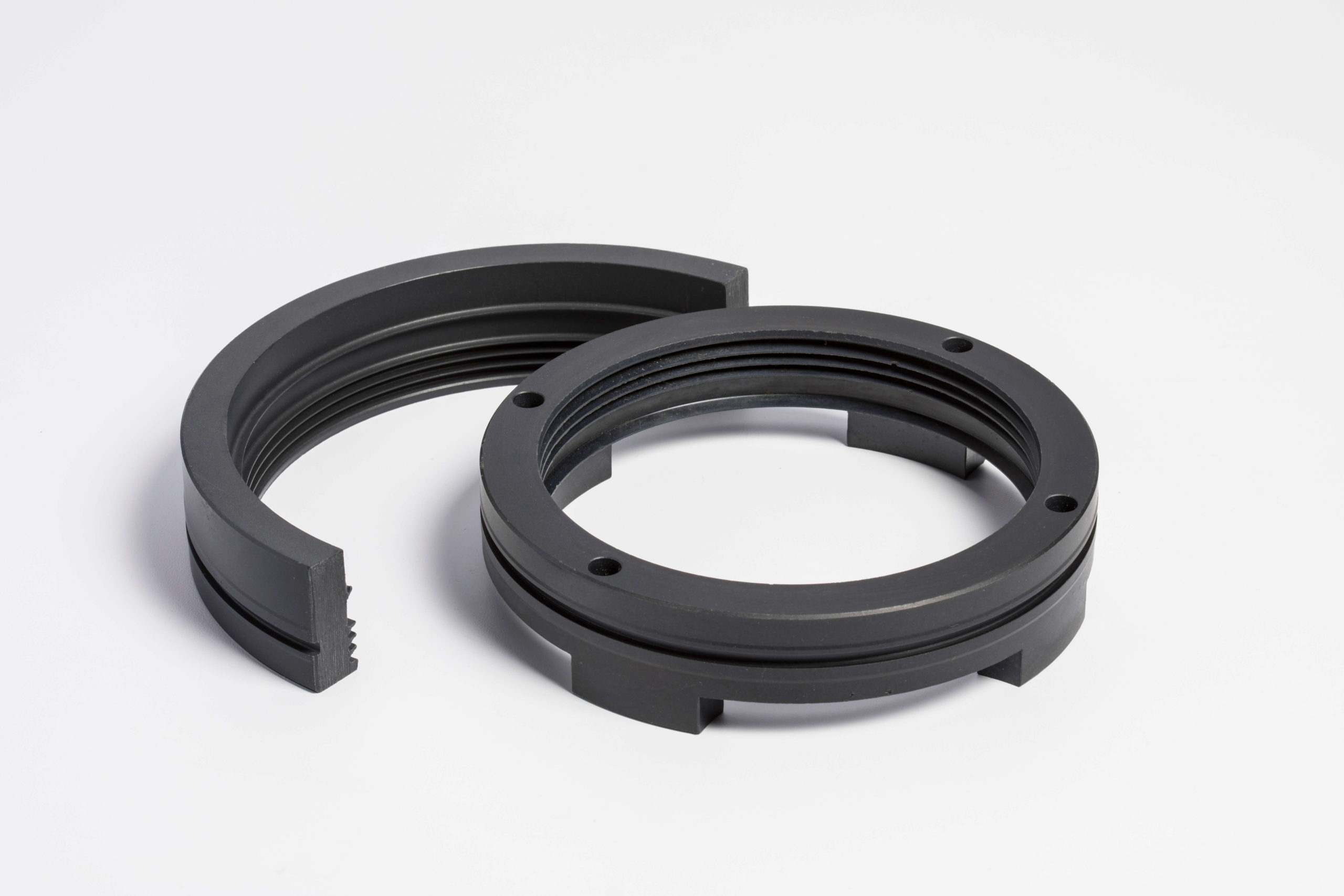
Labyrinth seals are a non-contact sealing solution used in high-speed, high-performance machinery. Unlike contact seals, labyrinth seals rely on geometry and fluid dynamics, rather than friction, to prevent leaks.

This article examines the reasons why labyrinth seals are so effective, including their low wear, high-speed capabilities, thermal stability, and long lifespan.

Fundamentals of Labyrinth Seal Operation

The Basic Mechanism

Labyrinth seals create a tortuous path that resists fluid passage through a series of cavities and restrictions. With every cavity, the fluid experiences a drop in liquid pressure that is directly caused by the turbulent flow and the kinetic energy dissipated. It is these pressure differentials and losses in velocity that prevent fluids from escaping. This tortuous path is also what allows the labyrinth seals to have a non-contact design.

Non-Contact Design Advantages

The non-contact architecture of labyrinth seals eliminates frictional wear, extending both seal and shaft life. This also enables the operation of these seals with extremely high shaft speeds and in environments where lubrication is limited or undesirable (e.g., aerospace, cryogenic, and vacuum applications). This non-contact operation also reduces heat generation, thereby improving energy efficiency. 

Polymer Material Science in Labyrinth Seals

Traditional metallic labyrinth seals, such as those made from nickel alloys, aluminum, and stainless steel, do not possess the same advantages as engineering polymers. These advantages include less weight, a more compact design, and better chemical resistance. 

Additionally, some polymers are self-lubricating, eliminating the need for lubricants, and have extremely low coefficients of friction. They also exhibit better thermal expansion properties than traditional metal solutions. Unlike metal labyrinth seals, polymer seals can also achieve tighter clearances and reduced leakage because the teeth deflect during any contact without wear or damage to the rotor. Finally, polymers exhibit superior resistance to abrasion. 

Two of the most commonly used polymers for labyrinth seals are PEEK and Torlon.

PEEK Labyrinth Seals

PEEK has some excellent properties, including a high strength-to-weight ratio, thermal stability up to ~480°F (250°C), and resistance to aggressive chemicals. They are also self-lubricating and can withstand continuous operating temperatures of around -94°F (-70°C), making them ideal for cryogenic conditions. 

Torlon Labyrinth Seals

Torlon (PAI) is an ultra-high-performance polymer offering even higher mechanical strength and creep resistance than PEEK. Torlon labyrinth seals are also self-lubricating with a very high strength-to-weight ratio and support continuous service temperatures above 500°F (260°C) while still maintaining excellent dimensional stability. It also works exceptionally well in cryogenic operating conditions, maintaining its key physical properties. Torlon labyrinth seals also have excellent compressive strength, allowing for consistent tooth geometry even in high-pressure or thermally cycled environments.

Performance Characteristics That Make Labyrinth Seals Exceptional

Non-contact labyrinth seals are able to avoid frictional drag, supporting their use in turbines, compressors, and rotating equipment that operate at speeds exceeding 20,000 RPM. Unlike contact seals, these seals exhibit very little dynamic instability and can actually improve energy efficiency. In addition, polymers like PEEK and Torlon can handle transient temperature spikes and repeated thermal cycling without loss of integrity.

In addition, labyrinth seals manufactured from PEEK or Torlon exhibit resistance to corrosive gases, fuels, and lubricants in aerospace and energy applications, expanding their potential applications beyond those of metal labyrinth seals.

The absence of frictional wear significantly extends their service life, and they do not seize or gall even after long periods of inactivity. Both of these features result in reduced maintenance costs and decreased equipment downtime.

Industry Applications

In wind turbine gearboxes, polymer labyrinth seals block dust, moisture, and lubricant loss. Their complex paths trap contaminants before they reach internal components. These seals also dampen vibration and handle minor shaft misalignment, helping the gearbox run smoothly and last longer in rugged conditions.

In aerospace and cryogenic settings, these seals stay effective across extreme temperature changes and low pressures. Materials like PEEK and Torlon remain stable and flexible when metals cannot, maintaining tight sealing and reliable performance from cryogenic cold to intense heat.

Polymer labyrinth seals are ideal for compressors, pumps, and other rotating assemblies where reduced leakage, low drag, and high reliability are essential. They can maintain system efficiency, protect components from contamination, and ensure long-term performance in even the most demanding conditions.

Advanced EMC’s Engineering Approach

Advanced EMC has both the materials science expertise and precision manufacturing capabilities to design and manufacture the PEEK and Torlon labyrinth seals that you need. We offer customization capabilities that include geometry optimization, tolerance control, and thermal expansion matching for metal or composite housings. And finally, our polymer labyrinth seals are engineered to deliver high performance under extreme mechanical, thermal, and environmental stresses.

Conclusion

Labyrinth seals work so well because their non-contact design eliminates friction and wear while using precisely engineered geometry to minimize leakage. Advanced polymers, such as PEEK and Torlon, offer thermal stability, resilience, and rub tolerance to further enhance the effectiveness of labyrinth seals. 

EMC’s polymer seals are engineered for mission-critical reliability in applications ranging from aerospace to industrial applications. Contact us to discuss a custom labyrinth seal solution for your next high-speed design challenge.

by Sara McCaslin, PhD Sara McCaslin, PhD No Comments

Labyrinth Seals for High-Speed Rotating Equipment: Non-Contact Protection for Wind Turbines

Labyrinth seals for high-speed rotating equipment are essential to the reliability of today’s wind turbines. These systems face extreme conditions, including high rotational speeds and fluctuating loads, as well as airborne contaminants, which can quickly compromise traditional contact seals.

In critical interfaces, such as gearboxes and generator shafts, seal failure often results in lubricant loss, contamination, and costly downtime. Labyrinth seals address these issues with a non-contact design that forms a tortuous path to block ingress and retain lubrication without generating friction, heat, or wear.

For wind energy applications, where uptime and longevity are non-negotiable, polymer labyrinth seals offer additional advantages, including corrosion resistance and lightweight design. In this blog post we discuss how labyrinth seals meet the demanding requirements of high-speed rotating systems in modern wind turbines.

Sealing Demands in Wind Turbines

Wind turbines are unique machines. They operate in harsh environments from salty offshore platforms to dust-laden plains and must run continuously for years with limited access to maintenance. At the heart of these systems lie high-speed rotating components, including the gearbox output shaft, the generator interface, and, in some direct-drive designs, high-speed rotor hubs.

These components rotate at thousands of revolutions per minute. They are subjected to wide-ranging temperatures, frequent load reversals, and axial or radial misalignment caused by structural flexing. Worse, they must do all this while preventing the ingress of moisture, dirt, and particles that degrade internal components.

Traditional contact seals struggle here. Frictional heat accelerates wear. Surfaces degrade. And eventually, lubricant escapes, or contaminants enter, leading to bearing failure or gearbox damage. The cost of even one unplanned maintenance event can be staggering. Sealing solutions must offer more than just barrier performance: they need to support longevity, stability, and efficiency under continuous high-speed operation.

Spring Energized PTFE Seal

How Labyrinth Seals Work in High-Speed Wind Energy Applications

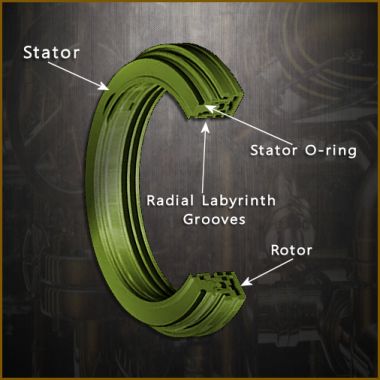
The power of a labyrinth seal lies in its geometry. Instead of using contact pressure to form a barrier, it creates a complex, narrow passage through which air, oil, or particles must travel. Each directional change or constriction in the path dissipates pressure and reduces the flow’s momentum. By the time the fluid or gas reaches the other end—if it ever does—its energy is largely lost.

This design is ideal for high-speed rotating equipment. No physical contact means no friction. No friction means no heat generation or surface wear. The result is a sealing system that performs reliably over extended periods, particularly in dynamic, high-load environments such as wind turbines.

Modern labyrinth seals may include straight-through paths, stepped grooves, or interlocking designs. Some systems incorporate shallow grooves on the shaft and mating grooves on the stationary housing, creating a highly restricted channel without touching components.

In wind turbines, materials also matter. Polymer labyrinth seals offer significant advantages over metal or elastomeric solutions for wind energy applications. Polymers such as PTFE, PEEK, and UHMW-PE resist corrosion, weigh less, and are less abrasive to surrounding components. These qualities make polymer labyrinth seals well-suited for outdoor and marine turbine installations, where exposure to salt spray, moisture, and UV radiation can cause degradation of metal components over time.

Spring Loaded Seal

Technical Advantages of Labyrinth Seals for Wind Energy Equipment

For design engineers and maintenance professionals, the benefits of labyrinth seals in high-speed wind turbine equipment go beyond just sealing. Here’s how they add real-world value:

1. Wear-Free Operation

Since labyrinth seals rely on flow dynamics and not frictional contact, they do not degrade from continuous rotation. This eliminates a primary failure mode in conventional seals—surface wear—and extends operational life.

2. Superior Thermal Behavior

High-speed shafts generate heat, particularly during periods of high power output. Traditional seals may harden, melt, or lose tension when exposed to heat. Labyrinth seals are immune to these issues. Their non-contact nature means virtually no temperature rise due to sealing friction.

3. Resistance to Misalignment

Wind turbines experience tower sway, yaw misalignment, and thermal expansion. Labyrinth seals are more tolerant of these shifts than rigid-contact seals. The sealing gap may vary slightly, but performance remains largely unaffected.

4. Low Torque Drag

Especially at startup or low-speed conditions, reducing system resistance is key. Labyrinth seals exert no drag torque, allowing for more efficient rotation and reduced energy loss. Over time, this contributes to better system efficiency and lower mechanical loading.

5. Contaminant Rejection

Particles, moisture, and even insects are a constant threat to wind turbine internals. Labyrinth seals, with their tortuous flow path, effectively reject solid contaminants, particularly when paired with centrifugal motion or positive internal pressure.

6. Maintenance Reduction

Perhaps the most significant benefit: reduced service frequency. For remote or offshore turbines, extending service intervals by even a few months can translate into substantial savings in crew time, transportation, and lost production.

Conclusion & Engineering Recommendations

Labyrinth seals for high-speed rotating equipment have proven themselves in gas turbines, aircraft engines, and now increasingly in wind turbines, where high-speed rotation and long-term reliability are essential. Their non-contact geometry makes them uniquely suited for systems that must endure thousands of hours of continuous operation with minimal maintenance.

In wind energy, where environmental exposure, mechanical stress, and economic pressure converge, polymer labyrinth seals offer a compelling balance of performance, durability, and design flexibility. They protect critical systems without the drawbacks of traditional friction-based seals.

For engineers seeking to extend component life, improve drivetrain reliability, or reduce long-term maintenance costs, labyrinth seals—especially those built from advanced polymers—deserve serious consideration. Whether you’re designing next-generation turbines or retrofitting legacy systems, Advanced EMC can help develop custom labyrinth sealing solutions that meet your exact performance requirements.