
by Sara McCaslin, PhD Sara McCaslin, PhD No Comments

Plain Polymer Bearings: When Simple Is a Design Advantage, Not a Compromise

Polymer plain bearings are often eliminated early in a design because it is easy equate complexity with performance. But that isn’t always true. While rolling-element bearings are the standard for a reason, the humble plain bearing, specifically when high-performance engineering polymers are used, offers a surprisingly robust alternative. Sometimes, eliminating moving parts is actually the biggest upgrade that can be made. 

This blog post explores what polymer plain bearings are, what their benefits are, and what their limitations are. 

Plain Polymer Bearings

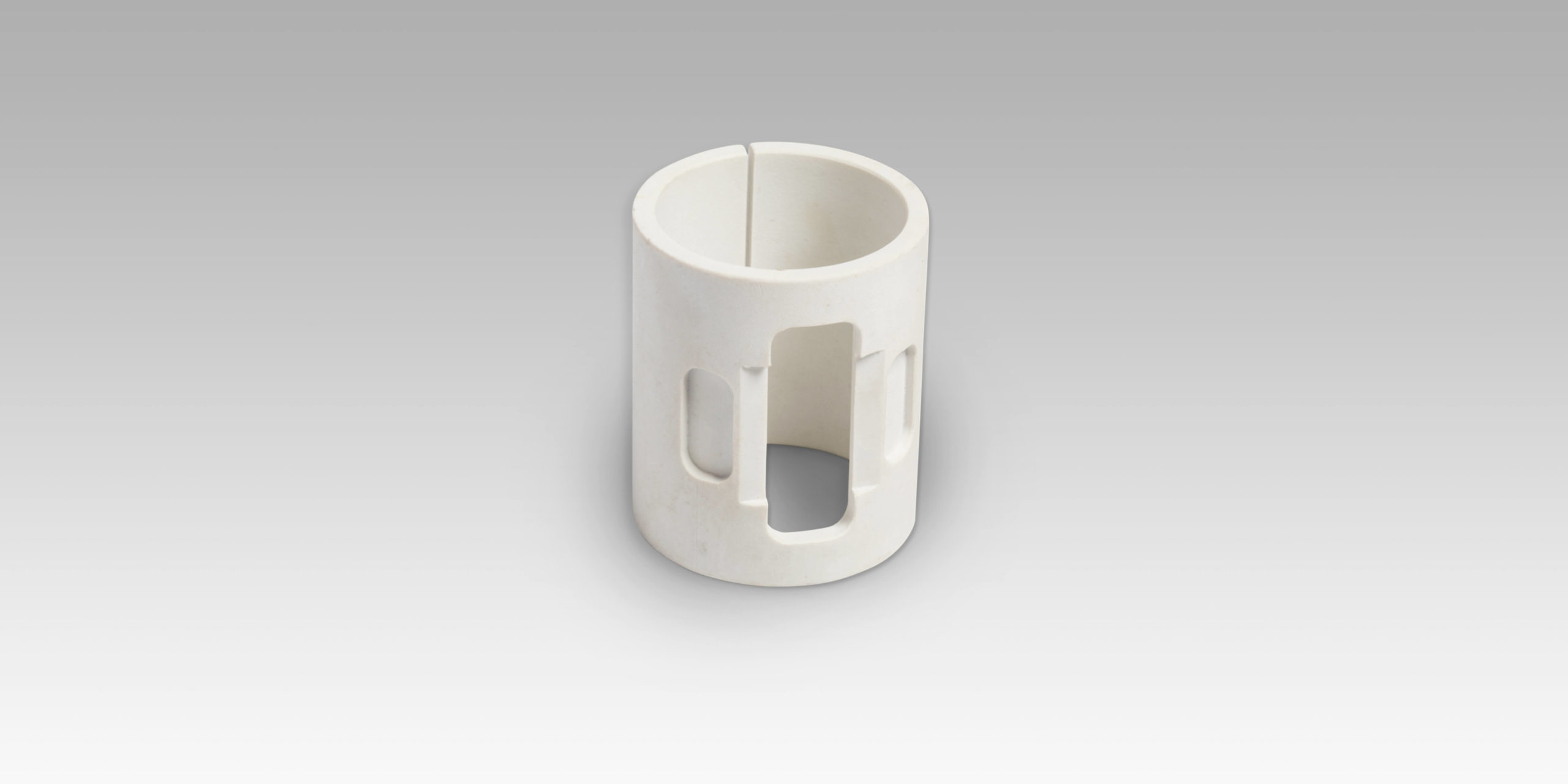
A plain bearing (also known as a plane bearing) is the simplest design of a bearing, primarily because it has no rolling elements. These bearings come in several different forms, including cylindrical sleeves (the simplest), flanged (which can support axial loads), and thrust washers. As simple as their design is, however, there are many instances where they can outperform their rolling-element bearing counterparts

Plain Polymer Bearings vs Rolling-Element Bearings

What follows are some of the key benefits of simple plain bearing designs as compared to their rolling-element bearing counterparts. 

Superior Load Capacity and Shock Resistance: Plain bearings have a much larger surface-contact area than rolling element bearings possess. Because of this, plain bearings distribute loads much more effectively. Under shock loads, rolling-element bearings concentrate force into point loads that can cause fatigue or brinnelling. Plain bearings, however, can absorb shock and safely spread these impacts.

Predictable, Non-Catastrophic Failure: When a ball bearing fails, it seizes and can shatter and send problematic metal shrapnel into the system, a form of catastrophic failure that does serious damage beyond just the bearing itself. Plain bearings, on the other hand, experience wear at an even, predictable rate. This non-catastrophic failure mode is critical for applications in industries such as food processing and pharmaceutical applications, where contamination is a serious event.

Weight, Space, and Cost Savings: A typical plain bearing weighs less than half of a comparable needle-roller bearing, especially when a polymer bearing is used to replace a metal rolling-element bearing  (sometimes up to 14 times less than a deep-groove ball bearing). Their single-piece design eliminates the need for components such as snap rings and complex machined shoulders. This, in turn, enables engineers to shrink housing sizes and significantly reduce manufacturing costs.

Vibration Damping and Silence: Because they have no internal moving parts to rattle or slop around, plain bearings run quietly, and they naturally absorb a significant portion of mechanical vibration. This feature makes them extremely quiet when compared to rolling-element bearings.

Self-Lubrication: Perhaps the biggest advantage of plain engineering polymer bearings, such as PTFE and PEEK, is their maintenance-free nature. Instead of requiring continuous oil or grease, they rely on material transfer lubrication. As the shaft makes its first few rotations, the polymer smears a microscopic transfer film onto the mating metal shaft. This transfer film fills the microscopic recesses on the mating shaft, creating a dry-running, low-friction surface that prevents the messy buildup of debris common with greased bearings. 

When Polymer Plain Bearings are Not the Solution

Are plain bearings always the solution? No, and here’s a quick summary of where rolling-element bearings remain the recommended choice. For example, plain bearings are generally optimized for single-speed applications, but rolling-element bearings can tolerate a wider speed range, making them more suitable for applications with variable-speed drives. Start-stop cycles can also be a problem for plain bearings because it takes time for their lubricating transfer film to form, but rolling-element bearings are more efficient in such environments. In addition, high-precision applications work best with rolling-element bearings because polymer plain bearings require a radial clearance. Polymer bearings cannot handle the same level of edge loading as their equivalent rolling-element bearings. Finally, polymer plain bearings have much stricter mating shaft surface requirements.

Conclusion

Switching to plain bearings is not a solution for every design challenge. If you need extreme precision or are dealing with high-speed variability, rolling elements remain the best option. That said, the benefits of going simple are hard to ignore. Removing the risk of catastrophic seizure and reducing maintenance, polymer bearings solve the issues traditional rolling element metal bearings create. It comes down to knowing exactly what your application can tolerate.

If you are trying to decide between plain and rolling-element bearings, Advanced EMC can help. Contact us today and talk to one of our experienced bearing engineers.
by Sara McCaslin, PhD Sara McCaslin, PhD No Comments

High-Performance Polymer Bearings: Materials, Advantages, and Use Cases

High-performance polymer bearings are replacing metal in increasingly demanding applications. The low-friction, dry-running capabilities, chemical resistance, and weight savings are just a few of the reasons why polymer bearings are gaining favor among engineers. This blog post focuses on three materials — PEEK, PPS, PAI, and PTFE — and their applicability to plane bearing applications.

Advantages of High-Performance Polymer Bearings

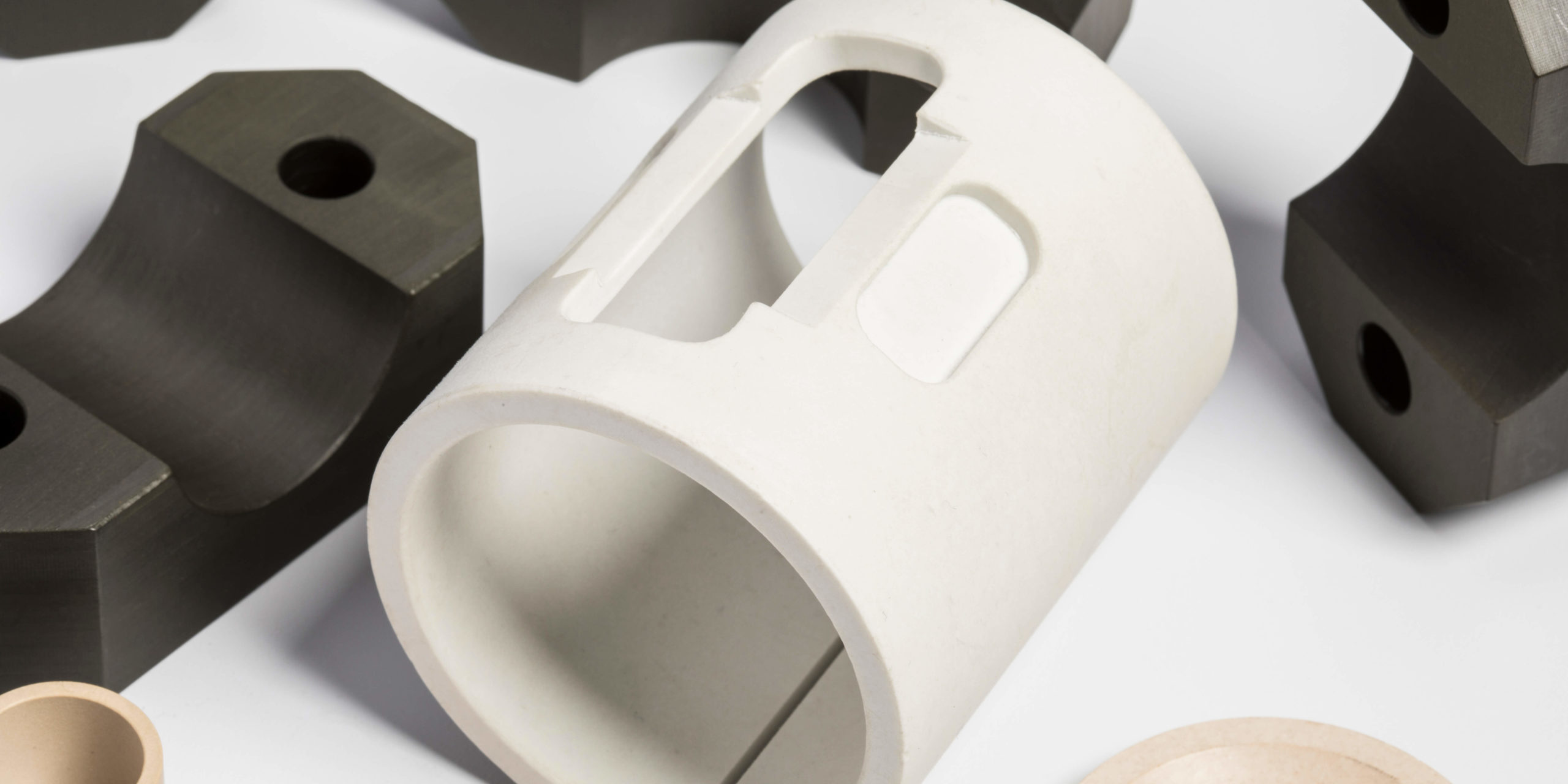
Bearing-grade engineering polymers such as PEEK, PPS, PAI, and PTFE are excellent options for bearing design. Compared to traditional metal bearings, these can run dry with minimal lubrication, generate less frictional heat, and experience less wear. They also offer corrosion resistance and are resistant to many problematic chemicals, along with significant weight savings. They also serve as natural electrical insulators and offer good vibration damping. High-performance polymer bearings are also compatible with clean environments (e.g., medical and semiconductor).

Understanding High-Performance Polymer Bearings

What makes a bearing material high-performance? First is low friction and natural lubricity, which reduces friction and the amount of heat generated by friction. Next is resistance: resistance to wear, resistance to chemicals, and resistance to absorbing moisture. Dimensional stability is also key, as well as the ability to maintain their load capacity under heat. Finally, PV limits serve as a benchmark for how suitable a high-performance polymer is for a particular application.

Material Profiles for High-Performance Polymer Bearings

1. PEEK (Polyetheretherketone)

PEEK is a semicrystalline, high-performance thermoplastic that is best known to engineers for its balance of strength, temperature resistance, and dimensional stability. It has excellent mechanical strength, with bearing grades able to withstand up to 6,00 psi. It also possesses excellent high-temperature performance up to 480°F continuous. In addition, PEEK has excellent chemical resistance that includes fuels, oils, solvents, and corrosive media. It also provides good creep resistance and dimensional stability even under thermal cycling.

Depending on the grade chosen, PEEK’s PV rating is 100,000 PV (Fluorolon 3015, PEEK BG) or 50,000 PV (Fluorolon 3010), with velocities up to 600 SFM and low friction (especially when graphite is used as a filler).

PEEK is often used with high-speed actuators, pumps, compressors, downhole and energy-sector applications, and aerospace mechanical linkages.

2. PPS (Polyphenylene Sulfide)

PPS is a rigid, aromatic polymer known for excellent chemical inertness and good dimensional stability, especially in corrosive environments. PPS is resistant to nearly all solvents, acids, bases, fuels, and process chemicals and has a continuous-use temperature of up to 400°F. It has naturally low friction and low moisture absorption, but is more brittle and less impact resistant than PEEK or PAI. 

PPS good PV ratings, depending on the grade used (i.e, 25,000 PV for Fluorolon 5065 and 11,000–12,000 PV  for Fluorolon 5025, 5010). It also possesses a load capacity of up to 2,000 psi, dependent on the grade chosen. 

PPS works very well in chemical processing equipment, automotive components exposed to aggressive chemicals, pumps and valves with moderate loads, and applications where chemical performance and corrosion resistance outweigh mechanical requirements.

3. PAI (Polyamide-Imide)

Torlon, or PAI, is the highest-strength thermoplastic available for bearing applications. Its imide backbone provides exceptional thermal, mechanical, and creep resistance. It has excellent compressive strength and fatigue resistance, with a continuous use temperature up to 500°F. It also has low friction in its graphite-filled grades, like Torlon 4301. 

PAI has good PV ratings, with 100,000 PV  for Torlon 4435 and  50,000 PV for Torlon 4301. Its velocity limit is 850–900 SFM, one of the highest speeds for non-metal bearings. And its load capacity is up to 1,000 psi. 

PAI bearings are commonly used for aerospace linkages and flap actuators, industrial machinery with extreme loads, robotic joints and linear motion systems, and high-temperature turbine or compressor environments. 

4. PTFE (Polytetrafluoroethylene, Filled and Unfilled)

PTFE is the lowest-friction engineering material available. It offers near-universal chemical resistance, but has lower strength and PV capability than PEEK or PAI. In fact, its ultra-low coefficient of friction makes it often used in dry-running or low-lubrication conditions. PTFE also has exceptional chemical resistance as it is inert to nearly all chemicals. High thermal resistance is another key property of PTFE: depending on the grade, it can be between
500°F–550°F depending on grade. However, it exhibits poor mechanical strength and creep resistance unless fillers are used.

Its PV rating depends heavily on fillers: 10,000 PV for filled PTFE grades like Rulon LR, J, W2, and only 1,000 PV  for unfilled PTFE: Fluorolon 1000. PTFE’s velocity limits are up to 400 SFM. For filled PTFE grades, the load capacity ranges from 750 to 1,000 psi.

PTFE bearings work best as low-load, low-to-moderate speed bearings. Common areas of application include chemical processing, where exposure to highly corrosive chemicals is expected, and semiconductor and cleanroom applications, where contamination is not acceptable.

Conclusion

High-performance polymer bearings made from PEEK, PPS, PAI, and PTFE offer significant advantages over traditional metal counterparts, including low friction, chemical resistance, and weight savings. And polymer bearings extend equipment life, improve reliability, and increase efficiency. 

If you’re evaluating materials for demanding bearing applications, our engineers can help you identify the best polymer solution for your requirements. Contact Advanced EMC today to discuss your design challenges and request a consultation.