
by Daniel Mays Daniel Mays No Comments

Cryogenic Challenges: How Do Seals Work in Extreme Temperatures

Cryogenics, the science of dealing with extremely low temperatures, presents unique challenges due to the physical and chemical changes in materials under these conditions. One such challenge is sealing cryogenic liquids – a task that can be difficult due to alterations in material properties caused by frigid temperatures.

So, what makes this process so challenging? To answer this question, it’s essential first to understand how temperature affects matter at a molecular level.
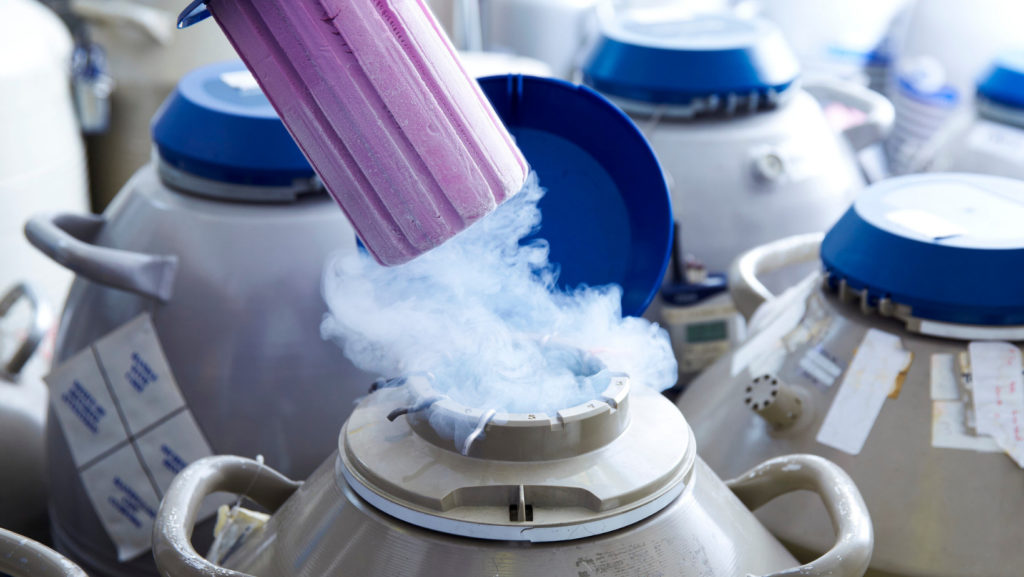
cryogenic

How Do Cryogenic Temperatures Affect Seals

Temperature measures the kinetic energy or motion of molecules within any given substance. As temperatures decrease, the movement or vibration of these molecules slows down significantly. This slowing effect on molecular motion can significantly change material characteristics and phase transitions.

Take water, for instance. At 0°C (32°F), water undergoes a critical phase transition from liquid to solid form – we know it as ice. This change affects not only its physical appearance but also its mechanical and thermal properties, such as hardness, thermal conductivity, and heat capacity.

However, beyond the freezing point lies an even colder realm known as cryogenics, which starts at about -150°C (-238°F). Herein lies another central turning point where substances experience further significant shifts in their properties unlike anything observed at higher temperatures.

At around -273°C (-459°F), known colloquially as ‘absolute zero,’ molecular movement ceases entirely, presenting new characteristics for materials exposed to this extreme condition. The Kelvin temperature scale was developed with absolute zero being 0K for scenarios where standard temperature scales become inadequate.

Understanding these dramatic transformations induced by frigid conditions is fundamental when working with cryogenic systems, especially when it comes to sealing cryogenic liquids, which are typically stored at very low temperatures, often near absolute zero, like liquid nitrogen (at -196°C) or liquid helium (at -269°C).

The Cryogenic Sealing Process

The sealing process in cryogenic systems is crucial to prevent leakage of these liquids, which could pose serious safety risks and operational inefficiencies. However, the extreme cold temperatures create challenges that make it difficult to achieve an effective seal.

First, materials commonly used for seals, such as elastomers, metals, and ceramics, often change properties dramatically under cryogenic conditions. For instance, most elastomers harden and lose their elasticity at very low temperatures, making them unable to provide a tight seal. Metals also become brittle, while ceramics may undergo dimensional changes due to thermal contraction.

Additionally, the phase changes that certain substances undergo at these extremely low temperatures can further complicate the sealing process. Sealing gaskets containing water or other substances that freeze could crack or break due to expansion during freezing, compromising the seal’s integrity.

Seal designs also need to consider possible pressure build-ups caused by evaporating cryogenics, which, if not correctly managed, might lead to catastrophic failures like explosions.

Furthermore, another challenge is presented by thermally induced stresses on seals caused by rapid temperature changes during system start-up or shut-down phases known as ‘thermal cycling.’ These stress cycles can lead to repeated flexing, which could eventually cause fatigue failure in seals over time.

Cryogenic Seal Technology

Materials science plays a vital role in overcoming these challenges by developing innovative materials capable of withstanding extreme cold without losing their sealing capabilities. Examples include composites from PTFE (polytetrafluoroethylene) filled with glass fibers or carbon-graphite-based compounds known for maintaining good mechanical strength and flexibility even under severe cold conditions.

In addition, advanced computational modeling techniques are being used extensively today for predicting how different materials will behave under various operating conditions, thus aiding in design optimization processes to minimize potential risks associated with handling cryogenic liquids.

Another important area where technology has made significant strides is non-destructive testing methods such as ultrasonic testing and magnetic particle inspection, which detect flaws or defects in seal materials that might lead to failure.

In conclusion, while sealing cryogenic liquids is a complex task fraught with numerous challenges due to changes in properties caused by freezing temperatures, continued advancements in science and technology offer promising solutions. Researchers are constantly pushing the boundaries of what’s possible in this fascinating realm of extreme cold, from developing new materials and improved seal designs to employing sophisticated predictive modeling techniques. The future of cryogenics seems bound to continue its trajectory of bringing about even more exciting discoveries and innovations.
by Daniel Mays Daniel Mays No Comments

Guide to Cryogenic Seals for Marine Loading Arms

cryogenic seals for marine loading arms

A marine loading arm is a flexible, mechanical arm that assists loading or unloading ships. Typically, they transport petroleum and other chemicals between vessels and containers at the docks. 

Marine loading arms are an alternative to using direct hookups. Like direct connections, you must completely drain the loading arms before breaking off the links by using high-pressure air to blow out traces or stripping the line using a pump.

Due to what these loading arms carry, they can operate at cryogenic temperatures. Choosing the appropriate seals for this use is essential to ensure the safety of operators and machines alike. Let’s look further into cryogenic seals for marine loading arms.

Why Use Cryogenic Temperatures

Some liquids are too volatile to transport naturally. That is why they are cryogenically cooled into their liquid form. Cooling the air to cryogenic temperatures requires a process of compression, cooling, and expansion.

Moving cryogenic liquids instead of gas is safer and less likely to explode or cause a fire in the event of an accident. However, as these liquids are at sub-zero temperatures, you should use protective equipment when handling them.

There are many types of gasses transported using cryogenic temperatures. The most common use of marine loading arms to load onto ships include liquified petroleum gas, natural gas, liquid oxygen, liquid nitrogen, liquid hydrogen, and liquid helium. The table below shows the temperatures at which these gasses are transported.

Gas Temperature °C Temperature °F
Liquified Petroleum Gas -48°C -54.4°F
Natural Gas -162°C -259.6°F
Liquid Oxygen -182°C -295.6
Liquid Nitrogen -196°C -320.8°F
Liquid Hydrogen -253°C -423.4°F
Liquid Helium -269°C -452.2°F

Cryogenic Seal For Marine Loading Arms Design Consideration

The most common cryogenic loading arm seals are a polymer material with a metallic energizer. These materials include

  • PTFE
  • PCTFE
  • TFM
  • UHMW PE

PTFE is often the first choice because it is compatible with a wide range of chemicals, has an extremely low coefficient of friction, and is thermally stable. Another valuable material for cryogenic seals is Torlon® Polyamide-imide. Torlon PAI is rigid even at cryogenic temperatures. 

These materials have excellent chemical compatibility, low friction, dry-running, and good dimensional stability. Dimensional changes can be accounted for using a spring-energized seal or sizing the seal by accounting for the plastic’s coefficient of thermal expansion. 

Cryogenic seals made with PTFE and its variants offer a high strength-to-weight ratio, excellent durability, and self-lubricating properties.

What Cryogenic Seals Materials to Avoid

Traditional compression seals are not a viable choice for cryogenic use. Natural rubber, silicone, Buna-N, fluorocarbon, and ethylene-propylene can handle sub-zero temperatures. However, they cannot correctly seal at cryogenic temperatures. Temperatures below -32°C (-25.6°F) cause the rubber to become brittle.

If you use an inappropriate seal, it will eventually fail. Upon failure, the hazardous liquids flowing through the marine loading arm will escape and can be life-threatening. Some dangers include explosion, fire, asphyxiation, or frostbite.

In addition, there will be dimensional changes between when the seal is installed and when it experiences cryogenic operating conditions. You must ensure that the chosen polymer or elastomer doesn’t become brittle at the cryogenic temperatures involved.

Cryogenic Seal Maintenance Considerations

Periodically, cryogenic seals will require maintenance and replacement. Some things to ensure a longer seal life include understanding conditions, knowing what the seal can withstand, and knowing what to look for when it comes to wearing and lubricating.

Understand Conditions 

The conditions in which your marine loading arm works will affect the seals. Temperature, movement, and pressure will eventually cause the seal to wear out and increase leak rates.  If you know and understand the exact conditions where the seals will work, you can pick the suitable material for longer-lasting usage.

Knowing What the Seal Can Withstand

All seals have a limit to what they can withstand. Cryogenic seals can withstand temperatures from -269°C (452.2°F) to 148°C (300°F). They typically resist chemicals, natural gas, petroleum, and liquid nitrogen. They can also withstand high-pressure conditions.

Know What to Look for When It Comes to Wear

All seals wear out. Eventually, cryogenic seals are not excluded. Seals begin to wear on the seal face, causing a leak. You should inspect seals regularly for signs of distress, such as chips and grooves. If there are any indications of wear, then you should replace the seal immediately.

Lubricate

The cryogenic fluids themselves usually make for poor lubricators.  Any added lubricants or even moisture can freeze onto the face of the seal, causing the seal to shatter or, worse yet, the system to lock up and experience catastrophic damage.  However, not using lubrication can result in issues like slip-stick vibration.  

Lubricating cryogenic seals is virtually impossible. As a result, using unfilled polymer materials or a modified material may be the only option.

Best Cryogenic Seals for Marine Loading Arms

Choosing the best cryogenic seals for marine loading arms will depend on what you are transporting. Most cryogenic seals will work in marine loading arms, but some materials work better than others. The most common materials are PTFE, PCTFE, TFM, and UHMW PE.

Advanced EMC offers a wide array of cryogenic seals. If you are interested in purchasing cryogenic seals, contact us today!

FAQ

How do you seal liquid nitrogen?

Sealing liquid nitrogen requires either silicone or PTFE seals. If the seal comes into contact with the liquid nitrogen, PTFE seals are the better choice as this material can handle cold flow without causing creep.

What is the purpose of marine loading arms?

Marine loading arms load or unload vessels carrying petroleum products. They are made of several sections of pipes connected by quick-connect fittings and swivel joints. Cryogenic seals are used between the fittings and joints when transporting liquid nitrogen, liquid petroleum, or any other liquid stored at cryogenic temperatures.