
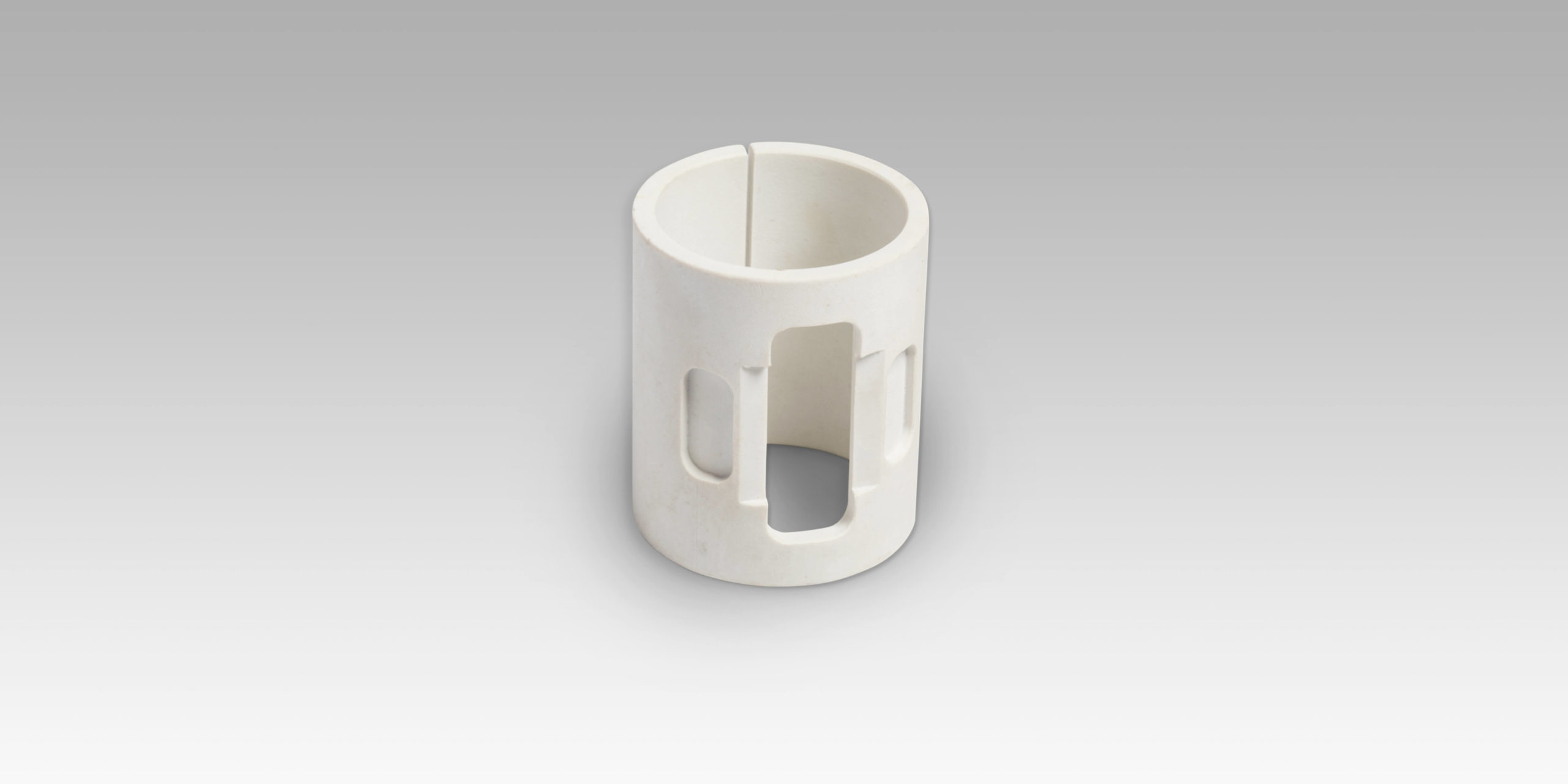
Polymer plain bearings are often eliminated early in a design because it is easy equate complexity with performance. But that isn’t always true. While rolling-element bearings are the standard for a reason, the humble plain bearing, specifically when high-performance engineering polymers are used, offers a surprisingly robust alternative. Sometimes, eliminating moving parts is actually the biggest upgrade that can be made.
This blog post explores what polymer plain bearings are, what their benefits are, and what their limitations are.
Plain Polymer Bearings
A plain bearing (also known as a plane bearing) is the simplest design of a bearing, primarily because it has no rolling elements. These bearings come in several different forms, including cylindrical sleeves (the simplest), flanged (which can support axial loads), and thrust washers. As simple as their design is, however, there are many instances where they can outperform their rolling-element bearing counterparts.
Plain Polymer Bearings vs Rolling-Element Bearings
What follows are some of the key benefits of simple plain bearing designs as compared to their rolling-element bearing counterparts.
Superior Load Capacity and Shock Resistance: Plain bearings have a much larger surface-contact area than rolling element bearings possess. Because of this, plain bearings distribute loads much more effectively. Under shock loads, rolling-element bearings concentrate force into point loads that can cause fatigue or brinnelling. Plain bearings, however, can absorb shock and safely spread these impacts.
Predictable, Non-Catastrophic Failure: When a ball bearing fails, it seizes and can shatter and send problematic metal shrapnel into the system, a form of catastrophic failure that does serious damage beyond just the bearing itself. Plain bearings, on the other hand, experience wear at an even, predictable rate. This non-catastrophic failure mode is critical for applications in industries such as food processing and pharmaceutical applications, where contamination is a serious event.
Weight, Space, and Cost Savings: A typical plain bearing weighs less than half of a comparable needle-roller bearing, especially when a polymer bearing is used to replace a metal rolling-element bearing (sometimes up to 14 times less than a deep-groove ball bearing). Their single-piece design eliminates the need for components such as snap rings and complex machined shoulders. This, in turn, enables engineers to shrink housing sizes and significantly reduce manufacturing costs.
Vibration Damping and Silence: Because they have no internal moving parts to rattle or slop around, plain bearings run quietly, and they naturally absorb a significant portion of mechanical vibration. This feature makes them extremely quiet when compared to rolling-element bearings.
Self-Lubrication: Perhaps the biggest advantage of plain engineering polymer bearings, such as PTFE and PEEK, is their maintenance-free nature. Instead of requiring continuous oil or grease, they rely on material transfer lubrication. As the shaft makes its first few rotations, the polymer smears a microscopic transfer film onto the mating metal shaft. This transfer film fills the microscopic recesses on the mating shaft, creating a dry-running, low-friction surface that prevents the messy buildup of debris common with greased bearings.
When Polymer Plain Bearings are Not the Solution
Are plain bearings always the solution? No, and here’s a quick summary of where rolling-element bearings remain the recommended choice. For example, plain bearings are generally optimized for single-speed applications, but rolling-element bearings can tolerate a wider speed range, making them more suitable for applications with variable-speed drives. Start-stop cycles can also be a problem for plain bearings because it takes time for their lubricating transfer film to form, but rolling-element bearings are more efficient in such environments. In addition, high-precision applications work best with rolling-element bearings because polymer plain bearings require a radial clearance. Polymer bearings cannot handle the same level of edge loading as their equivalent rolling-element bearings. Finally, polymer plain bearings have much stricter mating shaft surface requirements.
Conclusion
Switching to plain bearings is not a solution for every design challenge. If you need extreme precision or are dealing with high-speed variability, rolling elements remain the best option. That said, the benefits of going simple are hard to ignore. Removing the risk of catastrophic seizure and reducing maintenance, polymer bearings solve the issues traditional rolling element metal bearings create. It comes down to knowing exactly what your application can tolerate.
If you are trying to decide between plain and rolling-element bearings, Advanced EMC can help. Contact us today and talk to one of our experienced bearing engineers.
 Intense competition makes it imperative for industries to arrange the best of material and equipment. Any room for maneuverability is just not there. If they move their stance a bit, they will only create space for competition. Pressure for sustenance of quality is more acute if you are an OEM in sectors like energy where investments are huge and businesses are eager to break even.