
The demand for high-performance materials has increased in recent years, driven by technological advancements and a need for superior properties in various industries. One such material that has gained significant attention is Polyether Ether Ketone (PEEK) plastic. With its unique combination of exceptional mechanical, thermal, and chemical properties, PEEK has become a game-changer in multiple sectors.
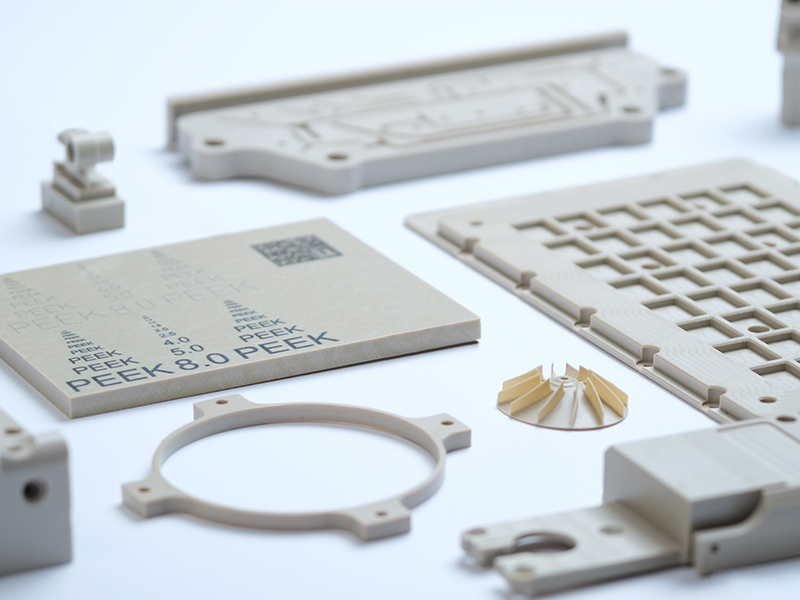
This article aims to provide a comprehensive overview of the revolutionary applications of PEEK plastic material across different industries. From aerospace and automotive to medical and electronics, we will explore how this versatile material transforms these sectors with its remarkable performance capabilities.
The Versatility of PEEK Plastic Material
PEEK plastic is known for its outstanding versatility and exceptional properties. Let’s delve into some key characteristics that make it an ideal choice for various applications:
- High-Temperature Resistance: One of the standout features of PEEK plastic is its ability to withstand extreme temperatures. It can operate continuously at temperatures up to 260°C (500°F) without losing its mechanical properties or degrading chemically.
- Mechanical Strength: PEEK exhibits impressive mechanical strength and stiffness, making it suitable for demanding applications where structural integrity is crucial.
- Chemical Resistance: This material is excellently resistant to chemicals such as acids, bases, solvents, fuels, and radiation exposure.
- Low Friction Coefficient: With a low friction coefficient comparable to that of lubricated metals like steel or brass, PEEK reduces wear and tear while improving the efficiency of moving parts.
- Biocompatibility: Due to its biocompatible nature, PEEK is ideal for medical applications where compatibility with human tissues is vital.
- Electrical Insulation Properties: PEEK is widely used in electrical and electronic applications due to its high dielectric strength and low moisture absorption.
With these remarkable properties, it’s no wonder that PEEK plastic is widely used in various industries. Below, we’ll explore some of the revolutionary applications of this material.
Aerospace Industry: Lightweight Solutions for Enhanced Performance
The aerospace industry demands lightweight materials to withstand extreme conditions and improve fuel efficiency. PEEK plastic has emerged as an excellent choice for various aerospace applications:
- Aircraft Interiors: PEEK’s ability to meet stringent flammability standards makes it a preferred material for aircraft interiors. It is used in seating systems, ducting, insulation panels, and cabin interiors.
- Engine Components: With its high-temperature resistance and mechanical strength, PEEK is employed in engine components like seals, gaskets, thrust washers, bearings, and compressor parts.
- Aircraft Structural Parts: PEEK’s lightweight nature reduces weight in aircraft structural parts without compromising strength or durability.
Automotive Industry: Advancing Performance and Efficiency
In the automotive sector, where performance and efficiency are paramount concerns, PEEK plastic offers several advantages:
- Engine Components: Similar to aerospace applications, PEEK is used in various engine components such as piston rings, valve seats/inserts, connectors/seals for turbochargers, and exhaust systems due to its ability to withstand high temperatures and chemical resistance.
- Electrical Systems: Electric vehicles are becoming more popular globally due to their eco-friendly nature, and the demand for reliable electrical systems is also increasing. Thanks to its excellent electrical insulation properties and resistance against thermal degradation under high voltage conditions, PEEK has become an ideal choice for connectors/plugs within these systems.
- Interior Applications: In vehicle interiors where weight reduction is crucial without compromising safety or aesthetics, manufacturers utilize the lightweight yet robust characteristics of PEEK for components such as seat frames, door handles, and dashboard parts.
Medical Sector: Transforming Healthcare Solutions
PEEK plastic has revolutionized the medical industry with its exceptional biocompatibility and sterilization compatibility. Here are some notable applications:
- Orthopedic Implants: PEEK’s biocompatible nature, strength, and radiolucency make it an ideal material for orthopedic implants such as spinal cages, joint replacements, and trauma fixation devices.
- Dental Applications: PEEK is used in dental prosthetics like crowns and bridges due to its excellent esthetics, durability, resistance to wear against natural teeth, and biocompatibility with oral tissues.
- Surgical Instruments: The lightweight nature of PEEK, combined with its chemical resistance, makes it a preferred choice for surgical instruments that require autoclaving or repeated sterilization cycles.
- Medical Devices: From catheters and pacemaker components to drug delivery systems and diagnostic equipment housings, PEEK enables the development of advanced medical devices that meet stringent regulatory requirements while enhancing patient care.
Electronics Industry: Enabling Technological Innovations
In the ever-evolving electronics industry, where miniaturization is critical, PEEK plays a crucial role in enabling technological innovations:
- Printed Circuit Boards (PCBs): With their excellent electrical insulation properties and high-temperature resistance, PEEK is used as PCB substrates, providing stability under extreme conditions while ensuring signal integrity.
- Connectors/Plugs: Due to their high dielectric strength and chemical resistance, PEEK connectors/plugs help maintain reliable electrical connections in electronic devices, even in harsh environments or when exposed to aggressive substances.
- Insulation Components: In power electronics applications with critical thermal management, PEEK insulating materials help dissipate heat effectively while providing electrical insulation between circuit board components.
PEEK plastic has emerged as a revolutionary material that is transforming various industries by providing exceptional performance capabilities across different sectors. Its unique combination of mechanical strength, chemical resistance, thermal stability, biocompatibility, and electrical insulation properties have made it indispensable in aerospace engineering, automotive manufacturing, medical advancements, and electronics innovations. From reducing weight and improving fuel efficiency in aircraft and automobiles to enhancing patient care with biocompatible orthopedic implants and medical devices, PEEK plastic continues to push the boundaries of what is possible.
As industries continue to evolve and demand increasingly high-performance materials, PEEK will undoubtedly play a vital role in driving innovation and finding new applications. With its versatility, reliability, and remarkable properties, PEEK plastic has become a game-changer that opens up new possibilities for technological advancements across multiple sectors.
Frequently Asked Questions (FAQs)
- Q: What are the advantages of using PEEK plastic over other materials?
A: PEEK offers advantages such as high-temperature resistance, exceptional mechanical properties, chemical resistance, low friction coefficient, biocompatibility, and electrical insulation. These qualities make it ideal for various industries requiring superior performance. - Q: Is PEEK plastic environmentally friendly?
A: PEEK plastic is considered environmentally friendly as it can be recycled and reused multiple times without losing its performance properties. Additionally, its lightweight nature contributes to fuel efficiency in transportation applications. - Q: How does PEEK compare to metal alloys regarding weight reduction?
A: Compared to metal alloys like steel or aluminum, PEEK plastic reduces weight while maintaining strength and stiffness. This makes it attractive for industries seeking lightweight solutions without compromising performance. - Q: Can PEEK withstand sterilization processes used in medical applications?
A: One of the remarkable features of PEEK is its ability to withstand repeated sterilization cycles commonly employed in medical applications such as autoclaving or ethylene oxide sterilization. - Q: Is PEEK suitable for high-frequency electronic applications?
A: Absolutely! The excellent electrical insulation properties and low dielectric loss tangent make PEEK a preferred material for high-frequency electronic applications where signal integrity is crucial.