by Sara McCaslin, PhD Sara McCaslin, PhD No Comments

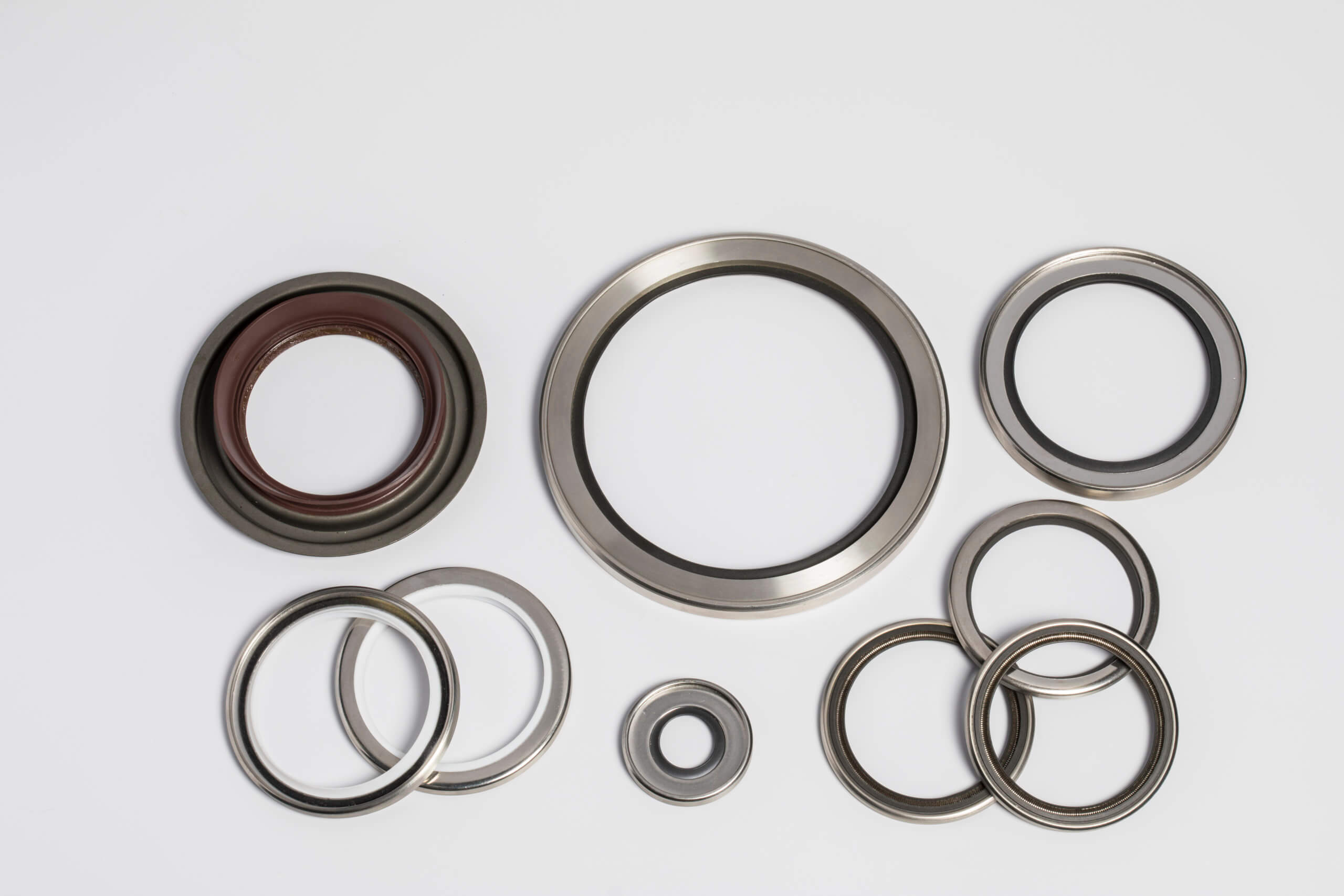
How PTFE and PEEK Enable Reliable Sealing Across Extreme Media

In the world of advanced sealing, few materials can match the resilience and versatility of PTFE and PEEK. When systems operate at temperatures below –200 °C or handle chemicals capable of dissolving most polymers, seal failure is not an inconvenience—it’s a critical risk. In such environments, the combination of PTFE and PEEK enable reliable sealing performance that remains stable, predictable, and long-lived.

This blog post focuses on key features of PTFE and PEEK that make their sealing solutions a good choice for extreme media and reviews applications where these materials excel.

The Challenge of Sealing Across Opposing Extremes

Designing a seal for cryogenic and/or corrosive service is an exercise in contradiction. At extremely low temperatures, most polymers become brittle and lose their ability to conform to mating surfaces. Under high heat or chemical exposure, others swell, creep, or break down at the molecular level. Even metals typically  lack the elasticity or chemical resistance required for tight dynamic sealing.

True reliability comes from materials that can maintain their properties across this spectrum—retaining flexibility near absolute zero while withstanding oxidative and acidic environments at elevated temperatures. This is precisely where PTFE and PEEK excel.

PTFE: The Chemical Inertness Benchmark

Polytetrafluoroethylene (PTFE) serves ast the industry standard for chemical resistance and thermal stability. With its fully fluorinated carbon chain forms, PTFE is one of the most inert polymer molecular structures known. It is impervious to nearly all solvents, acids, and bases. Its operating range is from –250 °C to +260 °C, and PTFE is able to maintain low friction and minimal surface adhesion even in the harshest conditions.

In dynamic seals, its extremely low friction and self-lubrication allows results in lower torque, reduced stick-slip, and minimal wear against counterfaces. In addition, cryogenic engineers value PTFE’s ability to retain elasticity at temperatures that render most elastomers and many polymers extremely brittle. In chemical processing, it functions as a barrier material, protecting metallic components from corrosive attack.

However, unfilled PTFE has its limits. Under continuous load, it can creep or cold-flow, gradually losing preload. Engineers address this with fillers such as glass, graphite, carbon, or bronze, with each improving compressive strength and wear resistance. These modifications allow PTFE and PEEK enable reliable sealing designs to meet performance expectations in applications ranging from cryogenic valves to aggressive chemical reactors.

PEEK: Structural Integrity Under Pressure

Polyether ether ketone (PEEK) seems to complement the properties PTFE by offering exceptional mechanical strength and outstanding dimensional stability. Where PTFE provides chemical inertness, PEEK contributes structural endurance. Its semi-crystalline molecular structure gives it tensile strengths exceeding 90 MPa and excellent creep resistance maintained even at continuous temperatures approaching 250 °C.

In sealing systems, PEEK often serves as a backup ring, retaining element, or structural carrier for softer sealing materials. PEEK is excellent at resisting extrusion under high differential pressure and maintains shape when thermal cycling could otherwise deform conventional polymers. Chemically, PEEK withstands regular exposure to hydrocarbons, steam, and strong acids, thus making it indispensable in oil-and-gas and chemical processing environments.

Composite grades filled with carbon fiber, graphite, or PTFE further optimize tribological performance. These blends combine the toughness of PEEK with the low friction and self-lubrication of PTFE, thus ensuring smoother operation dynamic sealing solutions where where friction is critical.

PTFE and PEEK Performance Across Extreme Temperatures and Corrosive Media 

Engineers often use PTFE sealing solutions for operations that involve components, such as cryogenic hydrogen and oxygen valves, where lubrication must persist without freezing or outgassing. On the other hand, PEEK components dominate in high-temperature pumps and compressors exposed to sour gases, acids, or amine-laden fluids. 

Even in vacuum environments, PTFE’s extremely low outgassing helpts to ensure critical contamination-free operation. PEEK’s dimensional stability supports precise alignment and positioning even over extreme temperature ranges. Such mechaniacl properties can translate into longer service life, reduced maintenance cycles, and measurable operational cost savings, all of which are outcomes every engineer values.

Conclusion: Material Science at the Edge of Performance

When the operating conditions involve everything form cryogenic cold to corrosive heat, only a select group of polymers can deliver consistent performance: PTFE and PEEK. One offers unmatched chemical inertness and low friction; the other, exceptional mechanical integrity and pressure resistance. Working independently or in tandem, PTFE and PEEK enable reliable sealing in systems where failure is simply not an option.

For engineers designing valves, compressors, or actuators expected to survive the extremes, these two polymers represent more than material choices—they represent confidence. Through advanced formulations, precision machining, and innovative hybrid geometries, the limits of polymer sealing continue to expand.

by Sara McCaslin, PhD Sara McCaslin, PhD No Comments

Designing Polymer Seals for Dynamic Applications: Balancing Wear, Friction, and Thermal Expansion

Designing polymer seals for dynamic applications can be a challenging task. Polymer seals have proven vital in dynamic applications such as rotary shafts, reciprocating pistons, and oscillating systems. However, dynamic conditions can introduce challenges that are not found in static conditions. These challenges include continuous motion, heat buildup, wear mechanisms, and variable pressures.

This blog post examines three key challenges involved in dynamic sealing: wear, friction, and thermal expansion.

The Role of Polymers in Dynamic Seals

Engineering polymers such as PTFE and PEEK offer several advantages over both traditional metals and elastomeric seals in dynamic systems. Such benefits include outstanding performance even in operating environments that include extreme temperatures and require excellent chemical compatibility and extremely low friction. And engineers can further enhance the most desirable features of these polymers through the use of fillers and blends (e.g., graphite, carbon, bronze, glass, and even PTFE).  Polymer seals are also lightweight and ideal for compact systems where space is limited.

Balancing Wear Resistance

One of the most limiting factors in dynamic seal applications is wear. The three most common wear mechanisms involved are adhesion, abrasion, and fatigue. 

  • Adhesive wear happens when the seal momentarily sticks to the counterface, thus tearing material away from the surface and resulting in material transfer or scoring.
  • Abrasive wear occurs when hard (abrasive) particles or rough surfaces cut into the polymer, creating grooves and accelerating material loss.
  • Fatigue wear takes place when the seal is subject to repeated cyclic stresses that form micro-cracks, eventually leading to surface flaking or spalling.

Polymers can effectively address wear issues. PTFE effectively combines extremely low dynamic friction and excellent self-lubrication. This combination makes it well-suited for high-wear dynamic applications such as piston rings in gas compressors. Another example is the use of PEEK seals in aerospace actuators, where its high resistance and ability to maintain mechanical strength at high temperatures make it an excellent choice for applications involving cycling under high loads.

One of the most effective ways to further improve the wear resistance of PTFE and PEEK dynamic seals would be the use of filled composites, the use of appropriate surface finishes on countersurfaces, and wise design choices that minimize localized stresses.

Managing Friction

Friction is particularly problematic in dynamic seals, as it leads to heat generation, energy loss, and accelerated degradation. This problem leads to a trade-off between achieving an effective sealing force and maintaining low friction. 

PTFE is an excellent example of how low-friction engineering polymers can help achieve this balance. PTFE has the lowest coefficient of friction of any engineering polymer, and is far less than that of metal or elastomers. Its self-lubricating nature keeps friction very low at the shaft-seal interface, which will minimize heat buildup and lost energy. In fact, it can even reduce energy loss during dry running conditions. The strength and modulus of elasticity of PTFE can be modified through the use of fillers and hybrids.

Spring-energized seals, which use a metallic energizer to keep the seal lip in contact with the sealing surface and generate a predictable, consistent load to compensate for problems such as wear, thermal expansion, and pressure changes. As the load is kept within a predictable range, the friction is also kept at consistent levels over a well-distributed sealing force.

Thermal Expansion Considerations

Polymers indeed possess a higher coefficient of thermal expansion when compared to metals and most elastomers. Changes in dimensions can impact clearance, sealing performance, and contact pressure in dynamic sealing applications. In aerospace and automotive applications, for example,  there can be an abundance of extreme temperature cycling, which is going to be especially problematic in rotary shaft seal designs. 

There are several approaches to minimizing the impact of thermal expansion, starting with customized PTFE or PEEK polymer blends with materials that will lower the coefficient of thermal expansion without compromising wear resistance or friction.

The use of spring-energized seals allows the polymeric sealing lip to remain in contact with the sealing surface despite changes in geometry or alignment, whether they are due to wear, thermal expansion, or thermal contraction in the presence of extreme temperature cycling. 

Note that both of these approaches can be further enhanced through predictive modeling of how the seal will deform under thermal stress.

Polymer Seals for Dynamic Applications: Design Best Practices

Here are some straightforward design best practices related to dynamic sealing challenges:

  • Always match the seal geometry to motion type (i.e., rotary vs reciprocating).
  • Carefully consider the allowable surface roughness and hardness of mating surfaces.
  • Respect the PV limit (pressure × velocity) when selecting a polymer.
  • Remember the importance of predictive modeling (finite element analysis for thermal and tribological performance).
  • Always test under real-world operating conditions before full-scale deployment.

Conclusion

Dynamic sealing requires balancing wear, friction, and thermal expansion, with no single solution that fits all. Fortunately, advances in polymer science and composites make it possible to design seals that meet increasingly demanding requirements. However, engineers must still carefully match polymer formulations, energizers, and geometries to the unique conditions of each application.

If you need a dynamic seal for an application, contact the experts at Advanced EMC. Our engineers are very experienced and highly knowledgeable, able to take you all the way from seal design and material selection to testing.