
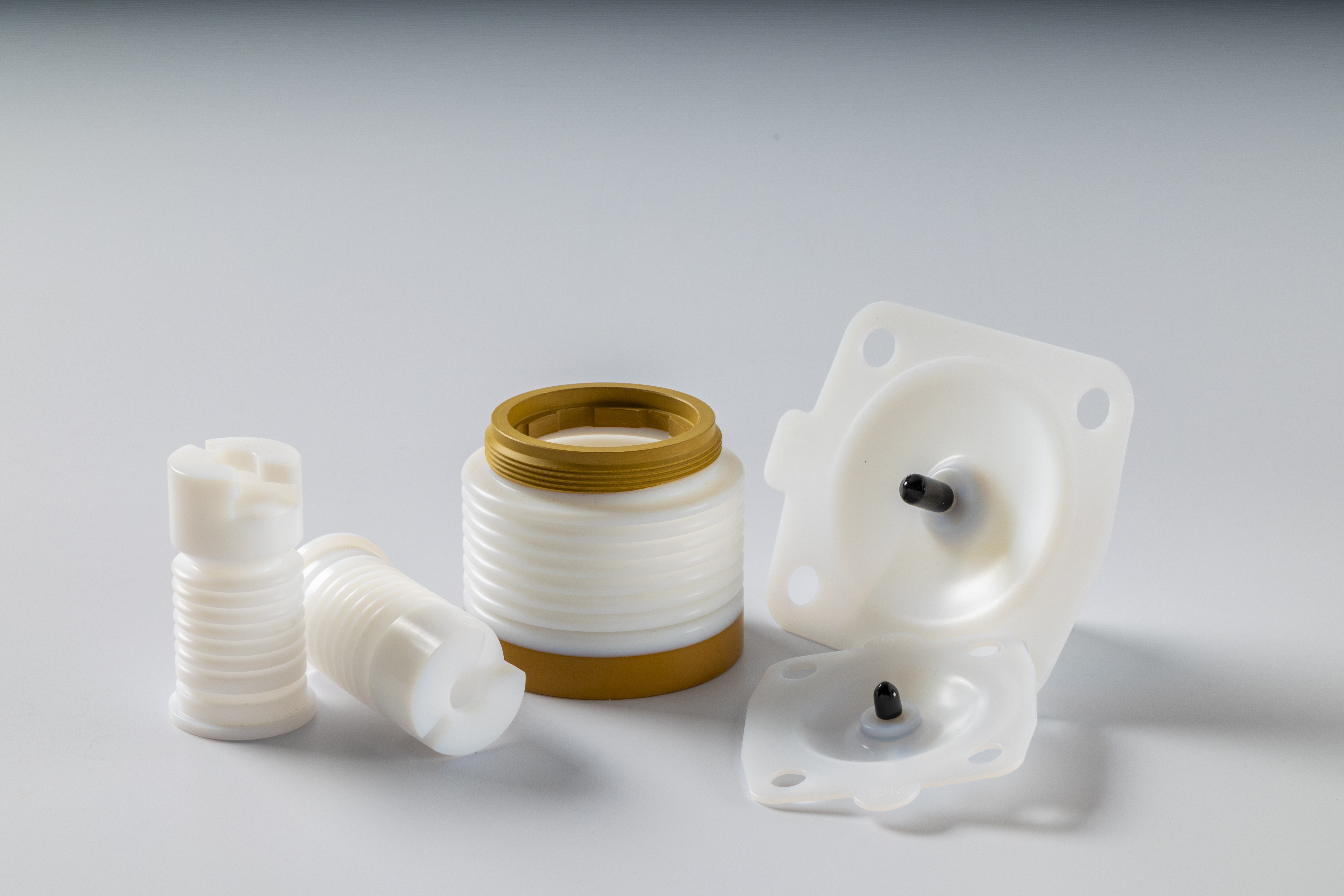
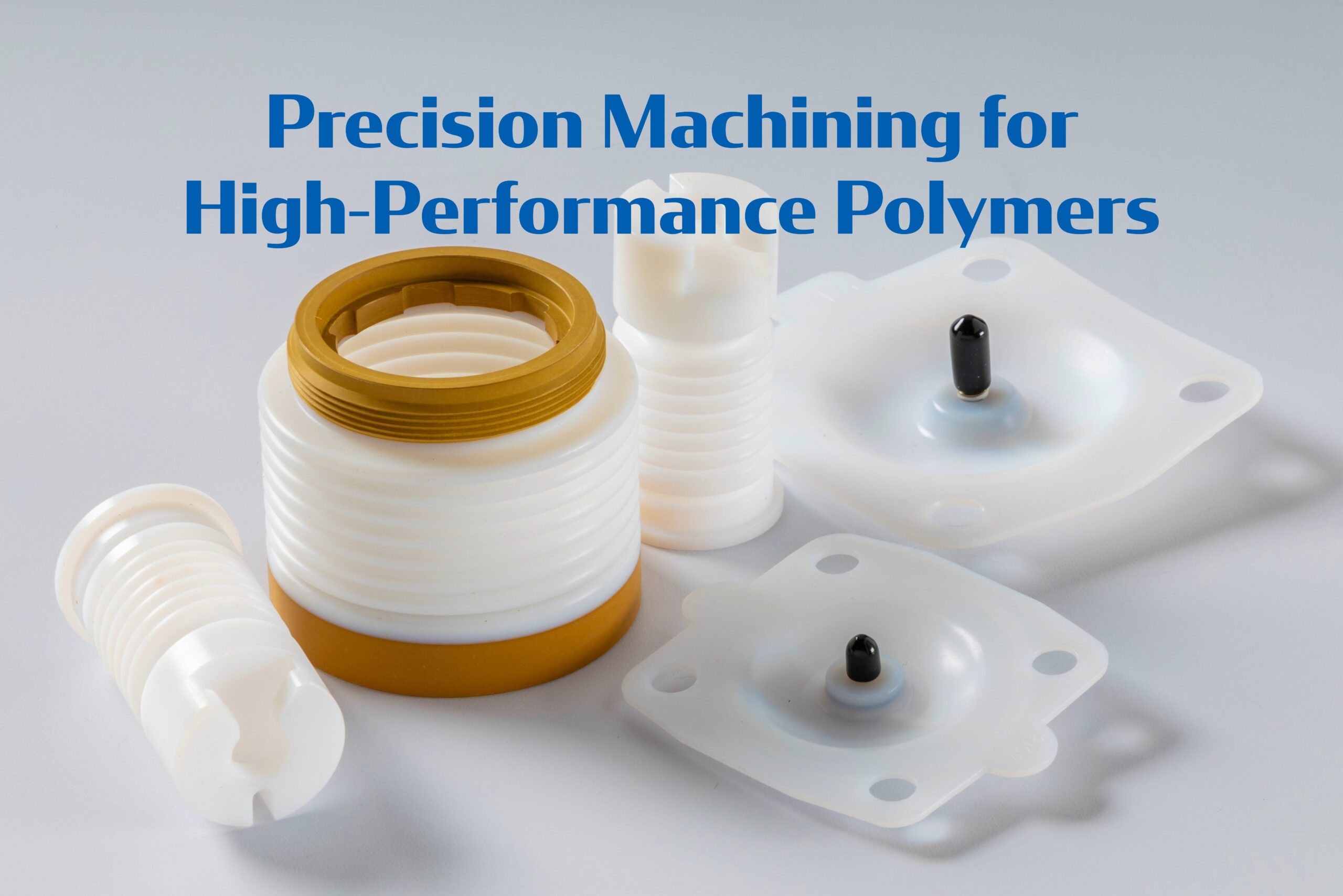
Over the past decade, high-performance polymers such as PEEK, PPS, PTFE, and Ultem have become essential in mission-critical industries. Such industries may require solutions that exhibit chemical resistance, thermal stability, and lightweight strength. Their potential often hinges on precision CNC machining, where even micron-level errors can compromise medical implants, RF components, or semiconductor parts.
This article examines the distinct machining challenges presented by these polymers compared to metals, providing engineering-focused insights and best practices to help translate advanced material properties into reliable, manufacturable components.
Precision Machined Polymer Components: From Niche to Necessity
At one time, polymer components were considered second-tier alternatives to metal and were deemed acceptable only for non-load-bearing or chemically inert roles. That era is over. Today’s advanced engineered plastics routinely outperform metals in applications where weight, corrosion resistance, dielectric properties, and thermal stability are critical.
In aerospace, polymers such as PEEK and PEI are replacing aluminum and titanium in components where vibration damping, flame resistance, and lightweighting are crucial. In the semiconductor industry, materials such as PCTFE and PTFE are used for fluid handling and wafer processing, where purity, chemical resistance, and dimensional stability must be maintained across extreme temperature fluctuations. And in the medical device space, biocompatible plastics are being machined into implantable components with sub-millimeter precision.
In these contexts, injection molding isn’t always a viable solution. CNC machining offers the flexibility to prototype and produce low- to mid-volume parts while meeting tight tolerances and surface finish requirements that molded parts may struggle to achieve. For polymer components that demand complex geometries, micron-level precision, and fast iteration cycles, machining isn’t just an option—it’s a necessity.
CNC Precision Machining of Polymers: Capabilities and Constraints
CNC machining has long been associated with metals, but its application to advanced polymers has opened up new possibilities for high-precision plastic components. While the basic principles remain the same—computer-controlled removal of material via turning, milling, drilling, or routing—the behavior of polymers under machining conditions differs significantly from that of metals, and these differences can have critical implications in manufacturing.
Polymers like PEEK, Ultem, and Delrin respond differently to heat and mechanical stress than aluminum or steel. Their relatively low thermal conductivity means that heat builds up at the cutting interface, which can lead to softening, dimensional drift, or even surface deformation. This makes toolpath design, spindle speed, and chip evacuation critical—not just for productivity but also for part quality.
Another key distinction is in workholding and fixturing. Many engineered plastics are susceptible to creep and stress relaxation, especially under prolonged clamping pressure. For parts that demand tolerances within ±0.001″, overly aggressive clamping can introduce distortion that doesn’t present until after the part is removed from the fixture. Engineers and machinists must account for this during both part design and process planning.
Despite these challenges, CNC machining remains one of the most effective methods for manufacturing complex, low- to mid-volume polymer components. It supports the kind of geometries, material-specific clearances, and surface finish requirements often found in medical implants, semiconductor tooling, or aerospace applications—where injection molding simply can’t deliver the needed precision.
Common Challenges in Machining High-Performance Plastics
Several common challenges exist in relation to the CNC machining of advanced polymers.
Thermal Sensitivity and Dimensional Drift: Unlike metals, high-performance polymers have low thermal conductivity and relatively high coefficients of thermal expansion. This means that even minor heat buildup at the cutting zone can cause localized softening, leading to warping, dimensional drift, or loss of tolerance. The best approach to mitigation is the use sharp tools, moderate feeds, and high chip evacuation rates to minimize heat accumulation.
Chip Control and Surface Quality: Polymers often produce long, stringy chips that can rewrap around the tool or interfere with surface finish. To minimize the effects, machinists can optimize tool geometry for plastic cutting (e.g., positive rake angles, polished flutes) and adjust parameters to encourage chip breakage.
Workholding Without Distortion: Polymers are more elastic and less stiff than metals, which makes them susceptible to deformation under clamping pressure. Design fixtures can be designed to provide support without excessive force, and the use soft jaws, vacuum fixtures, or conformal fixturing can also help.
Burr Formation and Deburring Difficulty: Some polymers tend to form fibrous burrs that are resistant to mechanical removal. This can be addressed by choosing cutting strategies that minimize burrs, and cryogenic deburring may be an option for batch processing burr-prone parts.
Contamination Control: In cleanroom and medical applications, particulate generation or residual lubricants can be unacceptable. This can be mitigated through the use of dry machining protocols, HEPA filtration, and cleanroom-ready packaging when required.
Common Challenges in Machining High-Performance Plastics
Several common challenges exist in relation to the CNC machining of advanced polymers.
Thermal Sensitivity and Dimensional Drift: Unlike metals, high-performance polymers have low thermal conductivity and relatively high coefficients of thermal expansion. This means that even minor heat buildup at the cutting zone can cause localized softening, leading to warping, dimensional drift, or loss of tolerance. The best approach to mitigation is the use sharp tools, moderate feeds, and high chip evacuation rates to minimize heat accumulation.
Chip Control and Surface Quality: Polymers often produce long, stringy chips that can rewrap around the tool or interfere with surface finish. To minimize the effects, machinists can optimize tool geometry for plastic cutting (e.g., positive rake angles, polished flutes) and adjust parameters to encourage chip breakage.
Workholding Without Distortion: Polymers are more elastic and less stiff than metals, which makes them susceptible to deformation under clamping pressure. Design fixtures can be designed to provide support without excessive force, and the use soft jaws, vacuum fixtures, or conformal fixturing can also help.
Burr Formation and Deburring Difficulty: Some polymers tend to form fibrous burrs that are resistant to mechanical removal. This can be addressed by choosing cutting strategies that minimize burrs, and cryogenic deburring may be an option for batch processing burr-prone parts.
Contamination Control: In cleanroom and medical applications, particulate generation or residual lubricants can be unacceptable. This can be mitigated through the use of dry machining protocols, HEPA filtration, and cleanroom-ready packaging when required.
Lack of Collaboration Between Design and Machining Teams: One of the most common causes of part failure is a disconnect between design intent and manufacturing reality. Designers who understand machining constraints can proactively reduce revisions, while machinists with insight into application needs can deliver parts that function flawlessly in the field. Early collaboration around material selection, fixturing strategy, and critical dimensions dramatically improves both quality and efficiency.
Looking Ahead: Precision Polymers and the Next Generation of Innovation
The next wave of applications—EVs, microfluidics, space systems—demands more from polymer machining than ever before. Smaller, cleaner materials, faster cycles. CNC machining, especially when combined with new hybrid and additive approaches, will be crucial in bridging the gap between cutting-edge designs and reliable, real-world parts. Sustainability and innovation will go hand-in-hand.
Conclusion
Precision machining of high-performance polymers is no longer a specialized exception—it’s fast becoming the norm across advanced industries. Success in this space requires a deep understanding of processes, material knowledge, and cross-functional collaboration. When engineers and machinists align, exceptional parts follow.
If your team is working with high-performance polymers, now’s the time to elevate your machining strategy. Talk with your machinists early. Share your design requirements clearly. And seek out partners who specialize in translating polymer behavior into precision parts.
At Advanced EMC, we continue to invest in the materials knowledge, process controls, and engineering communication that make precision polymer machining repeatable—even for the most challenging parts. Let’s build something exceptional, together.
