
by Sara McCaslin, PhD Sara McCaslin, PhD No Comments

Designing Polymer Seals for Dynamic Applications: Balancing Wear, Friction, and Thermal Expansion

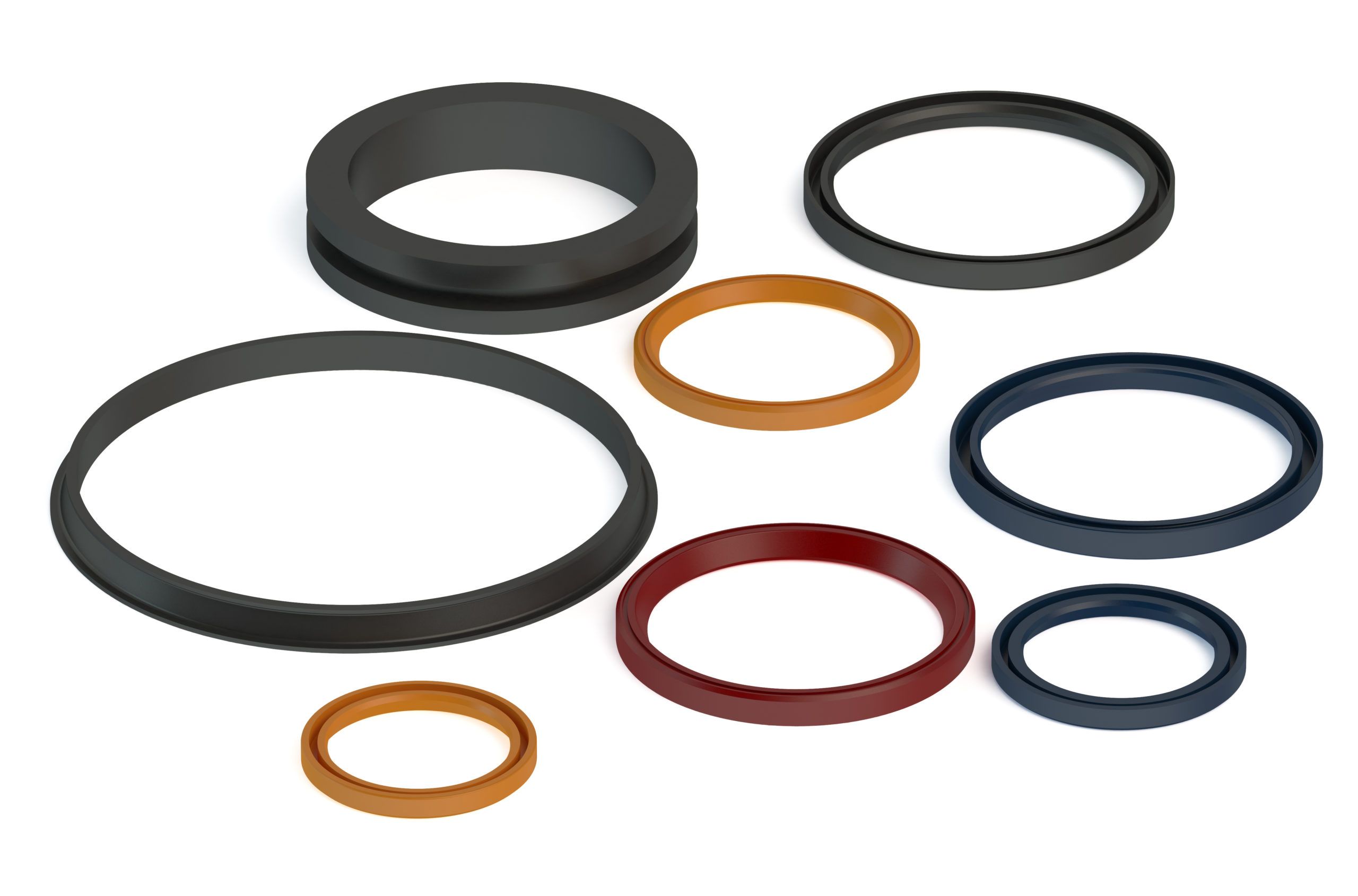
Designing polymer seals for dynamic applications can be a challenging task. Polymer seals have proven vital in dynamic applications such as rotary shafts, reciprocating pistons, and oscillating systems. However, dynamic conditions can introduce challenges that are not found in static conditions. These challenges include continuous motion, heat buildup, wear mechanisms, and variable pressures.

This blog post examines three key challenges involved in dynamic sealing: wear, friction, and thermal expansion.

The Role of Polymers in Dynamic Seals

Engineering polymers such as PTFE and PEEK offer several advantages over both traditional metals and elastomeric seals in dynamic systems. Such benefits include outstanding performance even in operating environments that include extreme temperatures and require excellent chemical compatibility and extremely low friction. And engineers can further enhance the most desirable features of these polymers through the use of fillers and blends (e.g., graphite, carbon, bronze, glass, and even PTFE).  Polymer seals are also lightweight and ideal for compact systems where space is limited.

Balancing Wear Resistance

One of the most limiting factors in dynamic seal applications is wear. The three most common wear mechanisms involved are adhesion, abrasion, and fatigue. 

  • Adhesive wear happens when the seal momentarily sticks to the counterface, thus tearing material away from the surface and resulting in material transfer or scoring.
  • Abrasive wear occurs when hard (abrasive) particles or rough surfaces cut into the polymer, creating grooves and accelerating material loss.
  • Fatigue wear takes place when the seal is subject to repeated cyclic stresses that form micro-cracks, eventually leading to surface flaking or spalling.

Polymers can effectively address wear issues. PTFE effectively combines extremely low dynamic friction and excellent self-lubrication. This combination makes it well-suited for high-wear dynamic applications such as piston rings in gas compressors. Another example is the use of PEEK seals in aerospace actuators, where its high resistance and ability to maintain mechanical strength at high temperatures make it an excellent choice for applications involving cycling under high loads.

One of the most effective ways to further improve the wear resistance of PTFE and PEEK dynamic seals would be the use of filled composites, the use of appropriate surface finishes on countersurfaces, and wise design choices that minimize localized stresses.
Managing Friction

Friction is particularly problematic in dynamic seals, as it leads to heat generation, energy loss, and accelerated degradation. This problem leads to a trade-off between achieving an effective sealing force and maintaining low friction. 

PTFE is an excellent example of how low-friction engineering polymers can help achieve this balance. PTFE has the lowest coefficient of friction of any engineering polymer, and is far less than that of metal or elastomers. Its self-lubricating nature keeps friction very low at the shaft-seal interface, which will minimize heat buildup and lost energy. In fact, it can even reduce energy loss during dry running conditions. The strength and modulus of elasticity of PTFE can be modified through the use of fillers and hybrids.

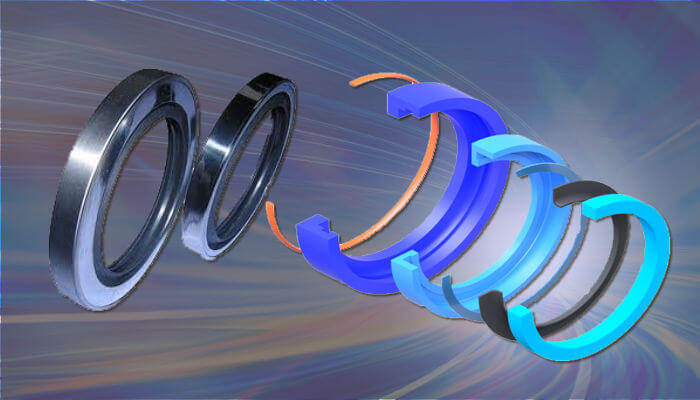
Spring-energized seals, which use a metallic energizer to keep the seal lip in contact with the sealing surface and generate a predictable, consistent load to compensate for problems such as wear, thermal expansion, and pressure changes. As the load is kept within a predictable range, the friction is also kept at consistent levels over a well-distributed sealing force.

Thermal Expansion Considerations

Polymers indeed possess a higher coefficient of thermal expansion when compared to metals and most elastomers. Changes in dimensions can impact clearance, sealing performance, and contact pressure in dynamic sealing applications. In aerospace and automotive applications, for example,  there can be an abundance of extreme temperature cycling, which is going to be especially problematic in rotary shaft seal designs. 

There are several approaches to minimizing the impact of thermal expansion, starting with customized PTFE or PEEK polymer blends with materials that will lower the coefficient of thermal expansion without compromising wear resistance or friction.

The use of spring-energized seals allows the polymeric sealing lip to remain in contact with the sealing surface despite changes in geometry or alignment, whether they are due to wear, thermal expansion, or thermal contraction in the presence of extreme temperature cycling. 

Note that both of these approaches can be further enhanced through predictive modeling of how the seal will deform under thermal stress.

Polymer Seals for Dynamic Applications: Design Best Practices

Here are some straightforward design best practices related to dynamic sealing challenges:

  • Always match the seal geometry to motion type (i.e., rotary vs reciprocating).
  • Carefully consider the allowable surface roughness and hardness of mating surfaces.
  • Respect the PV limit (pressure × velocity) when selecting a polymer.
  • Remember the importance of predictive modeling (finite element analysis for thermal and tribological performance).
  • Always test under real-world operating conditions before full-scale deployment.

Conclusion

Dynamic sealing requires balancing wear, friction, and thermal expansion, with no single solution that fits all. Fortunately, advances in polymer science and composites make it possible to design seals that meet increasingly demanding requirements. However, engineers must still carefully match polymer formulations, energizers, and geometries to the unique conditions of each application.

If you need a dynamic seal for an application, contact the experts at Advanced EMC. Our engineers are very experienced and highly knowledgeable, able to take you all the way from seal design and material selection to testing.

by Sara McCaslin, PhD Sara McCaslin, PhD No Comments

How Polymer Bearings Improve Efficiency in Electrified Systems

Polymer bearings improve efficiency in electrified systems by minimizing frictional losses, reducing maintenance demands, and enabling more compact, lightweight designs. Increasing electrification across transportation, robotics, aerospace, and industrial automation demands components that can sustain high performance in small spaces. In compact, high-speed electric systems, traditional metallic or lubricated bearings can increase drag, require more maintenance, and add unnecessary weight. 

In this blog post, we discuss how PTFE plane bearings deliver measurable efficiency gains by reducing friction, eliminating external lubrication, and enhancing durability under demanding operating conditions.

The Role of Bearings in Electrified Systems

Bearings play a pivotal role in electrified systems, supporting rotating shafts, actuators, and linkages while minimizing friction and wear. Their role in maintaining high precision shaft alignment for rotor-stator clearance and impacting electromagnetic efficiency cannot be overstated. 

Bearings have a significant impact on system efficiency. As far as energy loss pathways, polymer bearings offer reduced friction, generate less heat, and can avoid issues with lubrication drag when self-lubricating polymers are used. This understanding is crucial for designing high-efficiency electrified systems.

It’s important to remember that higher friction leads to a loss of energy, which manifests as heat generation. This can be critical to efficiency in many motor-driven applications. However, with the use of polymer bearings, particularly those made from PTFE, this energy loss can be significantly reduced, offering a promising future for your systems. 

PTFE as a Bearing Material for High-Efficiency Electrified Systems

PTFE is an excellent choice as a material for plane bearings. It exhibits an exceptionally low coefficient of friction (both static and dynamic), operates over a broad temperature range that includes both cryogenic and high ranges (-200°C to +260°C), and is chemically inert to coolants, dielectric fluids, and environmental contaminants.

Related to its extremely low coefficient, there are other tribological advantages. For example, PTFE has a very low stick-slip tendency, even at low speeds or when oscillatory motion is involved. It is naturally self-lubricating, and that can be enhanced or tailored through the use of embedded solid lubricants or fillers.

PTFE also has excellent electrical insulation properties that prevent stray current corrosion. And its non-magnetic nature eliminates the potential of it causing EMI interference in sensitive electronic systems.

Optimized PTFE Formulations 

Several different fillers and formulations for PTFE can enhance specific properties. 

Glass-Filled PTFE

Glass-fileld PTFE possesses increased wear resistance under high-load, low-speed applications and also has improved dimensional stability for operations that involve thermal cycling.

Carbon-Filled PTFE

When filled with carbon fibers, PTFE will have a higher compressive strength and improved thermal conductivity for heat dissipation. This type of filled PTFE is also suitable for high PV (pressure × velocity) values in compact electric drive systems.

Bronze-Filled PTFE

Bronze-fileld PTFE has an enhanced load capacity but at the cost of slightly higher friction. Such trade-offs are often required for torque-heavy systems.

Graphite or MoS₂-Filled PTFE

This type of filled PTFE is optimized for dry-running, high-frequency reciprocation without lubrication.

Hybrid Composites

Hybrid composites are multi-filler systems that can achieve combined strength, low wear, and static dissipation.

How Polymer Bearings Improve Efficiency in Electrified Systems

Reduction of Frictional Losses

High-performance polymer bearings exhibit coefficients of friction as low as 0.05–0.15, versus 0.35–0.60 for bronze. This lower drag reduces torque demand in electric motors, extending battery life in EVs and robotics, increasing range, and allowing smaller battery packs without performance loss.

Thermal Efficiency

Less friction means less heat. Polymer bearings ease cooling system demands, enabling smaller, lighter thermal management components. Lower temperatures maintain dimensional stability under continuous duty, extending service life and preventing heat-related failures.

No External Lubrication Requirement

Self-lubricating polymers eliminate grease and oil, removing parasitic drag from lubricant shear in high-speed applications. In automation, this reduces maintenance, prevents contamination, and increases uptime by simplifying bearing service.

Design Considerations for Maximizing Bearing Efficiency

The table below discusses some of the key design considerations when seeking to maximize the efficiency of PTFE plane bearings.

Design FactorKey ParametersBest Practices
Load and Speed RatingsPV limits vary by PTFE formulation: Virgin PTFE ~1,000–3,000 psi·ft/min (continuous), Filled PTFE 4,000–10,000+ psi·ft/min (continuous). Intermittent operation allows higher PV.Select formulation based on duty cycle; verify continuous PV ratings for heat management; consult material data sheets.
Thermal Expansion ManagementCTE: ~100–200 × 10⁻⁶/°C (several times higher than metals).Design housings for CTE mismatch; use press-fit for stable conditions, interference-fit for high load, adhesive bonding for thermal cycling or shock loads.
Shaft Surface Finish and HardnessRa: 8–16 µin (0.2–0.4 µm). Hardness: ≥55–60 HRC.Maintain Ra within range for transfer film adhesion; use hardened stainless steel, hard-chromed steel, or ceramic coatings.
Electrical IsolationPTFE is inherently dielectric and is used to prevent ground loops in motors.Maintain insulation integrity in housings; use insulating sleeves, washers, or barriers under load and vibration.

Applications Where Polymer Bearings Improve Efficiency

PTFE bearings in planetary gearsets and cooling pumps cut frictional losses, reduce parasitic drag, and extend service life—boosting drivetrain efficiency without complex lubrication systems.

Dry-running PTFE bushings in flap, trim, and thrust control actuators for aerospace applications significantly reduce weight, eliminate lubrication hardware, and deliver consistent torque across extreme temperatures.

In compact gearboxes for robotics and automation, PTFE bearings lower inertia and friction, enabling smaller motors, faster cycle times, and improved positional accuracy in high-speed automation.

In wind turbine yaw and pitch systems, PTFE bearings provide low-friction rotation, corrosion resistance, and electrical isolation to protect control electronics and improve responsiveness.

Conclusion

Polymer bearings, especially those manufactured from PTFE, can help improve the efficiency of electrified systems. Their extremely low friction, self-lubrication, and wide temperature range are direct benefits. And the performance of PTFE bearings can be customized through the use of fillers and hybrids.

If you’re considering PTFE as an option for plane bearings in an electrified system, contact Advanced EMC. Our engineers are ready to work with you to find the correct bearing solution for your design.