
by Daniel Mays Daniel Mays No Comments

What Sets Flexforce Canted Coil Springs Apart in High-Performance Applications

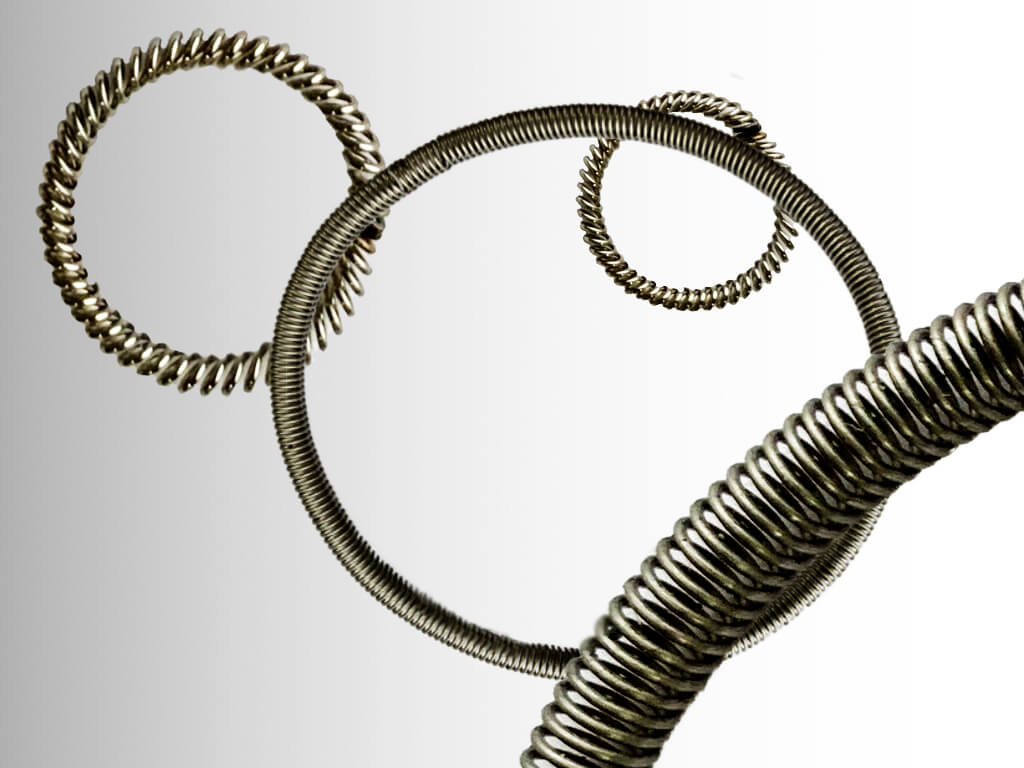
Canted coil springs, also known as slant coil springs, may be small in size, but their impact on engineering performance is substantial. Designed for multifunctionality, these springs serve critical roles in sealing, conductivity, mechanical latching, and load management. Flexforce, a proprietary line of canted coil springs offered by Advanced EMC Technologies, stands out for its exceptional precision, reliability, and adaptability across high-performance applications. 

This article examines the distinctive features of Flexforce springs and what distinguishes them in various industries, including aerospace and medical devices.

What Are Canted Coil Springs? 

Canted coil springs are composed of coils that are slanted (or canted) relative to the spring’s longitudinal axis, creating a unique geometry that enables uniform load behavior, consistent deflection characteristics, and multiple functional capabilities. Unlike more traditional springs, canted coil springs can maintain contact under highly variable tolerances and can be engineered for precise load-deflection profiles. Their design allows them to serve in sealing systems, act as conductive elements, enable mechanical locking mechanisms, and support high-cycle dynamic motion.

Defining the Flexforce Canted Coil Spring Difference

What makes Flexforce canted coil springs different? Here are five specific areas where the Flexforce makes a significant difference.

Precision Engineering and Manufacturing

Flexforce canted coil springs are produced with attention to consistency and quality. Advanced EMC Technologies employs precision manufacturing methods that ensure uniform coil spacing, tight dimensional tolerances, and high precision. This level of control is essential for mission-critical industries such as aerospace and medical devices, where even minor performance variation can result in system failure or safety risks.

Exceptional Load Control and Deflection Behavior

One of the key differentiators of Flexforce springs is their ability to maintain a nearly constant load across a wide range of deflection. This load-deflection stability enables engineers to design systems with predictable force behavior, whether under static compression, dynamic cycling, or thermal expansion. Flexforce springs can also be tailored to specific load profiles, ensuring optimal functionality in high-precision assemblies.

Multi-Functional Capabilities

Flexforce canted coil springs serve multiple roles within a single system. They provide spring-energizing force in sealing systems, enhancing the performance of PTFE and other polymer-based seals in extreme conditions. Additionally, they enable electrical conductivity, critical in applications such as EMI/RFI shielding and battery grounding. Their design also supports mechanical retention and latching, allowing for easy assembly and disassembly in components requiring secure but removable connections.

Customization and Material Versatility

Flexforce springs are available in a range of materials, including stainless steel, Elgiloy®, Hastelloy®, and other high-performance alloys. These materials offer varying levels of corrosion resistance, strength, and temperature tolerance. For applications requiring electrical conductivity or specialized environments, coatings can be applied to enhance performance. Flexforce also offers custom spring geometries and load curves to meet the unique demands of each application.

Design and Integration Advantages

Flexforce springs are designed with integration in mind. Their compact size and flexible design parameters allow engineers to incorporate them into existing designs without extensive modifications. Assembly is simplified, resulting in reduced labor time and costs. Additionally, their high reliability lowers maintenance needs and extends service intervals, which is particularly important in industries where downtime is costly.

FlexForce™ canted coil springs by Advanced EMC Technologies offer versatile solutions across multiple industries.

Flexforce Canted Coil Spring Performance in Critical Industries

Medical Devices

In medical technology, miniaturization and reliability are non-negotiable. Flexforce springs meet these demands with high precision and cleanliness. Their ability to function reliably in compact designs with low particulate generation makes them suitable for use in surgical robotics, implantable devices, diagnostic tools, and precision instruments. Biocompatible materials and cleanroom-friendly manufacturing further position Flexforce as a leader in medical spring solutions.

Aerospace and Space Exploration

Flexforce springs are engineered for the extreme conditions of aerospace and space applications. They operate reliably under vacuum conditions, extreme temperatures, and mechanical vibrations. In spacecraft and satellite systems, they are commonly used in spring-energized seals, electrical connectors, and latch mechanisms. Their high cycle life and performance under thermal and mechanical stress ensure continued operation in environments where failure is not an option.

Renewable Energy and EV Applications

In the renewable energy and electric vehicle (EV) sectors, Flexforce springs are utilized to manage electrical pathways, ensure electromagnetic interference (EMI) shielding, and support mechanical functions in high-vibration environments. Their resistance to fatigue and consistent load behavior make them ideal for dynamic systems, including battery packs, connectors, and control units. As EV and renewable energy technologies continue to advance, the demand for robust, multifunctional spring components, such as Flexforce, will only increase.

Why Engineers Choose Flexforce Canted Coil Springs

Engineers and OEMs choose Flexforce canted coil springs due to their proven performance and adaptability. Advanced EMC supports its Flexforce product line with engineering consultation, custom design services, and rigorous quality assurance. Whether the need is for a high-reliability seal in space or a low-resistance conductive spring in a medical device, Flexforce provides a dependable solution that can be tailored to meet exact specifications.

Conclusion 

Flexforce canted coil springs are more than just components—they are enablers of performance, reliability, and innovation across high-stakes industries. Their precision construction, multi-functional capabilities, and customizability set them apart in the world of engineered spring solutions. For engineers seeking consistent performance under extreme conditions, Flexforce delivers. Contact Advanced EMC Technologies to learn how Flexforce springs can elevate your next high-performance design.
by Daniel Mays Daniel Mays No Comments

Wear and Friction in Polymer Bearings

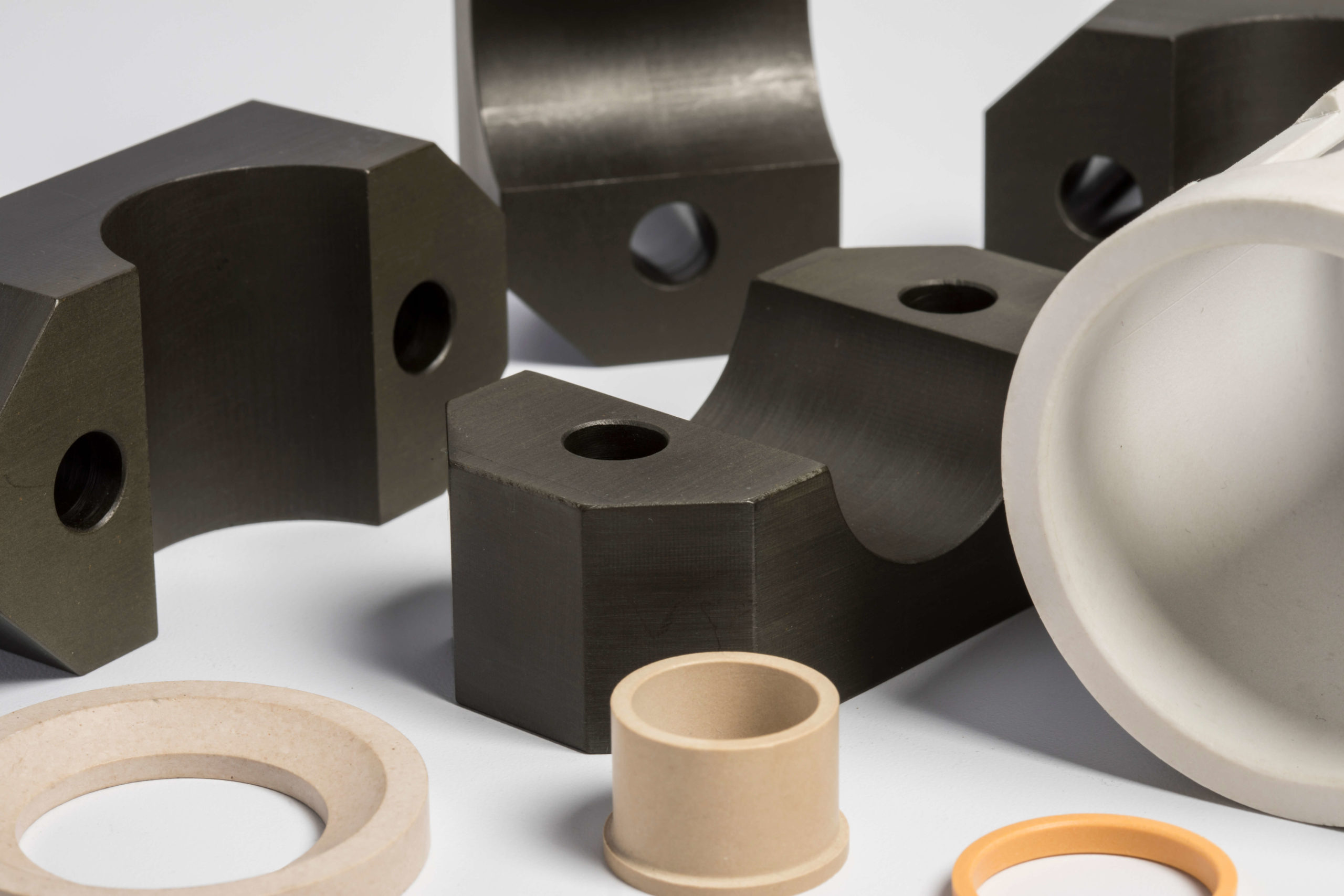
When bearings fail, friction and wear are often the primary causes. Friction and wear in polymer bearings are critical factors in their design and performance. In fact, friction and wear influence everything from energy efficiency to service life. 

In this article, we examine the fundamentals of friction and wear, their impact on polymer bearing performance, and why understanding PV values is crucial for selecting the appropriate material. Whether you work in aerospace, medical devices, or industrial automation, this guide will help you make informed engineering decisions.

Understanding Friction

One way to define friction is the resistive force that occurs when two surfaces move against each other. In the context of polymer bearings, friction plays a key role in determining energy efficiency, heat generation, and overall wear behavior. 

Friction arises from surface interactions at the microscopic level. Even polished surfaces have asperities (tiny peaks and valleys) that cause mechanical interlocking and adhesion. In polymer bearings, friction behavior is influenced not only by surface roughness and contact pressure but also by factors such as lubrication, temperature, and material composition. The table below summarizes the main friction mechanisms at work in polymer bearings.

MechanismDescription
AdhesionIntermolecular bonding between polymer and counterface contributes to resistance.
Surface DeformationPolymer deforms under load during sliding, adding to frictional resistance.
Viscoelastic DissipationInternal energy loss from viscoelastic behavior increases the friction coefficient.
Transfer Film FormationA layer of polymer transfers to the counterface, altering friction over time.
Stick-Slip PhenomenonAlternating adhesion and sliding causes vibrations or unstable motion.
Surface Roughness/TextureMicrostructure of surfaces influences contact area and frictional behavior.

High friction in polymer bearings can lead to excessive heat buildup, accelerated wear, and energy loss in mechanical systems. However, polymers often offer lower coefficients of friction than metals, which makes them an excellent option for reducing drag and operating efficiently without the need for continuous lubrication. This is especially advantageous in applications where maintenance access is limited, the environment is cryogenic, or cleanliness and sanitation are critical.

Understanding Wear

Wear is the gradual removal or deformation of material at solid surfaces due to mechanical action. In polymer bearings, wear not only affects part longevity but can also significantly alter dimensions and negatively impact performance over time, potentially leading to even increased friction, misalignment, or failure.

Wear occurs through various mechanisms, including abrasion, adhesion, fatigue, and erosion. In polymer bearings, the dominant type of wear often depends on operating conditions such as load, speed, temperature, and the presence (or absence) of lubricants. The main wear types are summarized in the table below.

Wear TypeDescriptionCommon CausesRelevance to Polymers
Abrasive WearHard particles or rough surfaces wear away material.Contaminants, rough counterfaces, high contact stressCommon in dirty or poorly filtered environments.
Adhesive WearSurfaces bond at contact points and then tear apart during movement.High pressure, poor lubricationCan be minimized by using low-friction polymer grades.
Fatigue WearCracks form due to repeated cyclic loading, leading to material removal.Repeated loading/unloading cyclesImportant for dynamic applications (e.g., pumps).
Erosive WearMaterial is gradually removed by impact from particles or fluid flow.High-speed fluids with particulatesLess common, but relevant in slurry or fluid transport.

Polymers typically have a lower elastic modulus and can deform under load, which helps reduce localized stress and delay wear, provided the material is selected correctly and the PV value remains within limits.

Friction and Wear in Polymer Bearings

Polymer bearings behave differently than metal under friction and wear. Their unique tribological properties—including low friction coefficients, self-lubricating capabilities, and tolerance for misalignment—make them ideal for applications where conventional metal bearings would struggle to perform.

PV Value: What It Means and Why It Matters

A key metric used in evaluating polymer bearing performance is the PV value, which stands for Pressure × Velocity. It quantifies the combination of load (P, in psi or MPa) and surface speed (V, in ft/min or m/s) that a bearing can withstand before experiencing excessive wear or thermal failure. In general, higher PV values indicate that the bearing can withstand greater stress and speed. Exceeding the limiting PV can lead to thermal softening, deformation, or accelerated wear of the polymer material.

Every polymer material has a limiting PV, which is the maximum combination of pressure and velocity it can handle under steady conditions. Engineers must stay below this threshold when designing systems to prevent performance breakdowns. Factors that affect limiting PV include:

  • Material type (e.g., PTFE, PEEK, UHMW)
  • Lubrication conditions
  • Heat dissipation
  • Bearing geometry and clearance

Choosing a polymer with a suitable PV rating is essential when operating at high loads, high speeds, or both. Some high-performance polymers even incorporate fillers—such as glass, carbon, or graphite—to increase wear resistance and raise the limiting power-to-weight (PV) threshold. Typical values are in the table below.

MaterialCoefficient of FrictionWear ResistanceLimiting PVTypical Enhancements
PTFEVery Low (0.05–0.10)FairLowGlass, bronze, or carbon fillers
PEEKModerate (0.15–0.30)ExcellentHighCarbon fiber, PTFE, graphite
UHMW-PELow (0.10–0.20)GoodModerateUV stabilizers, glass fiber
Nylon (PA)Moderate (0.15–0.25)Good (in dry conditions)Moderate to High (with lube)Moly disulfide
Filled PTFEVery Low (0.04–0.09)GoodModerateGraphite, MoS₂, or glass fiber blends
Polymer Beads

Choosing the Right Polymer for Friction and Wear

Selecting the optimal polymer for a bearing application requires more than just knowing the coefficient of friction. It involves understanding how various operating conditions interact with the material’s tribological profile.

Here are the major factors engineers should consider:

Load and Speed (PV Value): The combined pressure and velocity—expressed as the PV value—should stay below the material’s limiting PV to prevent overheating, deformation, or rapid wear. For high-load, high-speed applications, advanced materials like PEEK or filled PTFE are often necessary.

Temperature Range: Thermal stability varies widely across polymers. PEEK and PTFE perform well in high-temperature environments, while materials like UHMW-PE or nylon may soften or creep under prolonged exposure to heat.

Lubrication Conditions: Some applications operate with continuous lubrication, while others require dry-running performance. PTFE and UHMW-PE offer excellent dry lubricity, making them ideal for maintenance-free or clean-room conditions.

Chemical Exposure: Exposure to aggressive chemicals or cleaners can cause degradation of many plastics. PTFE offers broad chemical resistance, while nylon and acetal may be more limited depending on the environment.

Wear Resistance and Service Life: If durability is a primary concern, choose polymers that exhibit low wear rates under dynamic conditions. Fillers such as carbon fiber, glass, and graphite can significantly improve wear resistance without sacrificing too much in terms of friction.

Cost and Availability: High-performance polymers, such as PEEK and specialty-filled PTFE blends, come at a cost, however. For less demanding applications, materials like nylon or acetal may offer a more cost-effective solution.

Conclusion

Friction and wear are critical in polymer bearing design and specification. These factors directly impact performance, efficiency, and service life. Understanding how such friction and wear operate, along with the impact of PV value, temperature, lubrication, and material composition on behavior, empowers engineers to make informed decisions. Whether the application requires high-speed, dry-running conditions or chemical resistance in a corrosive environment, selecting the right polymer is crucial. At Advanced EMC Technologies, we specialize in high-performance polymer solutions engineered for demanding tribological environments. Contact us today to find the right material for your next bearing application.