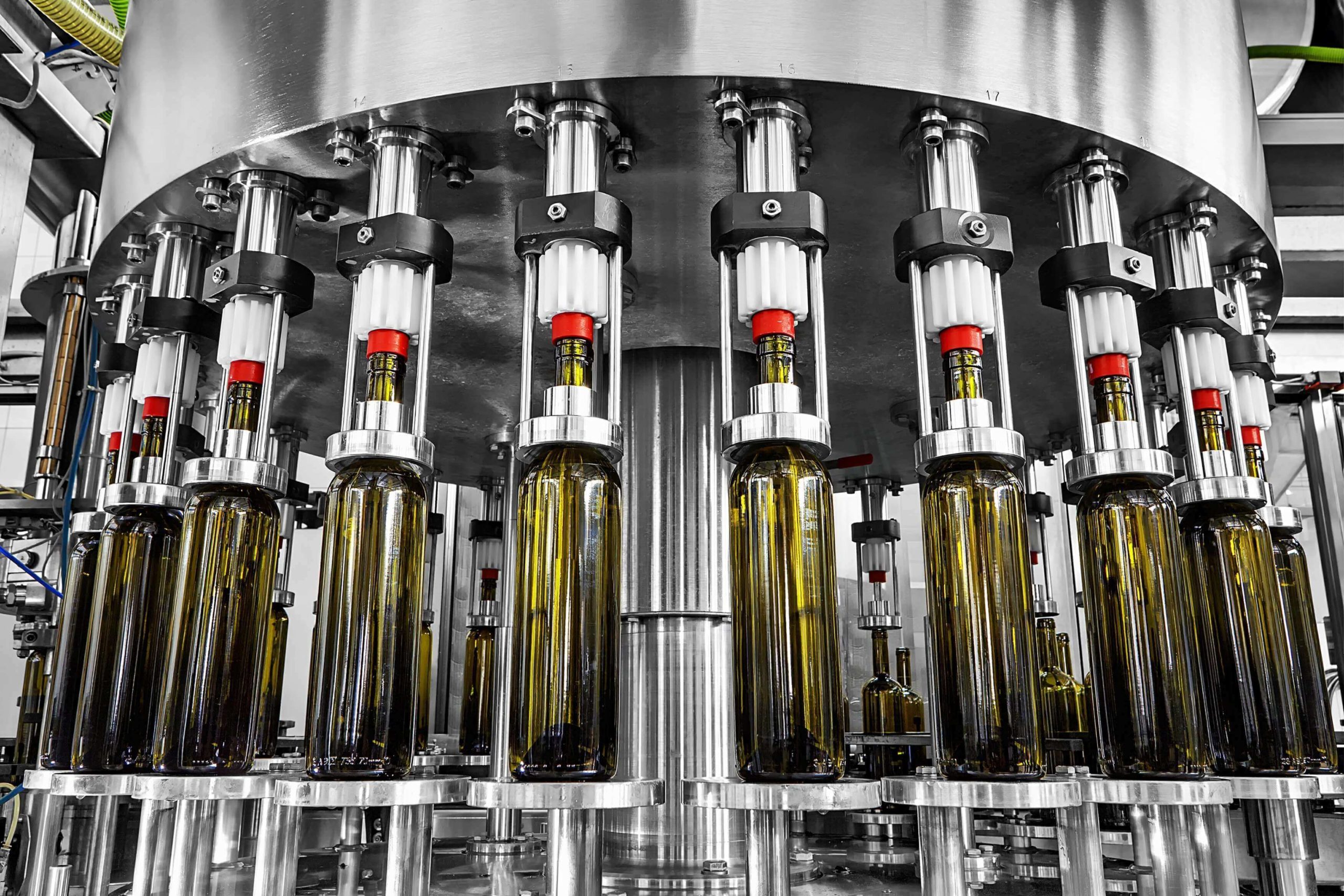
There are numerous challenges associated with polymer seals for the food and dairy industries, and the complications are numerous. From hygiene by design and zero tolerance for contamination to the unbelievably high cost of recalls, to temperature swings and moisture issues, engineers put in a significant amount of work to ensure that polymer seals are designed and specified correctly.
This blog post will explore the challenges and discuss solutions to each one.
CIP (Clean In Place) and SIP (Sanitize In Place) are harsh on seals and can involve repeated exposure to hot caustics, oxidizers, steam, and sometimes UV radiation. Additionally, the thermal spikes that often accompany CIP/SIP can lead to dimensional issues due to expansion and contraction. Issues with moisture absorption during the sanitation cycles are also a major problem.
Engineers need to consider the chemical intertness of the polymer chosen, as well as dimensional stability through temperature changes and low moisture absorption. Materials such as PTFE and UHMW-PE are an ideal choice for addressing these issues. They can retain key properties across cryogenic to steam conditions and withstand the most common CIP/SIP chemicals. Finally, PTFE is stable under exposure to UV used for sanitation.
Challenge 2: Chemical compatibility with cleaners and barrier fluid
Some of the common chemicals that are used to clean food and dairy equipment include . . .
Alkaline cleaners (such as sodium hydroxide-based)
Acidic cleaners (such as phosphoric or nitric acid)
Oxidizing agents like sodium hypochlorite (bleach) or peracetic acid
Quaternary ammonium compounds (quats)
These chemicals can lead to various issues, depending on the material used for the seal, including softening, hardening, and cracking. However, PTFE and UHMW-PE are minimally reactive to such chemicals.
Challenge 3: Contamination control and lubricant management
In the food and dairy industry, any external lubricant can become a contaminant; even “food-grade” oils complicate HACCP plans. This severely limits the type of polymers that can be used for seals; however, PTFE and UHMW-PE are both self-lubricating and can handle dry running.
Challenge 4: Moisture, swelling, and dimensional drift
Hot washdowns and steam can drive steam into hygroscopic materials, which leads to swelling and dimensional drift that can, in turn, cause compression and changes in clearances. PTFE and UHMW-PE exhibit negligible moisture absorption, which enhances fit and facilitates improved leak control after washdown.
Challenge 5: Abrasion and scratch avoidance on product-contact surfaces
Product-contact surfaces must stay as free as possible of abrasions and scratches because such surface imperfections can trap microbes and residues. For this reason, surfaces must be durable, smooth, and easy to clean. UHMW-PE offers exceptional abrasion resistance while remaining gentle to mating surfaces, and PTFE has a very low surface energy that effectively sheds debris.
Challenge 6: Wear life and unplanned downtime
When seals fail, there is a much higher risk of contamination and increased downtime. Both are expensive to deal with. PTFE and UHMW-PE both exhibit excellent wear resistance, which can extend service life and reduce the frequency of unplanned downtime.
Challenge 7: Taste, odor, and extractables
Some polymers leach flavors or odors into sensitive products, which is unacceptable in the food and dairy industry. However, both PTFE and UHMW-PE do not impart any taste or odor, and are non-toxic, making them an ideal solution to this challenge.
Challenge 8: Compliance and hygienic standards
Finally, engineers must navigate the FDA, 3-A Dairy, and customer audits while balancing performance and cost. Fortunately, PTFE and UHMW are available in FDA-compliant grades and are used in 3-A Dairy-compliant designs.
PTFE vs. UHMW-PE Seals in Food and Dairy Applications
Here is a table to help you choose between PTFE and UHMW-PE for polymer seals in the food and dairy industry.
If Your Primary Concern Is…
Choose:
Reason
Aggressive chemicals, oxidizers, or caustic CIP/SIP agents
PTFE
Unmatched chemical inertness and high-temperature stability
Steam sterilization or UV sanitation
PTFE
Handles heat and radiation without degradation
Abrasion, impact, or misalignment
UHMW-PE
Excellent toughness and wear resistance
Cost-effective wear surfaces in moderate cleaning regimes
UHMW-PE
Economical and durable for non-critical seals
Low friction, precision dynamic sealing
PTFE
Very low coefficient of friction and dry-running capability
Hygienic, FDA / 3-A compliant design
Either
Both are available in food-grade, non-contaminating formulations
Solutions for Polymer Seals in Food and Dairy Applications
There are several challenges engineers face when designing for food and dairy designs. However, the right choice of material can address many of these issues, and both PTFE and UHMW-PE are popular choices.
The experts at Advanced EMC are here to help you find the right sealing solution, from the type of seal you need to the best material for your food and dairy applications. Contact us today to learn more!
Sealing components face relentless stress in environments where extremes are the norm. This is true whether in outer space, deep underwater, or inside a high-temperature reactor. Temperatures can swing, pressures can reach incredible levels, and exposure to corrosive chemicals or radiation might occur daily. In such conditions, failure is costly and can be catastrophic. And that is where spring-energized seals come in.
This article explores how PTFE spring-energized seals provide a robust and reliable solution for sealing in extreme environments. We will examine the specific challenges and explain why spring-energized seal technology is critical for mission success, especially when paired with high-performance polymers like PTFE.
Extreme Environments and Their Sealing Challenges
Designing reliable seals for extreme environments requires an in-depth understanding of the forces at play. In many mission-critical systems, failure is not an option. However, high temperatures, aggressive chemicals, radiation, and pressure differentials constantly threaten seal integrity. Below is a closer look at the environmental factors that make sealing so demanding.
Temperature Extremes
High Temperatures
Seals exposed to elevated temperatures face thermal expansion, loss of elasticity, material degradation, and increased wear. Standard elastomers may soften, creep, or chemically break down under continuous thermal stress, leading to leakage or failure.
Cryogenic Temperatures
At the opposite end of the thermal spectrum, cryogenic conditions pose equally complex problems. Materials may contract significantly, lose ductility, and become brittle. Traditional seals can shrink away from sealing surfaces in these conditions, resulting in leaks.
High Pressure
Systems operating under extreme pressure are subject to tremendous mechanical stress. Without the right materials and geometry, seals permanently deform or lose contact with the sealing surfaces. Maintaining long-term reliability in such environments requires mechanically reinforced and dimensionally stable seals.
Chemical Exposure
Corrosive Media
Many industrial applications involve aggressive chemicals that quickly degrade standard elastomers and plastics. Exposure to acids, solvents, fuels, and other corrosive substances can cause swelling, embrittlement, or chemical attack.
Outgassing
Even trace amounts of outgassed compounds from seal materials can cause severe contamination in ultra-clean or vacuum environments. Outgassing is especially problematic when organic compounds interfere with optics, electronics, or surface chemistry. This means that seals in these environments must be made from materials with exceptionally low volatility and minimal extractables.
Radiation
Radiation is another factor that compromises many polymers’ structural integrity and performance. In nuclear and aerospace environments, ionizing radiation can cause chain scission or crosslinking, leading to embrittlement, cracking, and dimensional instability. Seals used in these settings must resist exposure to short- and long-term radiation without degrading.
PTFE Spring-Energized Seals: A Solution Built for Extremes
Sealing in harsh environments demands more than just durability. It requires materials and designs that actively maintain sealing force under fluctuating or extreme conditions. And that is precisely where PTFE spring-energized seals excel.
What Is a PTFE Spring-Energized Seal?
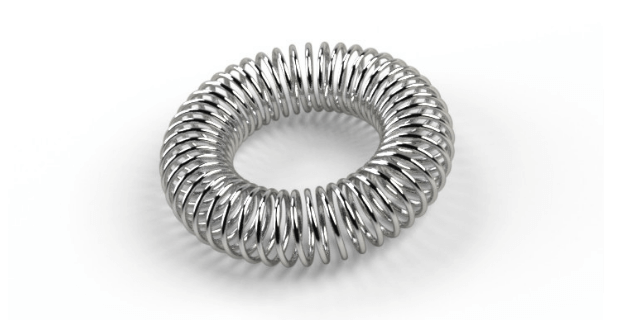
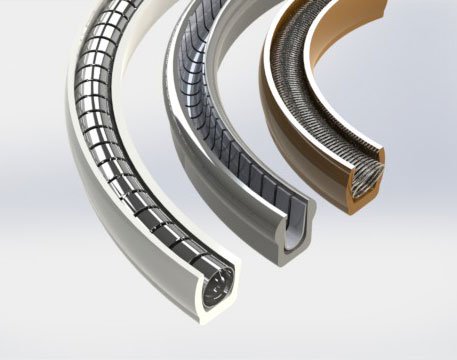
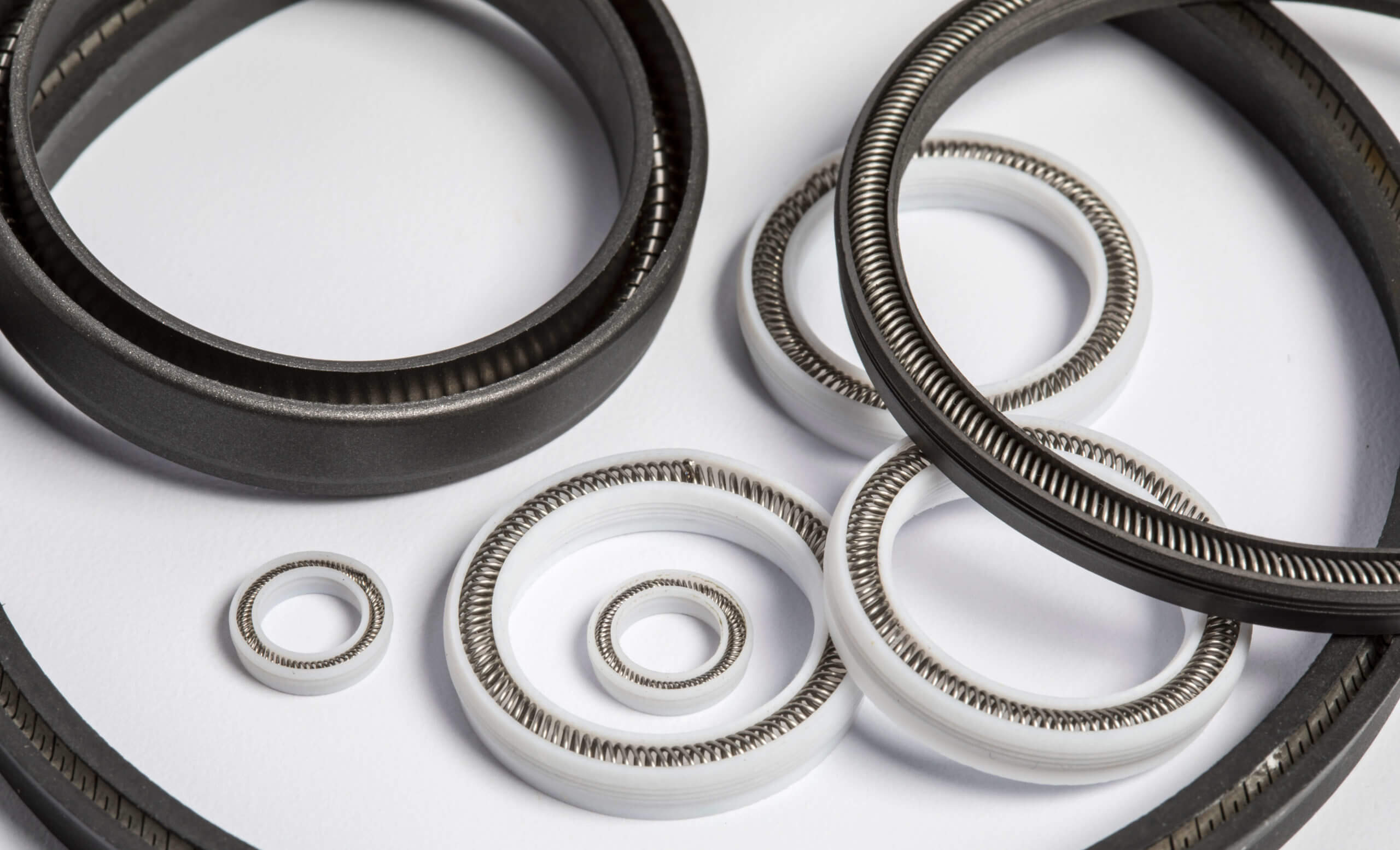
A spring-energized seal consists of two core components: a polymer jacket and an internal energizing spring. The jacket provides chemical resistance and mechanical barrier properties. The spring, on the other hand, ensures consistent contact pressure against the sealing surface, even when temperatures, pressures, or mechanical conditions change.
As conditions shift, the spring compensates for pressure or material contraction changes, keeping the seal engaged. This challenge makes spring-energized seals ideal for dynamic sealing applications, including reciprocating and rotary motion.
Spring types include:
Cantilever springs – Ideal for low to moderate pressures and cryogenic environments
Helical or coil springs – Used for higher pressures and more demanding mechanical loads
Canted coil springs – Suitable for sealing and electrical conduction, where uniform force is critical
Why Use PTFE for the Spring-Energized Seal Jacket?
Polytetrafluoroethylene (PTFE) is one of the most chemically resistant and thermally stable materials. And it exhibits a unique combination of properties that make it well-suited for extreme environments:
Broad Temperature Range: PTFE maintains performance from cryogenic levels (below -250°F) to elevated temperatures exceeding 500°F.
Chemical Inertness: It resists nearly all corrosive media, including strong acids, bases, fuels, and solvents.
Low Friction Coefficient: Ideal for dynamic applications where smooth, wear-resistant motion is essential.
Non-outgassing: PTFE has minimal extractables, making it suitable for ultra-clean vacuum or space environments.
Radiation Resistance: Certain PTFE formulations offer resistance to ionizing radiation.
Compliant with Regulatory Standards: Variants of PTFE that meet FDA, USP Class VI, and semiconductor purity standards are available.
When combined with the appropriate spring energizer, a PTFE seal delivers a balance of chemical resistance, mechanical compliance, and thermal stability that is difficult to match with conventional elastomers or plastic seals.
Benefits of PTFE Spring-Energized Seals
PTFE spring-energized seals offer a range of performance advantages that make them indispensable in extreme operating conditions. Unlike conventional elastomeric seals, they are engineered to maintain tight sealing integrity across wide temperature and pressure ranges while resisting chemical and mechanical degradation.
Reliable Sealing Across Variable Conditionswith Spring-Energized Seals
The built-in energizing spring provides consistent contact pressure even when temperatures fluctuate or the sealing surfaces shift due to thermal cycling or pressure changes. Because of this active sealing force, the seal ensures leak-tight performance in static and dynamic applications, whether in cryogenic fuel systems or high-pressure hydraulic actuators.
Exceptional Chemical Compatibility with PTFE
PTFE’s chemical inertness allows these seals to withstand aggressive fluids such as acids, fuels, solvents, and oxidizers. They are widely used in chemical processing, aerospace fuel systems, and pharmaceutical manufacturing—anywhere seal failure from chemical attack would be catastrophic.
Thermal Stability and Cryogenic Performance of PTFE Spring-Energized Seals
With a temperature tolerance ranging from below -250°F to above 500°F, PTFE spring-energized seals outperform most other sealing materials. They maintain flexibility and sealing force in cryogenic applications and do not degrade under high thermal loads.
Low Friction and Wear Resistance
PTFE’s low coefficient of friction minimizes heat generation and wear in dynamic sealing applications, which is especially important in systems requiring precise motion control or long service intervals, such as medical devices or aerospace actuators.Long Service Life
The combination of a resilient spring and a chemically inert jacket gives spring-energized seals excellent durability, even under continuous mechanical and thermal stress. This results in reduced downtime, fewer seal replacements, and lower maintenance costs over the lifecycle of the equipment.
Design Flexibility of Spring-Energized Seals
Spring-energized seals can be tailored for specific performance requirements, including:
This level of customization ensures that each seal is optimized for its intended environment and operational demands.
Applications of Spring-Energized Seals in Extreme Conditions
Because of their resilience and adaptability, engineers use PTFE spring-energized seals across a wide range of industries where standard sealing solutions cannot survive. These applications are defined by extremes—whether of temperature, pressure, chemical exposure, or environmental cleanliness.
Aerospace
In aerospace systems, seals must withstand extreme temperature variations, exposure to high-altitude vacuum conditions, and, in some cases, radiation. Engineers use PTFE spring-energized seals in fuel systems, cryogenic propulsion lines, actuators, and cabin pressure systems. Their low outgassing properties make them suitable for spacecraft and satellite environments.
Oil and Gas
Oilfield equipment routinely faces high-pressure differentials, corrosive drilling fluids, and wide temperature swings, from surface operations to downhole tools. Spring-energized seals made with chemically resistant PTFE compounds are commonly used in valves, pumps, and logging tools to maintain long-term sealing integrity under these harsh conditions.
Semiconductor Manufacturing
The semiconductor industry demands ultra-clean conditions where even minor contamination can lead to costly defects. PTFE seals are ideal for vacuum and plasma environments due to their low outgassing characteristics and resistance to aggressive process chemicals. Engineers use these seals in wafer handling systems, etching tools, and deposition chambers.
Medical and Pharmaceutical Equipment
Sealing solutions must be chemically inert, biocompatible, and often sterilizable in medical and pharmaceutical applications. Engineers integrate PTFE spring-energized seals in drug delivery systems, diagnostic devices, and sterile processing equipment where cleanliness, chemical resistance, and regulatory compliance are paramount.
Defense and Nuclear
Exposure to ionizing radiation, pressure cycling, and high temperatures is common in defense and nuclear environments. PTFE spring-energized seals are chosen for these applications because they maintain mechanical integrity under radiation and resist degradation over long periods of use. Applications include missile systems, nuclear reactor controls, and radiation-shielded enclosures.
Spring-Energized Seals are Ideal for Harsh Environments
Sealing in extreme environments—whether it involves intense heat, deep cryogenics, corrosive chemicals, or high-radiation fields—requires more than conventional materials and designs. PTFE spring-energized seals provide a proven solution engineered to withstand the most demanding conditions across aerospace, oil and gas, semiconductor, medical, and nuclear applications.
Combining the chemical inertness and thermal stability of PTFE with the adaptive force of a spring energizer, these seals maintain tight, reliable performance where others fail. Their low friction, minimal wear, and customizability make them the preferred choice for mission-critical systems where failure is not an option.
If you are facing extreme sealing challenges, trust the experts at Advanced EMC. Our PTFE spring-energized seals are engineered for durability, precision, and performance, no matter how harsh the environment. Contact us today to find the right sealing solution for your application.