
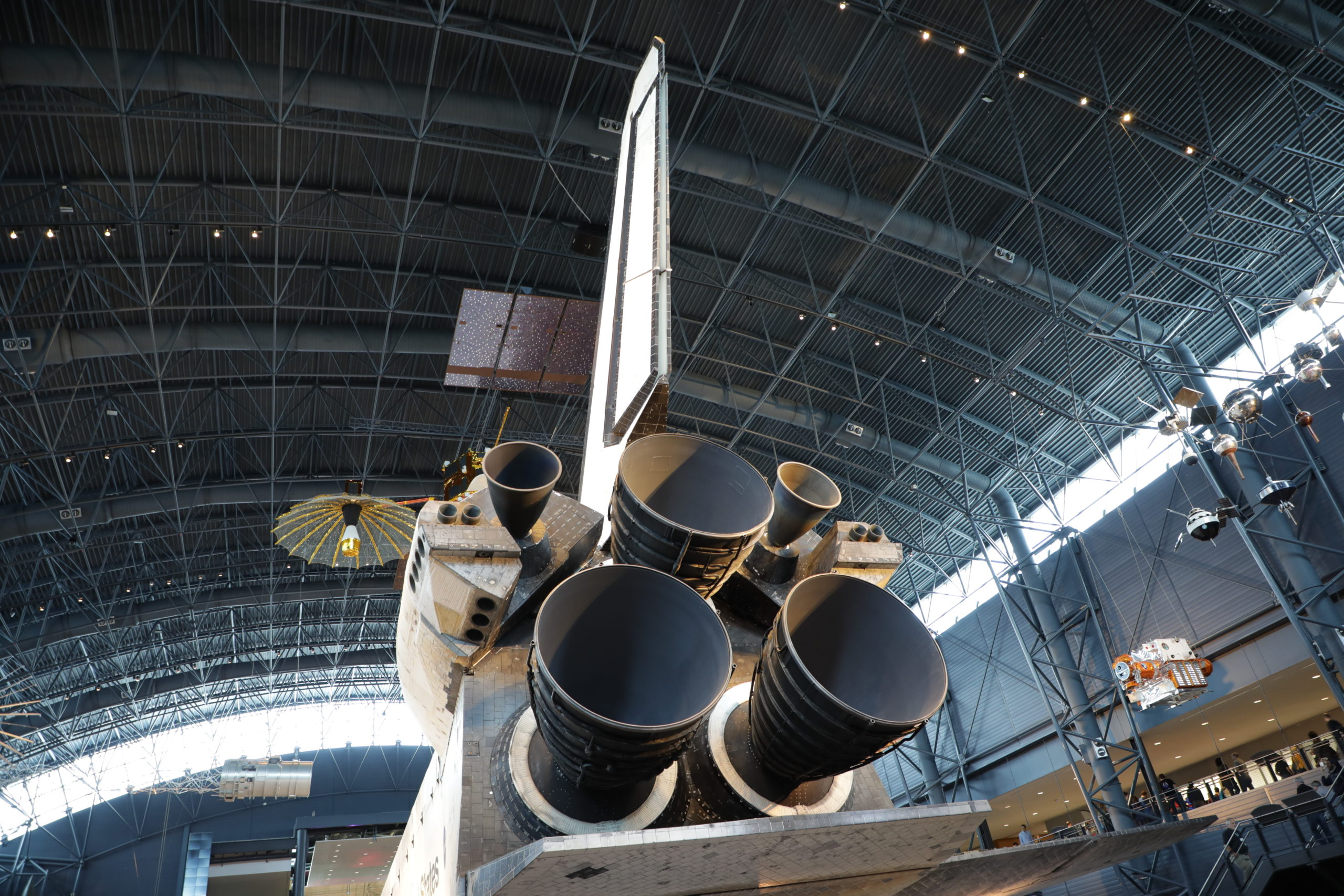
Seals for space environments face a myriad of challenges. Space is one of the most unforgiving operating environments ever encountered by engineers. Seals that would be considered routine in terrestrial applications become mission-critical in space, where a single leak can mean the loss of a spacecraft, a payload, or a crew. This blog post examines the major sealing challenges presented by the space environment, along with the solutions best equipped to address them (including PTFE and PEEK seals).
Seals for Space Environments: Design Challenges
From extreme cryogenic temperatures to atomic oxygen, there are a host of factors to consider when engineering a sealing solution for space environments.
Extreme Temperature Ranges
Seals for space environments experience enormous thermal swings ranging from cryogenic temperatures in shadowed regions or propellant lines (as low as -450°F) to the intense heat experienced during atmospheric re-entry or sun-facing surfaces (+750°F). This poses a serious problem as most elastomers become brittle and crack at cryogenic temperatures, while at high temperatures they can experience hardening, outgassing, and loss of elasticity. These extremes add an extra layer of difficulty when designing effective, reliable seals or space environments.
Spring-energized PTFE seals are an excellent solution here. The spring core maintains a highly consistent sealing force across the full thermal range, regardless of jacket expansion or contraction. For the most extreme high-temperature applications, a spring-energized Kalrez FFKM jacket will good superior heat resistance while still retaining the same self-energizing benefits for high-temperature sealing, but is not suitable for re-entry surfaces.
Vacuum and Outgassing
In hard vacuum conditions, most traditional seal materials are going to release trapped gases and plasticizers (outgassing). This leads to the potential for contaminated optics, sensors, and electronics, which can lead to catastrophic failure in many space applications. The seak materials used must possess a very low vapor pressure and minimal volatile content. To complicate things further, standard lubricants used to aid seal installation or reduce friction often evaporate entirely in a vacuum.
Both virgin PTFE and space-grade FFKM compounds are certified to NASA’s ASTM E595 outgassing standard. These materials are the preferred choices for vacuum applications as they offer exceptionally low vapor pressure and minimal volatile content. Spring-energized designs using these jackets also eliminate the need for installation lubricants, thus entirely removing another potential source of outgassing.
Radiation Exposure
In space, equipment is exposed to cosmic rays, solar particle events, and trapped radiation belt particles. These factors can quicly degrade the polymer chains in elastomers and plastics, causing major problems that include embrittlement, increased porosity, and loss of sealing performance over time. This potential for failure is especially severe in high-radiation orbits (e.g., near the Van Allen belts or at Jupiter).
PTFE offers improved radiation resistance compared to most elastomers, though prolonged exposure to high doses can still lead to material degradation. And PEEK can provide good performance for missions involving prolonged exposure to high doses of radiation.
Long Mission Life with No Maintenance
Unlike terrestrial seals that can be replaced, those used in space must often function for 10–30 years without any servicing. The lack of maintenance leads to a demand for near-zero wear and highly predictable aging behavior, both of which can be very difficult to validate on the ground.
Spring-energized PTFE or PEEK seals have been found ideal for long-life missions, as the spring continuously compensates for material creep that would cause conventional elastomeric seals to lose contact stress over time. In addition, PTFE and PEEK seals also have extremely low friction, self-lubrication, and little to no stick-slip behavior.
Mechanical Loads and Vibration
Launch seals will be exposed to incredibly intense acoustic and mechanical vibration, along with powerful shock loads and extreme acceleration. Seals for space environments must survive such a violent dynamic environment before even reaching the operating environment that was the primary target for the seals’ operating environment.
Spring-energized seals with glass-filled PTFE or PEEK jackets resist rolling, extrusion, and dislodgement under shock and vibration loading, and do so far better than convential O-ring designs.
Atomic Oxygen at LEO (Low Earth Orbit)
In LEO, the residual atomic oxygen in the upper atmosphere is highly reactive. It posseses the potential to aggressively erode many polymers (e.g., silicones, polyurethanes, etc.) resulting in the problematic thinning of seal cross-sections and the fast degradation of polymer surface properties.
PEEK offers significantly better resistance to atomic oxygen than many common polymers, though protective coatings may still be required for long-duration LEO exposure. PEEK’s dense aromatic backbone is significantly more resistant to atomic oxygen erosion than materials such as silicone, polyurethane, or virgin PTFE.
Micrometeorite and Debris Impact
Consider naturally occurring meteoroid particles that travel at extremely high speeds, and human-made orbital debris (often fragments from rocket bodies, collision ejecta, defunct satellites, and even paint flakes). Small particle impacts due to these types of debris can score or nick sealing surfaces, creating leak paths that are impossible to detect or repair once on orbit, and there are plenty of them in space.
In the case of micrometeorite and debris impact, material selection helps, but system-level redundancy and shielding are critical. Carbon-filled PTFE or PEEK sealing solutions offer good surface hardness against glancing impacts and are best paired with a redundant dual spring-energized seal configuration with a monitored inter-seal cavity.
Lubrication and Friction in Vacuum
Many seals rely on a thin fluid film to achieve low friction and reduced wear. However, in vacuum environments, conventional lubricants evaporate, which then leads to serious problems with stick-slip behavior and accelerated wear on dynamic seals (e.g., rotating joints on robotic arms or docking mechanisms).
PTFE’s inherently low coefficient of friction eliminates the need for additional lubrication in vacuum conditions. In addition, carbon-filled or MoS₂-filled PTFE variants offer even lower friction for dynamic sealing applications. PEEK, including filled PEEK, also offers a very low coefficient of friction and self-lubrication, although not quite on the order of PTFE.
Material Selection Constraints
The combination of the above factors inevitably narrows the list of acceptable materials drastically. Traditional sealing material choices such as nitrile rubber are often ruled out, pushing engineers toward high-performance engineering polymers such as PTFE or Viton, as well as spring-energized polymer seals.
Spring-energized seals with PTFE or PEEK jackets (with filled grades selected to target specific performance gaps) represent the most versatile and broadly applicable solution across all space sealing challenges.
Summary of Seals for Space Design Challenges
Below is a summary of some of the key issues related to seals in space, along with some suggested solutions.
| Challenge | Key issue | Suggested solution(s) |
|---|---|---|
| Extreme temperatures | Elastomers crack at cryogenic temps or degrade at high heat | Spring-energized PTFE seals; Kalrez FFKM jacket for high-heat applications |
| Vacuum & outgassing | Materials release gases that contaminate optics and sensors | Virgin PTFE or space-grade FFKM (NASA ASTM E595 certified) |
| Radiation exposure | Polymer chain degradation, embrittlement, increased porosity | PTFE (moderate doses); PEEK (high-dose / long-duration missions) |
| Long mission life | No maintenance possible; seals must last 10–30 years | Spring-energized PTFE or PEEK, pring continuously compensates for material creep |
| Vibration & shock | Intense launch loads can dislodge or extrude seals | Glass-filled PTFE or PEEK spring-energized seals |
| Atomic oxygen (LEO) | Reactive oxygen aggressively erodes many polymers | PEEK, dense aromatic backbone resists erosion; protective coatings for long durations |
| Micrometeorite impact | Debris scoring creates irreparable leak paths on orbit | Carbon-filled PTFE or PEEK + redundant dual spring-energized seal with monitored inter-seal cavity |
| Vacuum lubrication | Conventional lubricants evaporate in vacuum, causing wear | PTFE (self-lubricating); carbon- or MoS₂-filled PTFE variants for dynamic seals |
Conclusion
Each challenge outlined in this blog post is demanding on its own. When combined, they eliminate most conventional sealing solutions entirely. What consistently emerges from these challenges is a short list of solutions built around spring-energized seal architectures and/or high-performance PTFE and PEEK. Together, they offer the broadest combination of thermal stability, radiation tolerance, and mechanical robustness available today.
If you are tasked with designing seals for space environments, contact Advanced EMC today.