by Daniel Mays Daniel Mays No Comments

Polymer Seals in Food and Dairy Applications: Challenges for Engineers

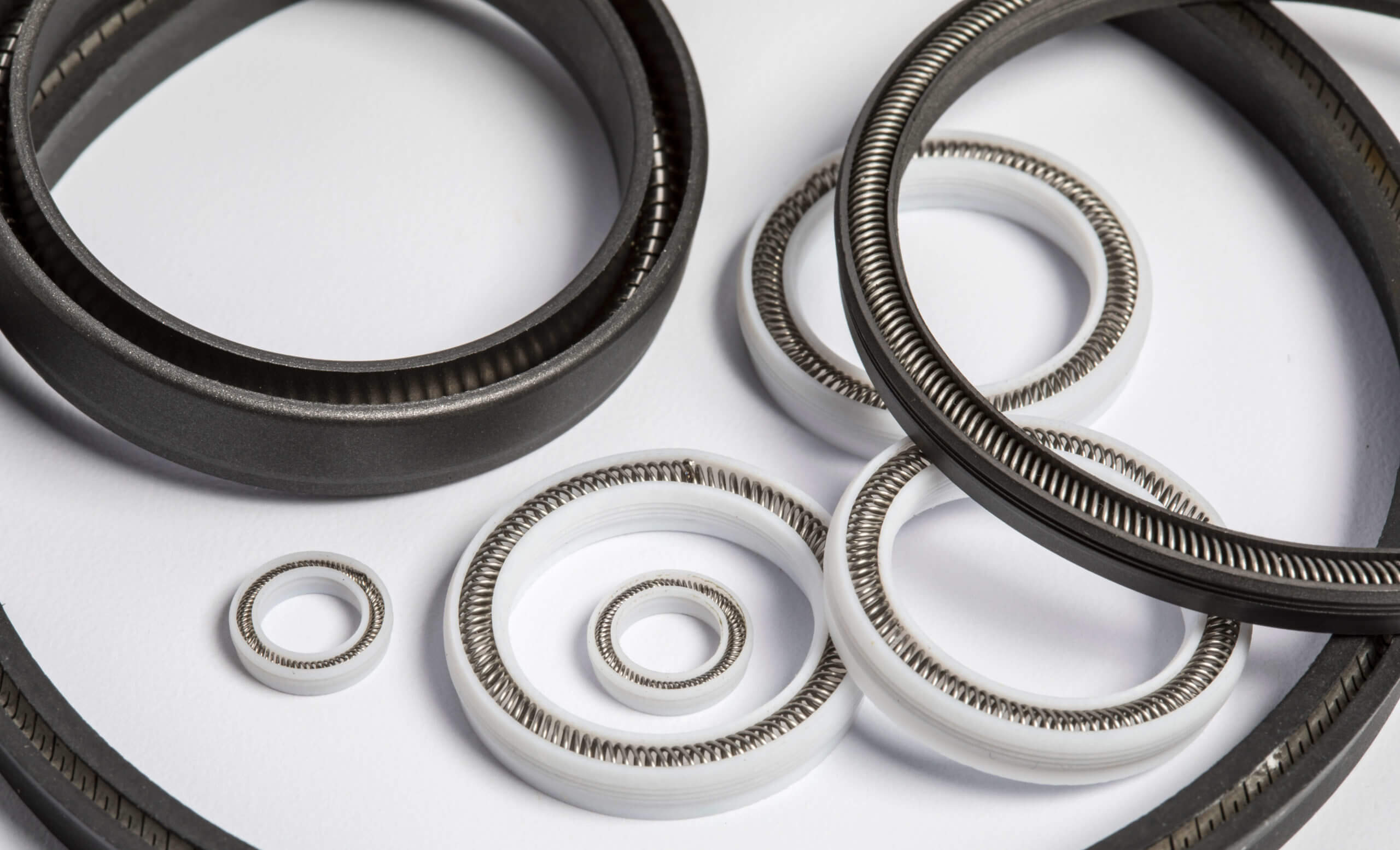
There are numerous challenges associated with polymer seals for the food and dairy industries, and the complications are numerous. From hygiene by design and zero tolerance for contamination to the unbelievably high cost of recalls, to temperature swings and moisture issues, engineers put in a significant amount of work to ensure that polymer seals are designed and specified correctly. 

This blog post will explore the challenges and discuss solutions to each one.

Challenge 1: Surviving sanitation cycles (CIP/SIP)

CIP (Clean In Place) and SIP (Sanitize In Place) are harsh on seals and can involve repeated exposure to hot caustics, oxidizers, steam, and sometimes UV radiation. Additionally, the thermal spikes that often accompany CIP/SIP can lead to dimensional issues due to expansion and contraction. Issues with moisture absorption during the sanitation cycles are also a major problem.

Engineers need to consider the chemical intertness of the polymer chosen, as well as dimensional stability through temperature changes and low moisture absorption. Materials such as PTFE and UHMW-PE are an ideal choice for addressing these issues. They can retain key properties across cryogenic to steam conditions and withstand the most common CIP/SIP chemicals. Finally, PTFE is stable under exposure to UV used for sanitation.

Challenge 2: Chemical compatibility with cleaners and barrier fluid

Some of the common chemicals that are used to clean food and dairy equipment include . . .

  • Alkaline cleaners (such as sodium hydroxide-based)
  • Acidic cleaners (such as phosphoric or nitric acid) 
  • Oxidizing agents like sodium hypochlorite (bleach) or peracetic acid 
  • Quaternary ammonium compounds (quats)

These chemicals can lead to various issues, depending on the material used for the seal, including softening, hardening, and cracking. However, PTFE and UHMW-PE are minimally reactive to such chemicals.

Challenge 3: Contamination control and lubricant management

In the food and dairy industry, any external lubricant can become a contaminant; even “food-grade” oils complicate HACCP plans. This severely limits the type of polymers that can be used for seals; however, PTFE and UHMW-PE are both self-lubricating and can handle dry running.

Challenge 4: Moisture, swelling, and dimensional drift

Hot washdowns and steam can drive steam into hygroscopic materials, which leads to swelling and dimensional drift that can, in turn, cause compression and changes in clearances. PTFE and UHMW-PE exhibit negligible moisture absorption, which enhances fit and facilitates improved leak control after washdown. 

Challenge 5: Abrasion and scratch avoidance on product-contact surfaces

Product-contact surfaces must stay as free as possible of abrasions and scratches because such surface imperfections can trap microbes and residues. For this reason, surfaces must be durable, smooth, and easy to clean. UHMW-PE offers exceptional abrasion resistance while remaining gentle to mating surfaces, and PTFE has a very low surface energy that effectively sheds debris.

Challenge 6: Wear life and unplanned downtime

When seals fail, there is a much higher risk of contamination and increased downtime. Both are expensive to deal with. PTFE and UHMW-PE both exhibit excellent wear resistance, which can extend service life and reduce the frequency of unplanned downtime. 

Challenge 7: Taste, odor, and extractables

Some polymers leach flavors or odors into sensitive products, which is unacceptable in the food and dairy industry. However, both PTFE and UHMW-PE do not impart any taste or odor, and are non-toxic, making them an ideal solution to this challenge.

Challenge 8: Compliance and hygienic standards

Finally, engineers must navigate the FDA, 3-A Dairy, and customer audits while balancing performance and cost. Fortunately, PTFE and UHMW are available in FDA-compliant grades and are used in 3-A Dairy-compliant designs.

PTFE vs. UHMW-PE Seals in Food and Dairy Applications

Here is a table to help you choose between PTFE and UHMW-PE for polymer seals in the food and dairy industry.

If Your Primary Concern Is…Choose:Reason
Aggressive chemicals, oxidizers, or caustic CIP/SIP agentsPTFEUnmatched chemical inertness and high-temperature stability
Steam sterilization or UV sanitationPTFEHandles heat and radiation without degradation
Abrasion, impact, or misalignmentUHMW-PEExcellent toughness and wear resistance
Cost-effective wear surfaces in moderate cleaning regimesUHMW-PEEconomical and durable for non-critical seals
Low friction, precision dynamic sealingPTFEVery low coefficient of friction and dry-running capability
Hygienic, FDA / 3-A compliant designEitherBoth are available in food-grade, non-contaminating formulations

Solutions for Polymer Seals in Food and Dairy Applications

There are several challenges engineers face when designing for food and dairy designs. However, the right choice of material can address many of these issues, and both PTFE and UHMW-PE are popular choices.  

The experts at Advanced EMC are here to help you find the right sealing solution, from the type of seal you need to the best material for your food and dairy applications. Contact us today to learn more!

by Daniel Mays Daniel Mays No Comments

Hytrel: A Deep Dive into Its Properties and Applications

Hytrel, a thermoplastic polyester elastomer (TPE) from DuPont, provides an excellent balance between flexibility and strength. Seal engineers know that if a seal is too rigid, it responds to changes in motion or pressure. Too soft, and it fails under heat or chemical attack. And that’s where Hytrel, a thermoplastic polyester elastomer (TPE) from DuPont, finds its niche as it bridges the gap between rubber-like elasticity and plastic-like toughness.

If you are looking for a material that resists fatigue, survives dynamic loads, and endures challenging fluids, then it is time to take a deep dive into Hytrel. This article looks at the science behind it, the different grades available, and where it works best. 

Understanding Hytrel: Structure, Chemistry, and Properties

Hytrel is a block copolymer comprised of alternating hard (polybutylene terephthalate) and soft (polyether) segments. This unique molecular structure type offers excellent versatility, as the hard segments provide mechanical strength, creep resistance, and dimensional stability. In contrast, the soft segments contribute elasticity, impact resistance, and low-temperature flexibility.

Engineers value Hytrel for properties such as:

  • Excellent flex fatigue resistance and rebound resilience, with the ability to flex in multiple directions
  • Wide operating temperature range (cryogenic to +315°F), depending on the grade
  • Very strong chemical resistance to media, including solvents, oils, fuels, and hydraulic fluids
  • An excellent combination of high wear resistance and low compression set
  • Good creep resistance

Additionally, it retains its mechanical properties even at high temperatures and remains flexible even at low temperatures.

Hytrel components can be manufactured in a number of different ways, including thermoplastic processing, extrusion, melt casting, rotational molding, blow molding, and injection molding.

There are two grades of Hytrel available: standard grades, which are the most economical and strike an excellent balance between cost and performance, and high-performance grades, which are ideal for environments where issues like abrasion and tear can be problematic. Each of these grades have ranges of hardness and elastic modulus, all achieved by varying the ratio of soft to hard segments in the molecular structure.

Grades of Hytrel

There are various grades of Hytrel, some of which are summarized here.

Hytrel 4056

This grade offers an excellent combination of toughness and strength over a considerably wide temperature range. It works extremely well for low-temperature and cryogenic applications that require a material that is able to retain flexibility. 

Hytrel 4068 and Hytrel 4069

Both grades offer good flex-fatigue and creep resistance combined with outstanding low-temperature properties. And they can be formed using molding or extrusion. They have a higher melting point and lower elastic modulus than 4056. In addition, there is a food-grade material available: Hytrel 4068FG.

Hytrel 4556

4556 is similar to grades 4068 and 4069, with a low-to-medium elastic modulus. This grade works extremely well for seals and gaskets.

Hytrel 5526 and Hytrel 5556

In terms of general properties, these particular grades provide a good balance. Its flow properties, however, primarily limit it to injection molding and extrusion as the manufacturing method. They also offer a balance of properties with a medium modulus.

Hytrel 4053FG NC010

When food contact grade seals are needed, 4053FG NC010 may be an option. This grade has a low modulus extrusion, and its properties include flex-fatigue resistance, creep resistance, and good low-temperature properties. 

Engineering with Hytrel: Applications and Design Considerations

There are several applications where Hytrel offers excellent performance, starting with sealing for dynamic applications.

Dynamic Sealing

It performs extremely well in reciprocating and rotary seals where flexibility and abrasion resistance are critical. In fact, its ability to recover quickly after deformation reduces leakage in spring-energized and lip seal designs.

Harsh Chemical and Thermal Environments

It’s excellent resistance to fuels, hydraulic oils, and cleaning solvents makes it a solid choice for automotive, aerospace, and industrial systems. Although it is not as inert as PTFE, it still outperforms many rubbers and urethanes in aggressive chemical environments.

Manufacturing and Compatibility

Because Hytrel is a thermoplastic, it can be welded, machined, or molded with high precision. In addition, it bonds well to certain metals and other polymers, making it ideal for multi-material seal assemblies.

Specific Applications

Here is a sample of just some of the applications where it excels:

  • Chassis Suspension Systems
  • Thermoplastic Tubing and Elastomeric Hose
  • Innovative Furniture Design
  • Medical Device Materials
  • Sustainability in Airbag Systems
  • Plastics For Sporting Goods
  • Cable Insulation and Jacketing
  • Polymers for Oil and Gas
  • Food Contact Materials
  • Seals and Gaskets

Limitations

Even with the excellent performance it offers, Hytrel does have limitations. For example, prolonged exposure to hot water or steam can degrade performance, and certain polar solvents may affect long-term durability. In addition, Hytrel does not work well in environments with continuous exposure to aggressive chemicals such as strong acids or halogens, and this is especially true at high temperatures.

Conclusion

Hyrtrel provides a solid middle ground between flexible rubber and rigid polymer solutions. Its resilience, fatigue life, and processability make it a go-to choice for demanding environments. Its balance of strength and elasticity will translate into longer service life, better energy efficiency, and reliable performance under real-world stress.

At Advanced EMC Technologies, we understand that every design challenge requires the right material match. Our engineering team works closely with clients to design Hytrel-based component solutions optimized for temperature, pressure, and chemical exposure. Contact Advanced EMC today to discuss how Hytrel can elevate the performance of your next sealing system.