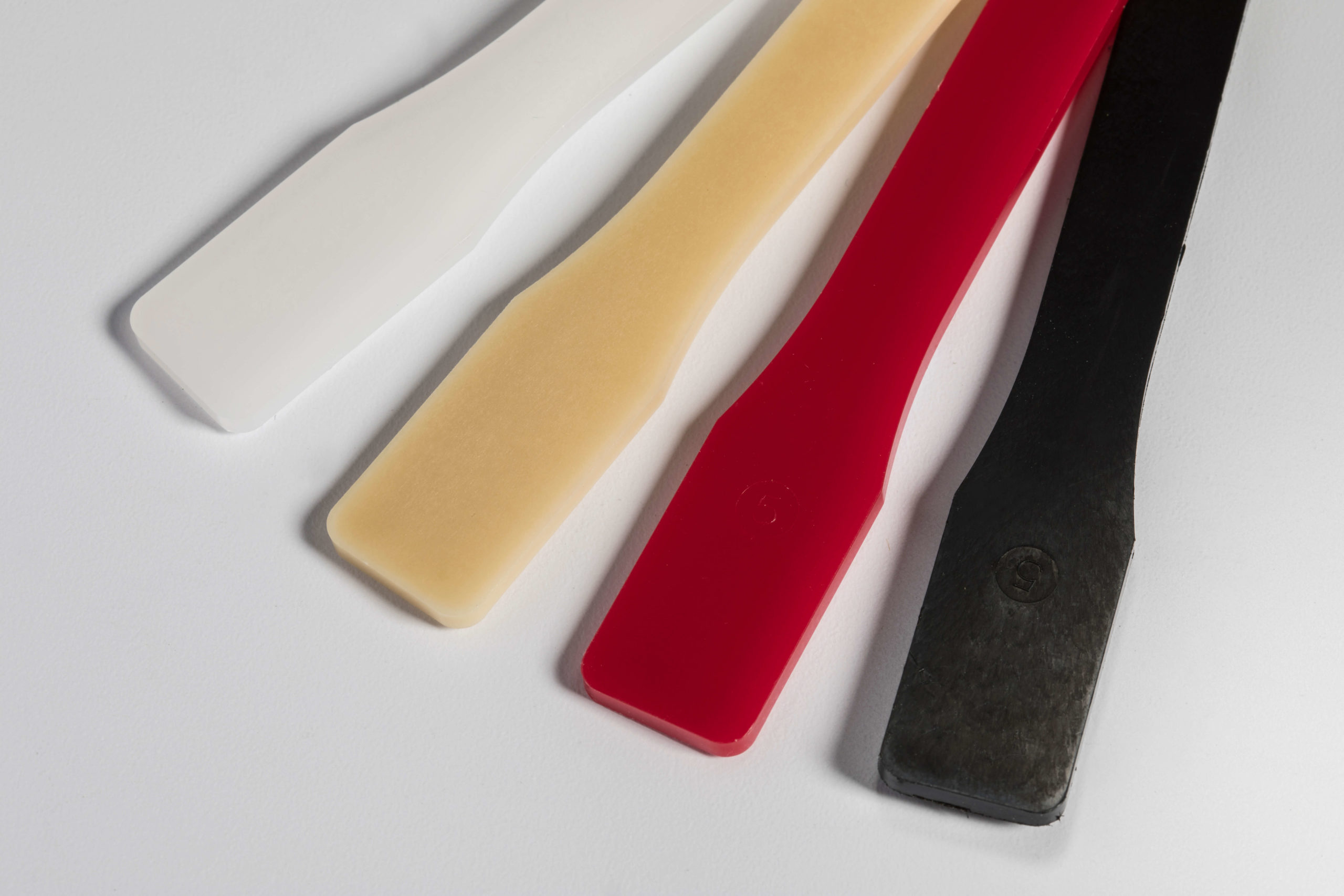

Nylon 66, PEEK, and PPS are available in bearing grades, but how should they be manufactured? The choice of manufacturing method can have a significant impact on their tolerances, performance, and cost.
This blog post focuses on machined and molded polymer bearings, including their benefits and limits, how they compare to metal options, and the best ways of manufacturing bearings made from three very different materials: Nylon 66, PEEK, and PPS.
Introduction to Polymer Bearings
Polymer bearings are low-friction, lightweight alternatives to traditional bearings. They are corrosion-resistant and offer varying degrees of chemical resistance. Polymer bearings are also known for their ability to run dry or with minimal lubrication, as well as good wear characteristics. They are also electrically insulating and offer quieter operation than their metal counterparts.
However, polymer bearings do have their limits. They are more susceptible to thermal expansion and may have lower load limits and PV than their metal counterparts, but the addition of fillers can mitigate this issue. In some cases, they may be susceptible to moisture uptake.
The table below summarizes the major differences between metal and polymer bearings.
Metal vs Polymer Bearings
| Feature | Metal Bearings | Polymer Bearings |
| Friction | Low only with lubrication | Low due to inherent lubricity |
| Lubrication | Required | Often not required |
| Wear Mechanism | Abrasive/adhesive fatigue | Transfer film formation |
| Corrosion | Possible | Nearly immune |
| Shock/Vibration | No damping | Natural damping |
| Speed | High | Moderate |
| Load | Higher | Moderate |
| Temperature Limits | Excellent | Varies by polymer |
| Maintenance | Higher | Very low |
Machined vs. Molded Polymer Bearings
Machined bearings are best for small production runs where tight tolerances and complex geometries are involved, and machining is ideal for prototypes, custom components, and specialty rotating equipment. This approach to manufacturing bearings also allows the material to remain homogenous with no molded-in stresses.
Molded bearings are the best option for high-volume production, and they are more cost-effective for simpler geometries. Molding also means reduced part-to-part variation; however, molded-in stress may be present, and there are limits to surface finish.
When choosing between machined and molded polymer bearings, the key factors are:
- Geometry
- Tolerances
- Cost
- Production volume
Nylon 66, PEEK, and PPS
Among the various options for polymer bearings are Nylon 66, PPS, and PEEK. The table below summarizes the differences between these materials.
Performance Comparison: Nylon 66 vs. PPS vs. PEEK
| Property / Factor | Nylon 66 | PPS | PEEK |
| Max Continuous Use Temperature | ~100–120°C | ~200–220°C | ~240–260°C |
| Wear Resistance | Good (improved with lubrication) | Very good | Excellent (especially filled grades) |
| Friction | Low | Low | Very low |
| Moisture Absorption | High (can swell, affects tolerances) | Very low | Very low |
| Dimensional Stability | Moderate (affected by humidity) | High | Very high |
| Chemical Resistance | Moderate | Excellent | Excellent |
| Mechanical Strength | Good | High | Very high |
| Impact Resistance | Very good | Moderate | Good |
| Creep Resistance | Moderate | Good | Excellent |
| PV Capability | Low–Medium | Medium–High | High–Very High |
| Cost | Low | Medium | High |
| Machining Suitability | Excellent | Excellent | Excellent (best with filled grades) |
| Moldability | Excellent | Good | Good |
| Typical Applications | Rollers, appliance bearings, automotive interior components | Pumps, compressors, chemical processing, precision housings | Aerospace, oil & gas, high-speed bearings, semiconductor tools |
Manufacturing Nylon 66, PEEK, and PPS Bearings
There are several different bearing materials available, but of interest in this blog post are Nylon 66, PPS, and PEEK bearings.
Nylon 66
Nylon 66 is very easy to mold because of its low viscosity, forging processing window, and good flow characteristics. However, there is going to be high mold shrinkage, which requires careful part design to keep warpage under control. Nylon also absorbs moisture, which means that drying is important before molding takes place.
Nylon also machines easily, but its high ductility leads to stringy chips that necessitate the use of chip-breakers. Heat buildup is also an issue with nylon, and moisture absorption can impact the level of precision that can be achieved. It does, however, respond well to secondary machining on already molded parts, but does not work well with tight-tolerance CNC components.
PEEK
Because PEEK high a high melt temperature around 343°C, a very narrow thermal window that requires precision temperature control, and requires a heated mold, it is considered challenging to mold. However, with the right processing parameters and careful design, PPS can be molded and can manufacture parts with excellent thermal and mechanical performance (but is more expensive).
PEEK is very difficult to machine. Its high modulus and hardness make it especially tough on cutting tools, and reinforced grades can be highly abrasive. It also generates an abundance of heat, thus requiring the use of coolants. However, machining PEEK supports excellent tolerances and surface finishes when the right combination of feed and speed is used. In fact, PEEK is frequently machined for low-volume aerospace and medical components.
PPS
PPS is not as easy to mold as Nylon 66 because its melt temperature is higher, it possesses a narrower processing window, and has high viscosity. However, it does exhibit very low shrinkage and excellent dimensional stability. PPS molding is very predictable and an excellent option once the right processing parameters have been figured out.
PPS is machinable, definitely more so than Nylon, but tends to be more brittle. It produces short chips and there is a risk of edge chipping during more aggressive cuts. On the other hand, it is good for tight tolerances. Note that filled grades of PPS can accelerate tool wear. Machining PPS is ideal for high-precision parts where dimensional stability is important.
Conclusion
Machined and molded Nylon 66, PPS, and PEEK bearings continue to gain traction because of properties such as low friction, wear characteristics, damping, corrosion resistance, and chemical compatibility. If you are in need of polymer bearings, Advanced EMC is here to help. Our team of engineers and bearing experts can help you from initial design to manufacturing to testing. Contact us today to learn more.