
by Daniel Mays Daniel Mays No Comments

Why Labyrinth Seals Work So Well

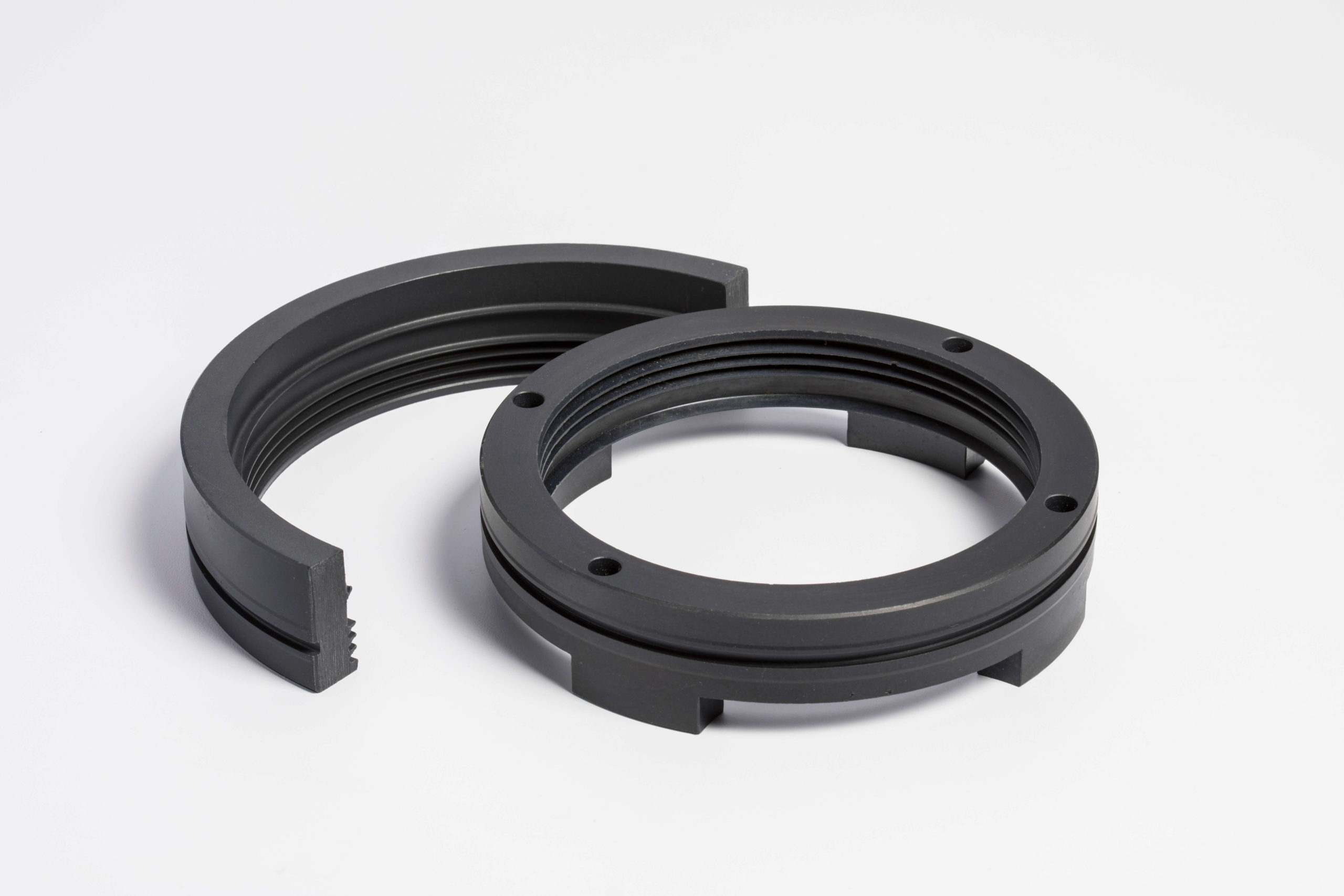
Labyrinth seals are a non-contact sealing solution used in high-speed, high-performance machinery. Unlike contact seals, labyrinth seals rely on geometry and fluid dynamics, rather than friction, to prevent leaks.

This article examines the reasons why labyrinth seals are so effective, including their low wear, high-speed capabilities, thermal stability, and long lifespan.

Fundamentals of Labyrinth Seal Operation

The Basic Mechanism

Labyrinth seals create a tortuous path that resists fluid passage through a series of cavities and restrictions. With every cavity, the fluid experiences a drop in liquid pressure that is directly caused by the turbulent flow and the kinetic energy dissipated. It is these pressure differentials and losses in velocity that prevent fluids from escaping. This tortuous path is also what allows the labyrinth seals to have a non-contact design.

Non-Contact Design Advantages

The non-contact architecture of labyrinth seals eliminates frictional wear, extending both seal and shaft life. This also enables the operation of these seals with extremely high shaft speeds and in environments where lubrication is limited or undesirable (e.g., aerospace, cryogenic, and vacuum applications). This non-contact operation also reduces heat generation, thereby improving energy efficiency. 

Polymer Material Science in Labyrinth Seals

Traditional metallic labyrinth seals, such as those made from nickel alloys, aluminum, and stainless steel, do not possess the same advantages as engineering polymers. These advantages include less weight, a more compact design, and better chemical resistance. 

Additionally, some polymers are self-lubricating, eliminating the need for lubricants, and have extremely low coefficients of friction. They also exhibit better thermal expansion properties than traditional metal solutions. Unlike metal labyrinth seals, polymer seals can also achieve tighter clearances and reduced leakage because the teeth deflect during any contact without wear or damage to the rotor. Finally, polymers exhibit superior resistance to abrasion. 

Two of the most commonly used polymers for labyrinth seals are PEEK and Torlon.

PEEK Labyrinth Seals

PEEK has some excellent properties, including a high strength-to-weight ratio, thermal stability up to ~480°F (250°C), and resistance to aggressive chemicals. They are also self-lubricating and can withstand continuous operating temperatures of around -94°F (-70°C), making them ideal for cryogenic conditions. 

Torlon Labyrinth Seals

Torlon (PAI) is an ultra-high-performance polymer offering even higher mechanical strength and creep resistance than PEEK. Torlon labyrinth seals are also self-lubricating with a very high strength-to-weight ratio and support continuous service temperatures above 500°F (260°C) while still maintaining excellent dimensional stability. It also works exceptionally well in cryogenic operating conditions, maintaining its key physical properties. Torlon labyrinth seals also have excellent compressive strength, allowing for consistent tooth geometry even in high-pressure or thermally cycled environments.

Performance Characteristics That Make Labyrinth Seals Exceptional

Non-contact labyrinth seals are able to avoid frictional drag, supporting their use in turbines, compressors, and rotating equipment that operate at speeds exceeding 20,000 RPM. Unlike contact seals, these seals exhibit very little dynamic instability and can actually improve energy efficiency. In addition, polymers like PEEK and Torlon can handle transient temperature spikes and repeated thermal cycling without loss of integrity.

In addition, labyrinth seals manufactured from PEEK or Torlon exhibit resistance to corrosive gases, fuels, and lubricants in aerospace and energy applications, expanding their potential applications beyond those of metal labyrinth seals.

The absence of frictional wear significantly extends their service life, and they do not seize or gall even after long periods of inactivity. Both of these features result in reduced maintenance costs and decreased equipment downtime.

Industry Applications

In wind turbine gearboxes, polymer labyrinth seals block dust, moisture, and lubricant loss. Their complex paths trap contaminants before they reach internal components. These seals also dampen vibration and handle minor shaft misalignment, helping the gearbox run smoothly and last longer in rugged conditions.

In aerospace and cryogenic settings, these seals stay effective across extreme temperature changes and low pressures. Materials like PEEK and Torlon remain stable and flexible when metals cannot, maintaining tight sealing and reliable performance from cryogenic cold to intense heat.

Polymer labyrinth seals are ideal for compressors, pumps, and other rotating assemblies where reduced leakage, low drag, and high reliability are essential. They can maintain system efficiency, protect components from contamination, and ensure long-term performance in even the most demanding conditions.

Advanced EMC’s Engineering Approach

Advanced EMC has both the materials science expertise and precision manufacturing capabilities to design and manufacture the PEEK and Torlon labyrinth seals that you need. We offer customization capabilities that include geometry optimization, tolerance control, and thermal expansion matching for metal or composite housings. And finally, our polymer labyrinth seals are engineered to deliver high performance under extreme mechanical, thermal, and environmental stresses.

Conclusion

Labyrinth seals work so well because their non-contact design eliminates friction and wear while using precisely engineered geometry to minimize leakage. Advanced polymers, such as PEEK and Torlon, offer thermal stability, resilience, and rub tolerance to further enhance the effectiveness of labyrinth seals. 

EMC’s polymer seals are engineered for mission-critical reliability in applications ranging from aerospace to industrial applications. Contact us to discuss a custom labyrinth seal solution for your next high-speed design challenge.

by Daniel Mays Daniel Mays No Comments

Torlon Bearings: The Unsung Heroes of High-Load, High-Temperature Mechanisms

Torlon bearings handle extreme loads and high heat in applications where metals and other polymers simply cannot maintain their performance. Made from ultra-strong polyamide-imide (PAI), Torlon bearings can maintain dimensional stability and low friction even under extreme stressors. 

This blog post explores why Torlon bearings excel in such demanding environments, the grades they are available in, what sets them apart from other high-performance materials, and the manufacturing options available.

What Makes Torlon Different: A Polymer Built for Extremes

Torlon PAI (Polyamide-Imide) is a thermoset aromatic imide-amid polymer that was initially developed for its ultra-high molecular strength but also possesses excellent thermal performance and wear resistance. 

Torlon offers continuous service temperature of up to ~500°F (260°C) with minimal creep or softening, and remains stable even when exposed to fuels, lubricants, and most industrial fluids. Torlon has low friction and does an excellent job of resisting wear against both metal and polymer counterparts. These and other properties make Torlon an excellent choice for demanding bearing environments.

Bearing Design Challenges in High-Load, High-Temperature Mechanisms

Common challenges in these environments include high PV conditions, lubrication starvation, wide temperature swings, and thermal cycling issues. All of these issues are met head-on by Torlon bearings.

There are many harsh environments that require high-load, high-temperature bearings, such as jet engine accessory drives, gear pumps, and compressors. And Torlon excels in situations where metals are prone to seize or gall, and polymers may creep or deform. From industrial ovens to downhole drilling tools, electric motors to high-speed aerospace actuators, Torlon has proven itself to be an excellent bearing solution. 

Why Torlon Bearings Excel Under Pressure

Load Capacity and Strength

Torlon possesses a compressive strength that exceeds 35,000 ksi and is able to maintain stiffness even at elevated temperatures, both of which make it excellent for static and dynamic bearing loads. It is also able to retain its mechanical integrity at temperatures beyond 250°C, as well as resisting thermal fatigue and maintaining appropriate clearances in mixed-material assemblies. 

Torlon is naturally self-lubricating, and its coefficient of friction can be further enhanced through  internal fillers like graphite and/or PTFE. It also exhibits excellent wear rates even in dry or marginally lubricated conditions. Its low coefficient of thermal expansion improves alignment and minimizes vibration in high-speed systems. Its low coefficient of thermal expansion improves alignment and minimizes vibration in high-speed systems.

Finally, Torlon components can be injection molded, compression molded, and machined, with exceptional machinability for attaining extremely tight tolerances. 

Grades and Configurations for Torlon Bearings

There are several bearing grades of Torlon available, with various fillers that each enhance key properties. These are summarized in the table below.

GradeFiller TypeKey PropertiesTypical ApplicationsPerformance Notes
Torlon 4203UnfilledHighest purity and electrical properties; moderate wearElectrical connectors, insulatorsBaseline for comparison; not optimized for bearing use
Torlon 430112% Graphite, 3% PTFEExcellent wear resistance and low friction; maintains strength and dimensional stabilityBushings, thrust washers, compressor bearingsIndustry standard bearing grade; performs well under dry or marginally lubricated conditions
Torlon 4435Carbon Fiber + PTFESuperior load-bearing and wear performance; higher modulus and thermal conductivityHigh-load bearings, gears, seal ringsImproved heat dissipation and rigidity; reduced thermal expansion
Torlon 4645Carbon Fiber + Graphite + PTFEMaximum wear and load capacity; top-tier strength and PV limitAerospace bearings, downhole tools, turbocharger bushingsBest balance of strength, wear resistance, and temperature endurance among all grades


Comparing Torlon Bearings to Metal and Other Polymers

Compared to their metal counterparts, Tolon bearings are going to be lighter, corrosion-free, have no galling, lower noise, and reduced lubrication demand. And when compared to higher grades of PEEK and PPS, it retains stiffness and strength even at elevated temperatures and exhibits better dimensional control both under heat and load.

There are, however, tradeoffs. Torlon does cost more, and the molding process is going to be more complicated, but this can be justified because of its reliability and longer service life.

Manufacturing and Machining Considerations

Because Torlon has such a high glass transition temperature (≈280°C), it requires careful molding and post-curing. Compression molding can be used and works exceptionally well for large or thick cross-section bearings where uniform density is critical. Injection molding is another option, and it is ideal for high-volume, precision components with fine detail. While Torlon can be machined, it requires very sharp tooling and the use of coolant, all due to the hardness of the material. In addition, Torlon may require post-curing and stress relief.

The Hidden Value: Reliability and Lifecycle Cost

Including Torlon bearings in a design often means extending the MTBM (Mean Time Between Maintenance) due to reduced wear and a reduced risk of seizure. They also mean a lower cost of ownership compared to metal or standard polymer polymers that usually require much more frequent replacements. In addition, Torlon bearings are a lightweight, reduced-lubrication solution that enhances energy efficiency.

Conclusion

Torlon bearings are critical to high-performance machinery, delivering excellent reliability where strength, heat resistance, and dimensional stability are necessary. Capable of withstanding extreme loads and temperatures that would cause metals to seize and conventional polymers to deform, they provide unmatched durability in the most demanding environments. 

Advanced EMC engineers will help you design and manufacture precision Torlon bearing solutions for aerospace, industrial, and energy applications where reliability is not optional and loads are high. Contact our knowledgeable team to discuss your next high-performance bearing challenge.